

"You're three hours into a night roadwork project. A noise complaint comes in. By 11 PM, work is forced to stop, and thousands of dollars are lost." For many urban and regulated environments, this is a common challenge when using diesel generators.
For decades, diesel generators were the job site standard. But today, Tier 4 Final and Stage V laws make them expensive. Noise complaints can kill an urban project. Fuel costs bleed your budget dry.
This is where Mobile Battery Energy Storage Systems (Mobile BESS) come in. These systems store electricity and deliver power with significantly lower noise and zero on-site emissions. No fumes. No refueling. No moving parts.
But is it truly a better investment than a generator? In this guide, we'll compare the total cost of ownership, noise, emissions, and real-world applications. You'll walk away knowing exactly which model fits your business.
What Defines a Modern Mobile Battery Energy Storage System?
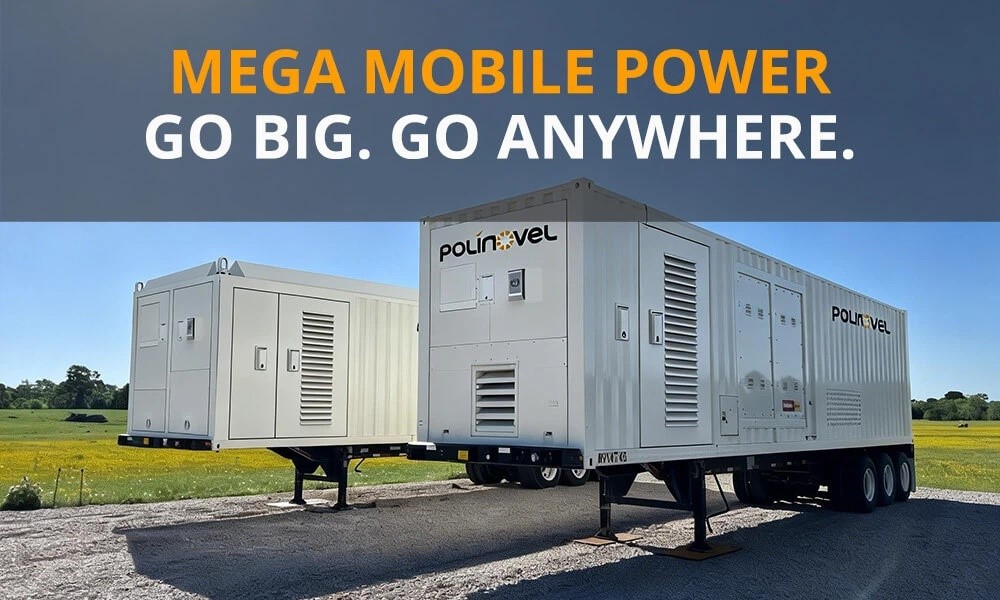
The Core Components
To understand why it is so reliable, you only need to know these five main parts:
- LiFePO4 Battery Cells – High-safety storage with 6,000+ long-life cycles.
- Bi-directional Inverter (PCS) – Converts DC to AC and manages rapid charging.
- Energy Management System (EMS) – monitors and optimizes system performance
- Integrated Safety & Thermal Systems – ensure stable operation in demanding conditions
- Battery Management System (BMS): Actively protects against overcharge and temperature spikes.
In a Mobile BESS vs Diesel Generator comparison, these integrated components allow battery systems to deliver cleaner, quieter, and more reliable power.
Mobile BESS vs Diesel Generator: 4 Key Reasons to Switch in 2026

Comparing a Mobile BESS to a diesel generator is like comparing an electric vehicle to a steam engine. One is a relic of the past; the other is a tool for modern efficiency.
Here is how the two stack up when the pressure is on:
1. Silence vs. Noise
Diesel generators typically operate at 85–100 dB, depending on load and enclosure.
The Reality: If you work in a residential area, a generator often means you must stop by 10 PM.
The Mobile BESS Solution: Operating at <50dB at 1 meter – quieter than a normal conversation (60 dB) and virtually silent at 10 meters. This allows you to work 24/7 without disturbing nearby residents, even in residential zones or overnight.
2. Clean Air vs. Toxic Fumes
Diesel engines are limited by their exhaust. You cannot put a smoking engine inside a tunnel, a basement, or a high-end event hall without massive ventilation costs.
The Reality: High carbon taxes and strict Stage V laws are making diesel a legal headache.
The Mobile BESS Solution: With Zero Emissions, your power can sit right next to your equipment-even indoors. This "indoor-ready" capability opens up new business opportunities in food storage, underground construction, and sensitive indoor venues.
3. Stability vs. Fluctuations
Traditional generators often struggle with "dirty power." Voltage spikes can fry sensitive LED screens, stage lights, or medical devices.
The Reality: A sudden load change can cause a generator to flicker, leading to costly downtime.
The Mobile BESS Solution: Mobile BESS can function similarly to an industrial UPS (Uninterruptible Power Supply). It delivers a Pure Sine Wave-this is high-quality, "clean" power identical to your home outlet. This stable current protects sensitive electronics like LED screens, computers, and medical sensors. Because the system switches in milliseconds, your equipment won't even know the power source changed.
4. Zero Maintenance vs. Constant Care
A diesel generator is a "high-maintenance" machine that demands constant attention-oil changes, filter swaps, and the messy reality of daily refueling.
The Reality: Every hour a generator is spent being serviced is an hour it isn't making you money.
The Mobile BESS Solution: With no engine or fuel system, it eliminates oil changes, filter swaps, and mechanical breakdowns. Routine maintenance is minimal - just periodic software updates and cooling system checks - reducing service costs by 80–90% compared to diesel. Charge it, deploy it, and let it run.
Quick Reference: Diesel vs. Mobile BESS at a Glance
| Feature | Diesel Generator | Mobile BESS |
| Noise Level | 85 - 100+ dB (Loud/Disturbing) | < 30 dB (Library Quiet) |
| Emissions | High CO2, NOx, and Smoke | Zero Emissions (Indoor Ready) |
| Fueling | Requires constant refueling | No fuel needed (Rechargeable) |
| Maintenance | High (Oil, filters, engine parts) | Near Zero (No moving parts) |
| Power Quality | Potential fluctuations (Dirty power) | Pure Sine Wave (Medical Grade) |
| Response Time | Slow (Needs time to start/ramp UP) | Instant(Millisecond UPS switching) |
| Operational Hours | Restricted by noise laws | Unrestricted 24/7 operation |
| Service Life | 10,000 - 20,000 hours (Engine) | 4,000 - 6,000+ Cycles (10+Years) |
| Remote Control | Manual or basic monitoring | Full Cloud-based EMS Monitoring |
Total Cost of Ownership: Mobile BESS vs Diesel Generator Cost Comparison
When you factor in fuel, maintenance, and the "Hidden Tax" of compliance, in many use cases, mobile battery systems can offer lower total cost of ownership over time.
Assumptions Used in This Comparison:
The following estimates are based on typical operating conditions observed across commercial and industrial projects. Actual results may vary depending on site conditions, load profiles, and regional pricing. For project-specific calculations, consulting the manufacturer is recommended.
- Diesel price: $1.50–$1.80 per liter (varies by region)
- Electricity cost: $0.10–$0.20 per kWh
- Load factor: 60–80% average
- Compliance costs vary depending on local regulations
The "Hidden Drain": Why Diesel is a Financial Black Hole
-
The Fuel Trap: A 100kW generator at 75% load burns roughly 22 liters of diesel per hour. At an average price of $1.50/L, you are spending $3,300 per 100 hours just to keep the lights on.
- The Compliance Tax: In "Green Zones" (like London's ULEZ or California's SCAQMD), emission fines range from €500 to €2,000 per day.
- Noise Violation Risks: A single noise complaint can lead to a "Stop Work" order. Losing a full day of labor and equipment rental can easily cost your business $5,000+ in a single afternoon.
- The Resale Cliff: As emission laws (Stage V/Tier 4F) tighten, the resale value of old diesel tech is crashing. A Mobile BESS remains a high-value asset for 10+ years
These figures are based on average market pricing for 156kW-class power solutions.
| Cost Category | Diesel Generator (10OkW) | Mobile BESS (156kWh) |
| Initial Purchase | Lower Upfront Cost | Higher Capital Investment |
| Fuel/ Energy Cost | $15,000 - $18,000 (Based on1,000h) | $2,500 - $4,500 (Electricity) |
| Maintenance | $2,500+ (Oil, filters, mechanical wear) | Near Zero (Solid-state tech) |
| Lifespan | 5-7 Years (High depreciation) | 10+ Years (6,000+ Cycles) |
| Compliance Fees | Risk of Noise/Emission Fines | $o (Stage V / ULEZC ompliant) |
| Total OpEx | High & Unpredictable | 80% Lower than Diesel |
While the initial investment for a 156kWh Mobile BESS is higher, the running costs are roughly 80% lower than diesel. When you factor in the elimination of fuel logistics and potential noise fines, the system typically reaches its break-even point much faster than smaller, lower-capacity alternatives.
Battery Longevity Note
Polinovel LiFePO₄ cells are rated for 6,000 cycles at 80% Depth of Discharge (DoD). For a single-shift operation (one charge per day), this translates to over 16 years of useful life. Even for intensive applications with two partial cycles daily, the battery will retain >70% capacity after 10 years.
When replacement is eventually needed, the modular design allows battery pack replacement without discarding the entire system – further protecting your long-term investment.
Case Study: The "Zero-Emission" Festival Payback
To understand the real-world impact, let's look at the math from a 3-day outdoor music festival requiring an 80kW constant load for 12 hours a day (36 hours total).
Option A: Diesel Generator
- Fuel Consumption: 80kW × 36h × 0.25L/kWh = 720 Liters.
- Fuel Cost: 720L × 1.80/L = $1,296.
- Labor & Extras: Refueling technician + Carbon tax = $600.
- Total Operational Cost: $1,896 (plus rental).
Option B: Polinovel 431kWh Mobile BESS
- Charging Cost: 80kW × 36hrs = 2,880kWh. At $0.15/kWh (Commercial rate) = $432.
- Labor: Zero (automated system).
- Total Operational Cost: $432 (plus rental).
The Result: By switching to BESS, the organizer saved over $1,400 in direct operational costs in just 72 hours. More importantly, they secured a $10,000 sponsorship specifically tied to the festival's "Green Initiative"- an additional benefit that is often difficult to achieve with traditional diesel solutions.
Application Scenarios & Selection Guide: Finding Your Perfect Match
Choosing a Mobile BESS is about more than just numbers-it is about choosing the right tool to eliminate noise complaints and bypass emission restrictions. Use this four-step guide to match our silent technology to your project's specific environmental needs.
Step 1 – Identify Your Scenario (The "Quiet & Clean" Filter)
Where is your "Zero-Emission" requirement most critical?
1. Large Events (Music Festivals & Outdoor Venues)
- Power Demands: Stage audio systems, high-intensity lighting, catering equipment, and temporary 5G base stations.
- The Silent Advantage: In urban parks or stadiums, noise curtains are expensive. A BESS is naturally silent, keeping the focus on the music, not the motor.
- Recommendation: Use 241kWh / 120kW for backstage and catering to keep the guest areas peaceful. For the main stage's massive surges, the 431kWh / 320kW delivers "pure" power with zero hum.
2. Construction & Job Sites (Urban & Night Work)
- Power Demands: Tower crane assistance, electric power tools, site office HVAC, and nighttime safety lighting.
- The Silent Advantage: Midnight roadworks often face "stop-work" orders due to noise. Our units let you work 24/7 in residential zones without a single complaint.
- Recommendation: The 261kWh / 160kW trailer is designed for rapid urban deployment-tow it in, power up, and stay invisible to the neighbors.

3. Emergency & Indoor Backup
- Power Demands: Life-support medical equipment, emergency communication recovery, and long-term lighting.
- The Zero-Emission Advantage: You can't run a diesel generator inside a hospital hallway or a basement data center. Because our BESS has Zero Fumes, it can sit directly in the workspace.
- Recommendation: The 156kWh is the ideal "indoor-ready" starter unit for tight, unventilated spaces.
4. Off-grid EV Fast Charging
- Power Demands: Simultaneous DC fast charging for multiple electric vehicles.
- The Zero-Emission Advantage: It makes no sense to charge an EV with a smoking diesel engine. Our high-capacity units provide a truly Green Charging loop.
- Recommendation: The 863kWh or 1.293MWh containerized systems are the ultimate "Mobile Charging Hubs."
Step 2 – Calculate Your "Silent" Runtime
To stay silent for the duration of your project, you must balance your load against the battery capacity.
- Power (kW): Determines what you can power (e.g., a silent 320kW peak for a concert).
- Capacity (kWh): Determines how long you can stay "Engine-Free."
The Selection Formula:
Runtime (hours) = Battery Capacity (kWh) ÷ Load (kW)
For example: A 200 kWh system powering a 50 kW load can run for approximately 4 hours.
Pro Tip: To ensure 100% reliability, we recommend choosing a capacity that covers 120% of your estimated shift time.
Step 3 – Product Matching Guide (Quick Selection)
The table below helps you quickly match your power needs with the right Mobile BESS configuration.
| Model | Capacity[kWh) | Power (kW) | Mobility | Application | Highlights |
| 156kWh/80kW | 156kWh | 80kW | Trailer-mounted | Small events, temporary power | 80kW output, long runtime |
| 241kWh/120kw | 241kWh | 120kW | Trailer-mounted | Medium events, catering | Balanced capacity & power |
| 261kwh/160kW | 261kWh | 160kW | Trailer-mounted | Urban construction | Fast deployment |
| 431kWh/320kW | 431kWh | 320kW | Container /Trailer | Main stage, fast charging | High power density |
| 627kWh/320kW | 627kWh | 320kW | Containerized | Long-duration supply | Stable output |
| 863kWh/640kWh | 863kWh | 640kW | Containerized | EV fast charging |
Multi-gun charging |
| 1.293MWh/1.2MW | 1293MWh | 1200MW | Containerized | Large-scale backup |
Max capacity, scalable |
All Polinovel units support Parallel Operation. This modular design allows you to scale both energy capacity (kWh) and power output (kW) seamlessly, ensuring you can meet increased demands as your project grows.
Step 4 – The "Modern Power" Checklist
Before finalizing, ensure your choice supports the full Silent & Zero-Emission ecosystem:
- Solar Input: Can it recharge via PV panels to stay 100% carbon-neutral?
- EMS Remote Monitoring: Can you manage the "Quiet Zones" and power levels from your phone?
- Safety Integration: Does it have built-in fire suppression (crucial for indoor/tunnel use)?
- Interface Compatibility: Are the connectors ready for your specific "Green" equipment?
The transition from diesel to Mobile BESS is no longer just an environmental trend-it is a competitive necessity. Whether you need to avoid noise fines, cut fuel costs, or win contracts in emissions-regulated zones, the math is clear: mobile battery storage delivers lower TCO, zero emissions, and 24/7 silent operation.
Ready to power your next project?
Don't let outdated diesel technology limit your opportunities. Contact Polinovel today for a free, project-specific TCO comparison – we'll help you find the right Mobile BESS configuration and show you exactly when you'll break even.