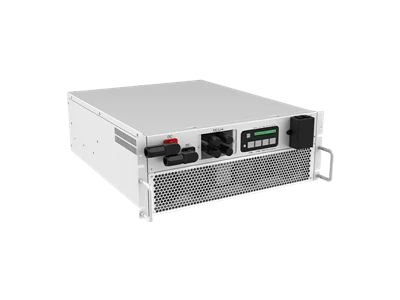
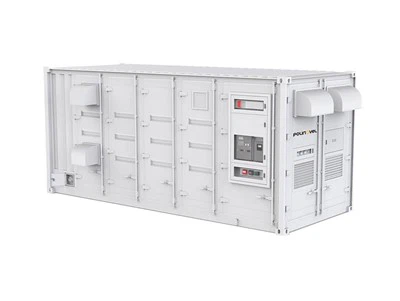
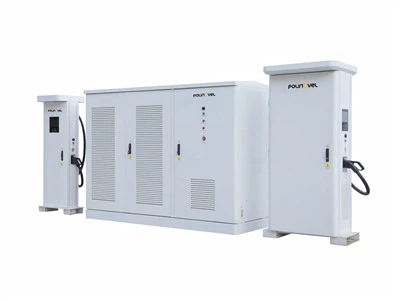
160kW Energy Storage Inverter for BESS
The 160kW Energy Storage Inverter for BESS is designed for high-voltage battery storage, microgrid, and grid-support projects that require stable power conversion and responsive system control.
It supports both utility-interactive and stand-alone operation, making it suitable for commercial and industrial BESS, island power systems, and renewable energy integration. Its project-oriented design helps system integrators build reliable storage solutions for demanding operating conditions and changing power requirements.

Key Features
Built for high-voltage BESS, demanding environments, and responsive microgrid operation.
High-Voltage Battery Integration
Supports a wide DC voltage range up to 1500V, enabling connection with high-voltage battery systems for commercial, industrial, and microgrid BESS projects.
Flexible Grid and Stand-Alone Operation
Operates in both utility-interactive and stand-alone modes, providing greater flexibility for grid-connected storage, backup power, and independent energy systems.
Fast Power Dispatch Response
A power dispatch response time of ≤15ms helps the bidirectional inverter react quickly to changing load and grid conditions.
Strong Short-Term Overload Capacity
Supports 1.5 times overload for 10 seconds, providing additional power during sudden load increases and short-duration demand peaks.
IP66 Outdoor Protection
The IP66 enclosure, −25°C to 60°C operating range, and multiple installation options support outdoor deployment in islands, deserts, and other demanding locations.
VSG and Microgrid Support
VSG technology supports microgrid applications, while compatibility with FFR, FCR, and FCAS expands its role in grid-support and frequency-response projects.
Specification
| Utility-interactive Mode | Stand-alone Mode | |
| Electrical Parameters | ||
| Nominal Power | 160 kVA | |
| AC Voltage |
EX: 400 (-15%~15%) Vac NA: 480 (-15%~15%) Vac |
EX: 400 (-10%~15%) Vac NA: 480 (-10%~15%) Vac |
| DC Voltage Range | EX: 720 V~1500 V, >1200 V derating to 90% NA: 850 V~1500 V, >1200 V derating to 90% |
|
| AC Current |
EX: 230A NA: 192A |
|
| DC Current |
EX: 222A NA: 188A |
|
| AC Connection | 3P4W/3P3W | 3P4W |
| AC Frequency | 50/60 (-2.5~2.5) Hz | |
| THDI | ≤3% | |
| Voltage Ripple Coefficient | ≤1% | |
| AC PF | -1~1 | |
| AC Overload Capacity | 176 kVA (1.1 times long-term / 1.5 times for 10s overload) | |
| System Parameters | ||
| Maximum Efficiency | 98.5% (External auxiliary source) | |
| Dimensions |
893 mm × 290 mm × 1080 mm (width × height × depth) 893 mm × 290 mm × 950 mm (No Lug) |
|
| Noise | <80 dB @ 1 m | |
| Enclosure | P66 | |
| Operation Temperature | -25 °C ~ 60°C (>50°C derating) | |
| Cooling | Forced air cooling | |
| Operation Humidity | 0~100% (no condensation) | |
| Operation Altitude | 3000 m (>3000 m derating) | |
| Installation Method | Flat / Vertical / Wall-mounted installation | |
| Certification | EN50549-1 / EN50549-2 / UL1741 & IEEE1547 / IEC62477 / IEC61000 / FCC | |
| Communication | ||
| communication | RS 485, Ethernet, CAN | |
| Communication Protocol | Modbus TCP/RTU, CAN2.0 | |
Designed Around the Integration Questions BESS Engineers Need to Answer
In addition to the regular products that we already produce.
Connect High-Voltage Battery Systems Without Forcing a Narrow DC Window
The European configuration operates from 720–1500V DC and the North American configuration from 850–1500V DC. This gives integrators a clear voltage envelope for matching high-voltage battery strings while accounting for the published derating condition above 1200V.
Respond Quickly to Dispatch and Load Changes
A ≤15ms power dispatch response helps the inverter react quickly when the EMS changes charge or discharge commands or when operating conditions shift. This is useful in BESS projects where control speed matters for active power management and frequency-response functions.
Handle Temporary Power Peaks Without Immediate Shutdown
The inverter supports 176 kVA AC overload capacity, including 1.1 times long-term operation and 1.5 times overload for 10 seconds. That extra short-duration headroom is useful when a site experiences sudden load increases or transient demand above nominal power.
Use One Inverter for Utility-Interactive or Stand-Alone Operation
The unit supports both utility-interactive and stand-alone modes. Integrators can therefore use the same product family for grid-connected battery storage or systems that must maintain an independent AC bus, subject to the final protection and control architecture.
Support VSG and Frequency-Response Applications
VSG technology supports applications that need controlled voltage and frequency behavior, while compatibility with FFR, FCR and FCAS broadens the inverter's role in grid-support projects. Grid requirements should always be checked against the project location and applicable compliance documents.
Deploy Across Demanding Site Conditions
The published IP66 protection, forced-air cooling, −25°C to 60°C operating range, 0–100% non-condensing humidity range and 3000m operating altitude provide integrators with clear environmental limits for site design and derating calculations.
Where the 160kW Energy Storage Inverter Sits in the BESS
In a typical battery energy storage system architecture, the inverter controls the conversion between the high-voltage DC battery side and the AC system. The BMS protects and supervises the battery, while an EMS or site controller can communicate with the inverter through RS485, Ethernet or CAN using Modbus TCP/RTU or CAN2.0.
High-Voltage Battery
1
>>
DC Protection
2
>>
160kW Energy Storage Inverter
3
>>
AC Bus / Transformer
4
>>
Grid or Site Load
5
Before commissioning, confirm battery voltage and current limits, AC wiring, grid frequency, communication mapping, protection coordination and local grid compatibility. For teams that need a broader explanation of the converter's role, Polinovel's overview of a power conversion system (PCS) covers the system-level function.
Where This 160kW Inverter Adds the Most Value
The product is best positioned around high-voltage battery conversion and fast controllable power-not as a generic hybrid inverter. These are the applications that align most closely with its published electrical and control characteristics.
Commercial & Industrial BESS
For factories, industrial sites and commercial facilities, the 160kW inverter can control battery charge and discharge around site demand, energy management commands and backup requirements. Its 400V/480V AC options help integrators match common three-phase power systems across different markets.
Renewable Energy Storage & Grid Support
The inverter can support renewable energy storage projects where battery power must respond to grid or EMS commands. The ≤15ms dispatch response, adjustable power factor range and VSG-related capabilities are particularly relevant when the BESS participates in active power control or frequency-response services.
Stand-Alone & Islanded Power Systems
Stand-alone operation allows the inverter to serve projects that need an independent AC supply rather than continuous reliance on the utility grid. The specified AC wiring, overload capability and environmental limits should be matched to the actual load profile and site conditions before deployment.
Five Confirmed Details Regarding Energy Storage Inverter for BESS
| Project Input | Why It Matters for This 160kW Model |
|---|---|
| Battery Voltage Window | Confirm the battery stays within 720–1500V DC for the EX configuration or 850–1500V DC for the NA configuration, including the published derating above 1200V. |
| AC System | Confirm whether the project uses 400 Vac or 480 Vac and whether the required wiring is 3P4W or 3P3W. |
| Operating Mode | Define whether the inverter will run utility-interactive, stand-alone, or switch between operating strategies under an external controller. |
| Control & Communication | Confirm EMS/BMS integration over RS485, Ethernet or CAN and verify the required Modbus TCP/RTU or CAN2.0 data mapping. |
| Site & Grid Requirements | Check ambient temperature, altitude, enclosure expectations, frequency, certification and any project-specific grid-support requirements before release for production. |
Questions Engineers Commonly Ask About the 160kW Model
Q: What battery voltage does the 160kW energy storage inverter support?
A: The published DC voltage range is 720–1500V for the EX configuration and 850–1500V for the NA configuration. Above 1200V, the existing specification states derating to 90%. The battery's actual operating voltage across SOC and temperature should be checked against this range.
Q: What is the difference between the European and North American configurations?
A: The EX version is specified around 400 Vac and uses a 720–1500V DC range, while the NA version is specified around 480 Vac and uses an 850–1500V DC range. AC and DC current values also differ, so the correct regional configuration should be selected during system design.
Q: Can the inverter work without the utility grid?
A: Yes. The current product specification includes both utility-interactive and stand-alone modes. Stand-alone AC connection is listed as 3P4W, while utility-interactive operation supports 3P4W/3P3W. Final system protection and control logic should be coordinated with the complete BESS design.
Q: How quickly does the inverter respond to power commands?
A: The published power dispatch response is ≤15ms. This response capability is relevant when the BESS needs to follow fast EMS commands or participate in grid-support and frequency-response applications.
Q: What communication interfaces are available?
A: The existing product data lists RS485, Ethernet and CAN communication, with Modbus TCP/RTU and CAN2.0 protocols. During project integration, confirm the required register map, BMS/EMS communication logic and controller responsibilities.
Q: Which technical documents should I confirm before procurement?
A: At minimum, confirm the final model datasheet, wiring and installation information, communication documentation and applicable certification files.

Confirm the 160kW Inverter Against Your Battery and AC System
Send your battery operating voltage, BESS capacity, AC voltage, destination market, utility-interactive or stand-alone requirement, and required communication protocol. Polinovel can use these inputs to confirm whether this 160kW energy storage inverter matches the electrical and control requirements of your project.
Hot Tags: 160kW energy storage inverter, 160kW BESS inverter, high voltage energy storage inverter, 1500V energy storage inverter, 160kVA storage inverter