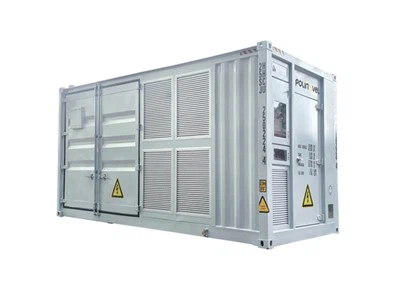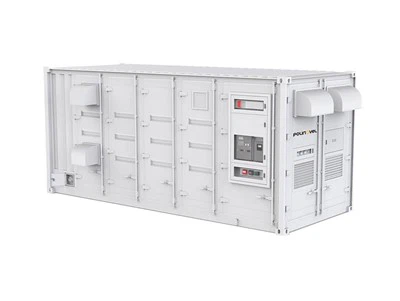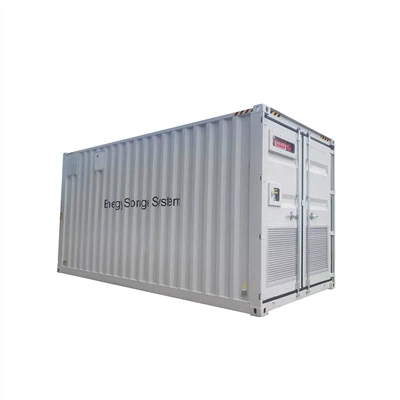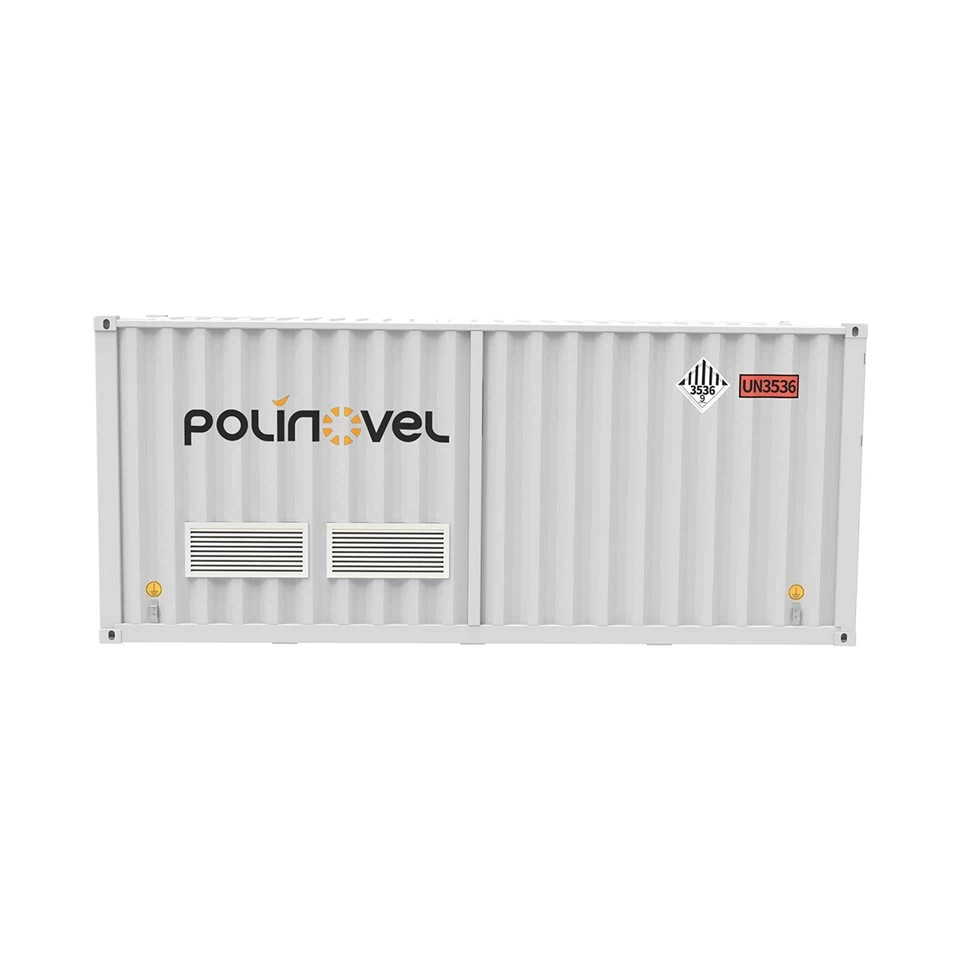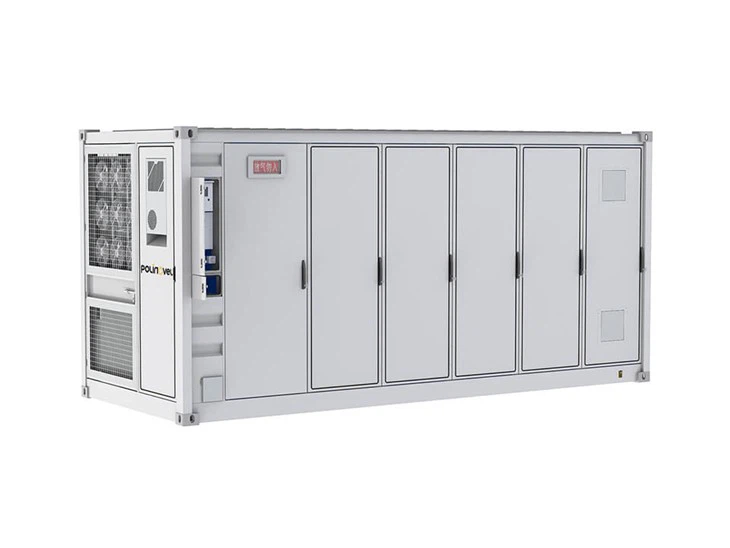

The 3.85–5 MWh On-Grid Liquid-cooled BESS Container is engineered for large-scale grid-connected energy storage applications. For larger 5MW battery storage projects, multiple 3.85MWh–5MWh liquid-cooled BESS containers can be configured together to support renewable energy integration, community-level power buffering, peak-demand shaving, and grid ancillary services. Depending on the required discharge duration, project capacity can be scaled to around 15MWh to 20MWh while maintaining a modular 20-foot containerized design.Fully automated liquid cooling actively balances battery temperatures to maintain high efficiency and long service life. The pre-assembled container design simplifies transportation, installation, and maintenance. Independent AC/DC container architecture and multi-level fire protection enhance system safety, while support for low and high voltage ride-through improves grid stability across a wide range of altitudes and environmental conditions.

3.85 MWh:
Designed for higher safety margins and longer service life, ideal for reliability-focused projects.
4.2–4.3 MWh:
A mainstream grid-connected configuration, balancing capacity, power, and overall project cost.
5 MWh:
Optimized for high energy density and maximum cost efficiency within a single container footprint.
Optimized for Your Energy Needs
High-Capacity Grid Support
Designed for 3.85–5 MWh capacity, the system delivers stable charge and discharge, supporting peak shaving, load balancing, and grid flexibility.
Enhanced System Safety
Independent AC and DC container design prevents fault propagation, while multi-level fire protection enables fast response and effective containment of thermal events.
Grid-Friendly Performance
Supports low and high voltage ride-through capabilities, helping stabilize the grid and maintain compliance during voltage fluctuations and grid disturbances.
Wide Environmental Adaptability
Reliable operation across wide temperature ranges, high altitudes, and harsh environments ensures consistent performance in diverse grid-scale deployments.
Automated Liquid Thermal Control
Fully automated liquid cooling actively balances cell temperatures, improving energy efficiency, reducing degradation, and supporting a long cycle life of up to 7000 cycles.
Simplified Deployment & O&M
The factory-integrated container structure reduces on-site work, shortens commissioning time, and simplifies long-term operation and maintenance.
Specification
| Model | CESS | ||
| 1900/3858 | 2100/4244 | 2500/5015 | |
| Battery Container | |||
Application | On-grid | ||
Cell Type | LFP 3.2V/314Ah | ||
Battery Module | 48S1P/48.23kWh | 104S1P/104.50kWh | |
System Configuration | 384S10P | 416S12P | |
Rated Voltage | 1228.8V | 1331.2V | |
System Energy | 3858.43kWh | 4244.27kWh | 5015.96kWh |
Charge/Discharge Rate | 0.5P | ||
Cycle Life | 7000 | ||
Thermal Management | Liquid-cooled | ||
Fire Protection System | Aerosol/Perfluorohexanone | ||
Weight | 38T | 40T | 43.5T |
Dimensions(L*W*H) | 6058*2438*2896mm | ||
Integrated Inverter Booster Unit | |||
Rated Power | 1900kW | 2100kW | 2500kW |
MV AC Voltage | 10~35kV | ||
| LV AC Voltage | 690V | ||
Operating Frequency | 50Hz/60Hz | ||
Power Factor | 1Leading~1Lagging | ||
Transformer Type | Dry/Oil-Immersed Transformer | ||
| Transformer Winding Type | Dy11 | ||
Thermal Management | Air-cooled | ||
Dimensions(L*W*H) | 6058*2438*2896mm | ||
System Parameters | |||
System Efficiency | 88% | ||
Operating Temperature | -20~+55℃ (>45℃ Derating) | ||
Operating Humidity | 0~95% (Non-condensing) | ||
Operating Noise | ≤75 dB(A) @3 m | ||
Ingress Protection | IP54 | ||
Max. Operating Altitude | 4000m (>2000m Derating) | ||
Communication Method | Ethernet | ||
Certification Standards | UN38.3,MSDS,IEC 62619,EN 62477,IEC 62933-5-2, EN IEC 61000-6-2/4,G99,VDE-AR-N 4110/4120,EN 50549-2,NTS 631 V2.1 | ||
The 20-foot 5MWh liquid-cooled energy storage container uses 314Ah battery cells, requiring over 5000 cells.The thermal challenges posed by high energy density make liquid cooling a necessary choice:
Temperature uniformity:
Achieves a 40% reduction in temperature difference within the battery cell and controls the temperature difference within the PACK to within 2℃.
Improved system lifespan:
Average system auxiliary power consumption is reduced by 20%, battery degradation rate is reduced by 10%~15%, and the system lifespan can reach over 15 years.
Reduced energy consumption:
The improved temperature uniformity achieved by liquid cooling reduces system self-consumption by 20%.
Liquid cooling unit (cooling main unit)
Liquid cooling pipelines (multi-stage variable diameter design)
Leak detection and response system
Intelligent temperature control algorithm
Fire Safety System
The fire protection system uses each battery pack as the smallest protection unit, employing gas-liquid two-phase atomized fire extinguishing agent technology, combined with aspirating smoke detectors, combustible gas detectors, and temperature and smoke detectors for comprehensive monitoring.
Cell Level:
Thermal runaway control
Pack Level:
Precise detection and spraying
Cluster Level:
Isolation and protection
Compartment Level:
Whole-compartment water immersion fire extinguishing + ventilation and explosion relief
Grid-scale/Power Generation Side Energy Storage
Helps power generation facilities restore grid stability, optimize power output curves, and reduce curtailment of wind and solar power.
01
Commercial and Industrial Energy Storage
Industrial users can replace transformer capacity with energy storage systems, reducing peak power consumption and thus saving on capacity costs.
Factories and shopping malls can perform peak shaving and load shifting, reducing electricity costs and serving as a backup power source.
02
New Energy with Energy Storage
To complement wind and solar power plants and address intermittency and variability issues.
03
Microgrid/Off-grid Systems
For mining operations, island power grids, communication base stations, etc.
04
Emergency Power Supply
For critical infrastructure such as hospitals, data centers, and military bases.
05
Why choose us?
High Integration: Highly integrated systems including battery, BMS, PCS, EMS, thermal management, and fire protection.
Standardization: Based on a 20-foot standard container, facilitating transportation, installation, and expansion.
Multi-level fire protection + liquid cooling temperature control + three-layer BMS architecture.
Cost-effectiveness: Reduced cost per kilowatt-hour due to high-capacity battery cells.
Suitable for various scenarios including grid-scale, commercial and industrial, and off-grid applications.
In high-capacity energy storage systems, operational stability is often more practically significant than individual performance indicators. The 3.85 MWh–5 MWh grid-connected liquid-cooled BESS containerized energy storage system, through comprehensive consideration of cell temperature difference control, system-level redundancy design, and multi-layer safety mechanisms, keeps battery performance degradation and operational risks within controllable limits, providing a foundation for predictable operation of the energy storage system throughout its entire lifecycle.
Hot Tags: 3.85MWH-5MWH On-Grid Liquid-cooled BESS Container Energy Storage System, China 3.85MWH-5MWH On-Grid Liquid-cooled BESS Container Energy Storage System manufacturers, suppliers, factory