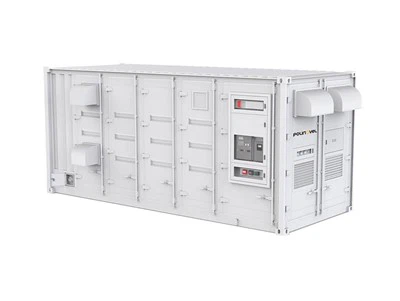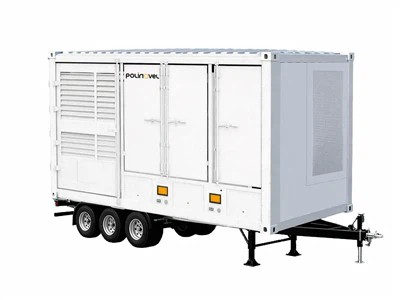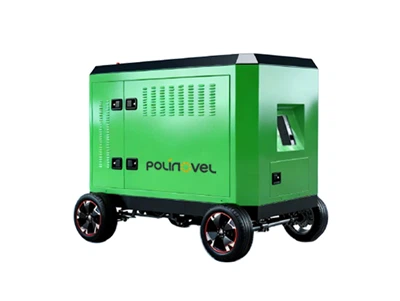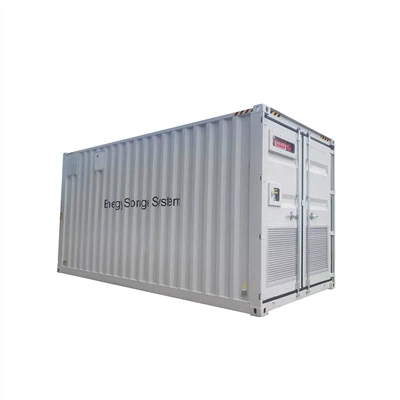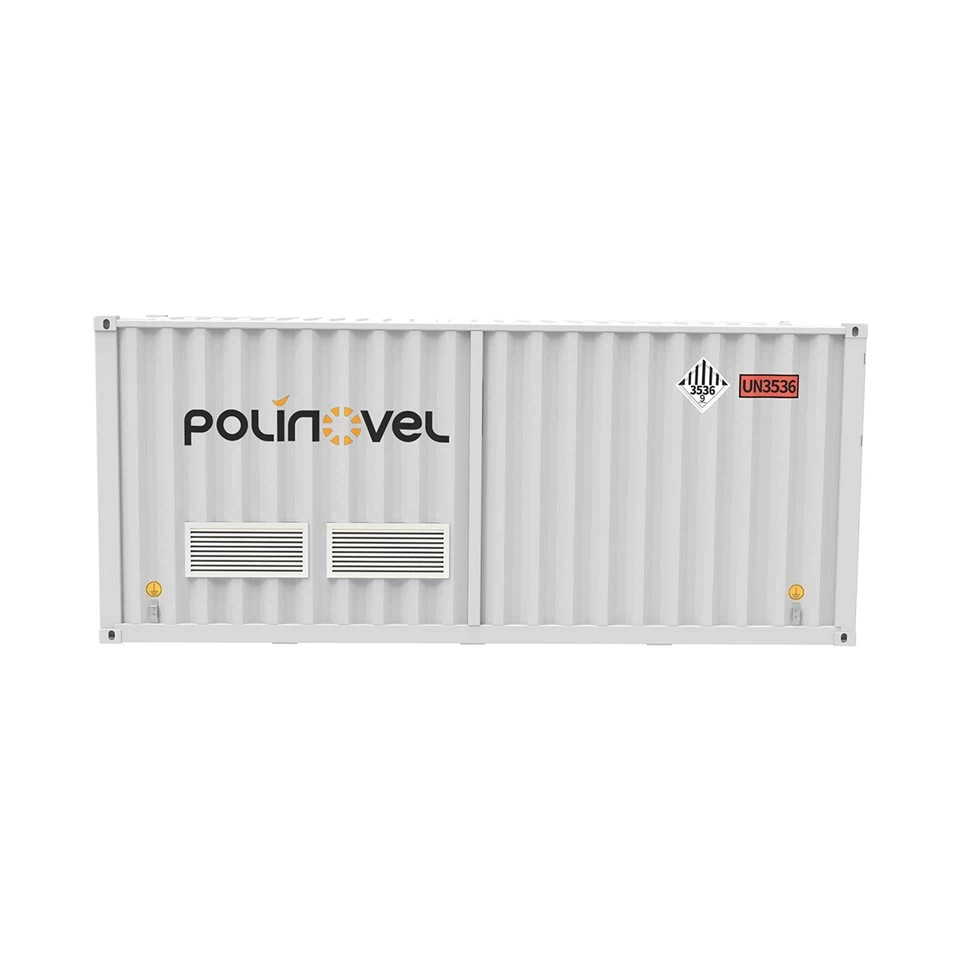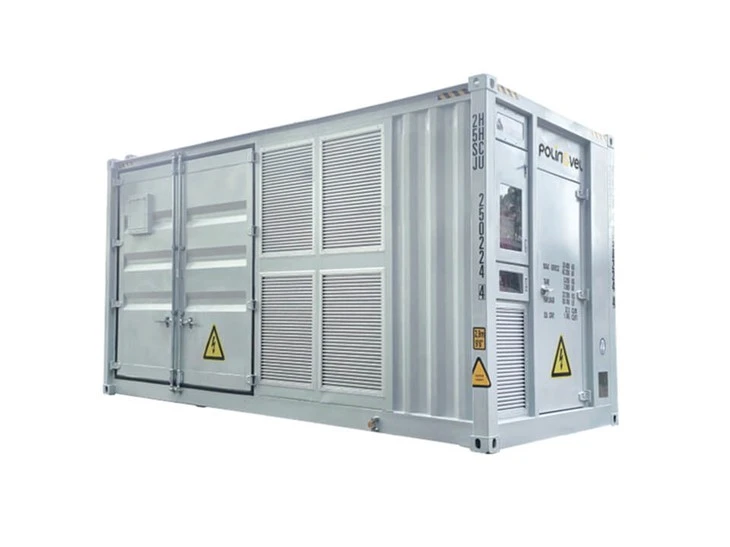
1.2MWH Microgrid Air-cooled ESS Container Battery Energy Storagey System
The 1.2 MWh Microgrid Air-cooled Container ESS is designed for stable and flexible microgrid applications. It supports hybrid energy integration with multiple simultaneous inputs and operating modes, adapting easily to diverse on-grid and off-grid scenarios.
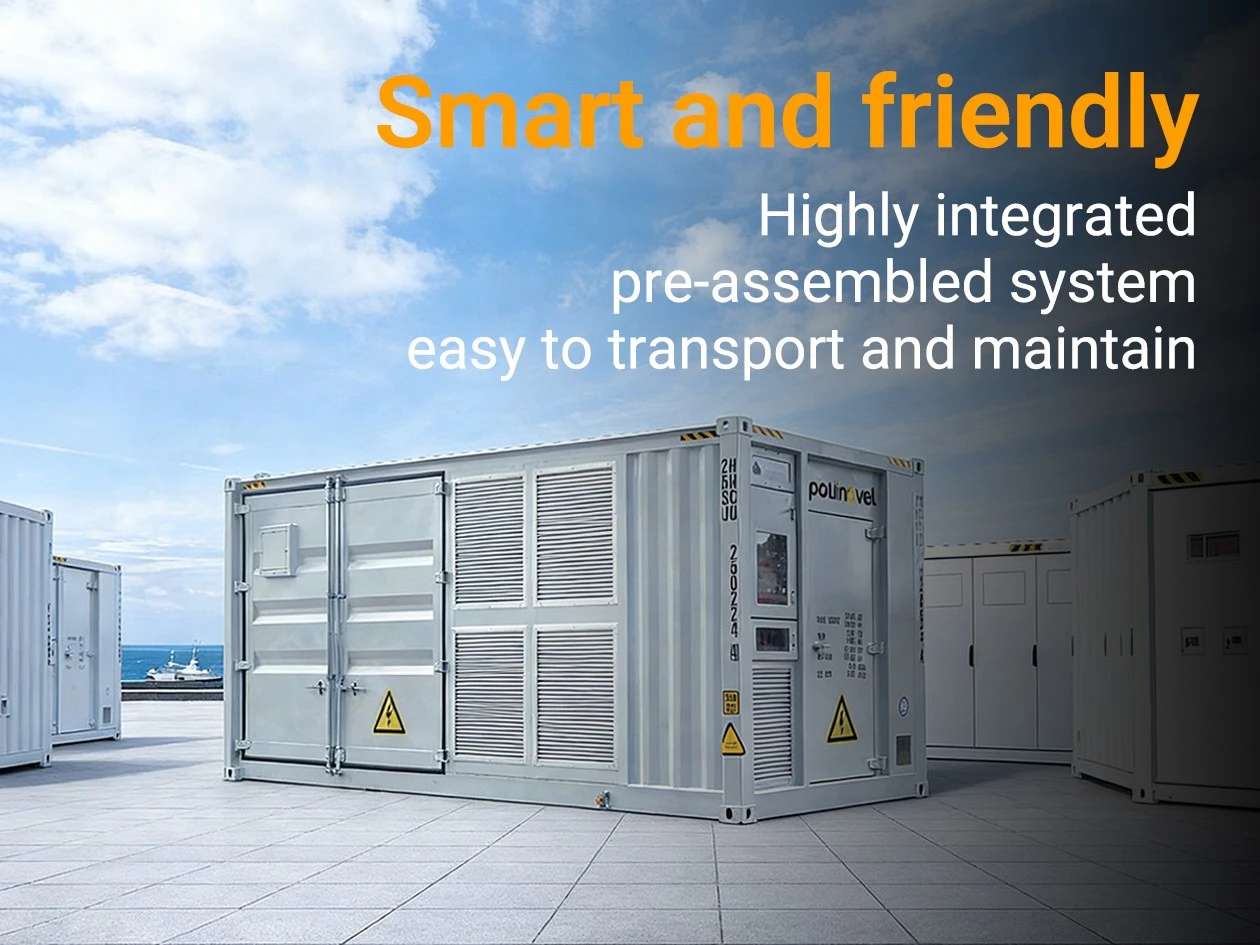
The pre-assembled container design simplifies transportation, installation, and maintenance. Seamless mode switching ensures uninterrupted power supply for critical loads, while comprehensive circuit protection and intelligent thermal monitoring enhance system safety, reliability, and long-term operational stability.
What is a Microgrid Air-Cooled ESS Containerized Energy Storage System?
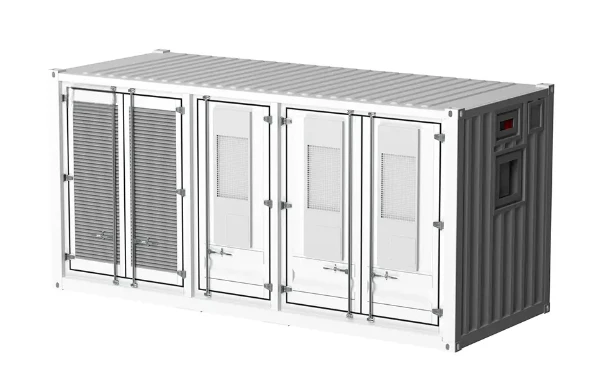
The 1.2MWh microgrid air-cooled ESS (Energy Storage System) containerized battery energy storage system is a highly integrated large-scale energy storage solution. This system integrates core components such as a lithium iron phosphate (LiFePO4) battery system, a 1000kW power conversion system (PCS), a battery management system (BMS), an energy management system (EMS/SCADA), a thermal management system (HVAC), and a fire protection system into a standard 40-foot container, forming a complete, mobile energy storage power station.
This system is particularly suitable for microgrid applications, enabling grid-connected, off-grid, and hybrid grid-connected/off-grid operation modes, providing users with stable and reliable power support. It utilizes an air-cooled (fan-cooled) thermal management solution, offering advantages such as simple structure, lower cost, and convenient maintenance.
Optimized for Your Energy Needs
Hybrid Microgrid Integration
Supports multiple simultaneous energy inputs, enabling smooth integration of renewables, grid power, and generators for stable and flexible microgrid operation.
Seamless Mode Switching
Instant switching between operating modes ensures uninterrupted power supply for critical loads, enhancing energy security in both grid-connected and islanded scenarios.
Cost-Effective Air Cooling
Optimized air-cooled thermal management delivers reliable temperature control with lower system complexity, reducing maintenance requirements and overall operating costs.
Comprehensive Safety Protection
Integrated circuit protection, real-time thermal monitoring, and fire suppression systems work together to minimize risks and ensure safe, stable system operation.
Simplified Deployment
Factory-integrated structure simplifies transportation, installation, and commissioning, shortening deployment time and improving on-site efficiency.
Low-Noise Design
The air-cooled container operates quietly (≤75 dB at 3 m), minimizing noise impact for commercial, residential, or urban microgrid deployments.
Specification
|
Model
|
CESS | ||
|
Application
|
Microgrid
|
||
|
Battery Parameters
|
|||
|
Cell Type
|
LFP 3.2V/314Ah
|
||
|
Battery Module
|
20S1P/20.096kWh
|
||
|
System Configuration
|
240S5P
|
||
|
Rated Voltage
|
768V
|
||
|
Voltage Range
|
648~864V
|
||
|
System Energy
|
1205.76kWh
|
||
|
Charge/Discharge Rate
|
0.5P
|
||
|
Cycle Life
|
6000
|
||
|
Photovoltaic Parameters
|
|||
|
Max. Input Power
|
600kW 660kW 720kW
|
||
|
Operating Voltage Range
|
250~640V
|
||
|
Qty of MPPT
|
10 11 12
|
||
|
AC Output Parameters
|
|||
|
Rated Power
|
500kW
|
||
|
Rated Voltage
|
400V
|
||
|
Rated Current
|
722A
|
||
|
Operating Frequency
|
50Hz/60Hz
|
||
|
Power Factor
|
1Leading~1Lagging
|
||
|
System Parameters
|
|||
|
System Efficiency
|
86%
|
||
|
Thermal Management
|
Air-cooled
|
||
|
Fire Protection System
|
Aerosol/Perfluorohexanone
|
||
|
Operating Temperature
|
-20~+55℃ (>45℃ Derating)
|
||
|
Operating Humidity
|
0~95% (Non-condensing)
|
||
|
Operating Noise
|
≤75 dB(A) @3 m
|
||
|
Max. Operating Altitude
|
4000m (>2000m Derating)
|
||
|
Ingress Protection
|
IP54
|
||
|
Communication Method
|
Ethernet
|
||
|
Max. Parallel Units (Off-Grid)
|
4
|
||
|
Weight
|
19T
|
||
|
Dimensions(L*W*H)
|
6058*2438*2896mm
|
||
|
Certification Standards
|
UN38.3,MSDS,IEC 62619,EN 62477,IEC 62933-5-2,EN IEC 61000-6-2/4, EN 62109-1/2,G99,EN 50549-1,NRS 097-2-1,IEC 62116/IEC 61727,IEC 61683
|
||
Air-Cooled Thermal Management System
Air Cooling Technology Principle:
The air-cooled thermal management system uses air as the heat exchange medium, achieving temperature control of the battery pack through industrial air conditioners and a carefully designed duct system. Its main characteristics are simple structure and low cost, but the heat dissipation speed and efficiency are relatively low, making it suitable for energy storage projects with low battery heat generation rates.
Stepped Air Duct Design:
To overcome the shortcomings of traditional battery compartment thermal management solutions, such as slow cooling speed and poor consistency, this system adopts several innovative stepped air duct designs:
Top-supply, front-return airflow mode:
Industrial air conditioners are placed at one end of the battery compartment aisle, with the maximum cooling capacity matched to the maximum heat dissipation power of the batteries. The top air outlet is connected to a stepped air duct.
01
Air pressure balancing design:
The height of the air duct gradually decreases along the direction of airflow, ensuring that the air pressure at each outlet is similar and that the cold air flows out evenly.
02
Air wall guiding system:
An air wall is set between the battery rack and the cabinet wall, connected to the air duct at the top, evenly guiding the cold air into the battery boxes.
03
Heat dissipation channel design:
Heat dissipation channels are set between every two battery cells inside the battery box, connecting the air wall and the aisle, increasing the heat dissipation area of the battery cells.
04
Intelligent temperature control strategy:
Automatically switches between heating and cooling modes based on ambient temperature to maintain the optimal operating temperature.
05
Air cooling vs. liquid cooling technology comparison
| Comparison Dimension | Air Cooling Scheme | Liquid Cooling Scheme |
|---|---|---|
| Heat Exchange Efficiency | Medium, temperature difference controlled around 5°C | High, temperature difference controlled within 3°C |
| System Cost | Lower, obvious advantage in initial installation cost | Higher, but potentially lower full lifecycle cost |
| Space Occupation | Requires air duct space, relatively lower energy density | Compact design, ~40% land area savings for same capacity |
| Maintenance Complexity | Simple, no leakage risk | More complex, need to monitor coolant leakage risk |
| Applicable Scenarios | Lower power density container storage, communication base station storage | High heat generation projects, harsh environments (e.g., seaside high salt-alkali areas, battery rooms) |
| Noise Level | Relatively higher (fan noise) | Relatively lower |
| Dehumidification Function | Has dehumidification capability, can reduce internal humidity | Requires additional configuration |
Product Positioning and Market
This energy storage system is primarily targeted at the following market segments:
Commercial and industrial (C&I) energy storage applications
Distributed energy and microgrid systems
Off-grid power supply in remote areas (islands, mining areas, etc.)
Emergency backup power systems
Grid-side peak shaving and frequency regulation services
Energy storage solutions for renewable energy power plants
Safety Protection System
Multi-layered Safety Protection System:
The safety of the energy storage system is the most critical design consideration. This system adopts a multi-layered, comprehensive safety protection system, establishing a complete safety assurance mechanism across four levels: battery cells, modules, system, and fire protection.
BMS (Battery Management System) functions:
Voltage and Current Monitoring: Real-time acquisition of total voltage and total current
Insulation Detection: Real-time monitoring of high-voltage positive and negative pole insulation resistance to ground
Passive Balancing: Maximum balancing current of 30mA to maintain cell consistency
Cell Monitoring: Each BMU monitors 16-24 cell voltages and 4 temperature channels in real time
Dual CAN Communication: Internal and external networks are separated to ensure secure and reliable communication
Safety Protection: Multiple protections against overcharge, over-discharge, overcurrent, insulation faults, overheating, voltage difference, temperature difference, etc.
SOC/SOH Estimation: Battery state of charge and state of health estimation, accuracy ≤8%
Fault Diagnosis: Comprehensive diagnosis of temperature, voltage, current, insulation, contactors, fuses, sensors, and communication
Remote Monitoring: Supports fault and status recording, low-power standby, and button wake-up function
Fire Protection System
The fire protection system employs a multi-stage interlocking protection mechanism that automatically detects fires, triggers alarms, and activates the fire suppression system:
- Detection methods: Smoke sensor + Temperature sensor + Humidity sensor
- Fire extinguishing agent: Heptafluoropropane (HFC-227EA)
- Activation methods: Automatic control, manual control, and mechanical emergency operation (three modes)
Application Scenarios
Integrated Solar, Storage, and Charging:
Energy storage systems for charging stations, enabling integrated operation of solar power generation, energy storage, and charging.
Emergency Backup Power:
Backup power supply for critical infrastructure such as hospitals and data centers, ensuring uninterrupted power supply during power outages.
Grid Ancillary Services:
Participating in grid peak shaving, frequency regulation, and reserve capacity services to generate revenue.
New Energy Integration:
Energy storage systems for solar power plants and wind farms, smoothing power output and reducing curtailment of wind and solar power.
Commercial and Industrial Energy Storage:
For industrial parks, large shopping malls, data centers, hotels, and other locations, enabling peak shaving and valley filling to reduce electricity costs.
Microgrid Systems:
Forms an independent microgrid with solar power, wind power, diesel generators, etc., operating in parallel with the main grid or independently when necessary, providing stable power supply to remote areas, islands, mining areas, etc.
Core Advantages
Highly Integrated and All-in-One:
All subsystems are integrated into a standard container, pre-fabricated in the factory, and require no on-site installation or commissioning. It can be transported remotely via road and sea, making it convenient and efficient.
Modular and Flexible Expansion:
Customizable according to actual user needs, with different battery capacities to suit various application scenarios and load requirements.
High Safety and Reliability:
Lithium iron phosphate batteries have become the preferred choice for energy storage applications due to their high safety, long cycle life, and low cost.
Long Lifespan and Low Cost:
Cycle life ≥4000 times, design life of 10 years, resulting in low cost per kilowatt-hour over its entire lifespan.
Intelligent Operation and Maintenance Management:
Cloud platform for remote monitoring, intelligent diagnostics, and predictive maintenance, reducing operation and maintenance costs.
Wide Environmental Adaptability:
Not limited by geographical location, it can operate under various environmental conditions, offering strong adaptability.
Whether in off-grid operation, weak grid support, or multi-energy collaborative scenarios involving solar power and diesel generators, the 1.2 MWh microgrid air-cooled ESS containerized battery energy storage system can serve as a fundamental module for independent deployment or multi-unit expansion, providing reliable energy buffering and dispatch capabilities for projects.
Hot Tags: 1.2MWH Microgrid Air-cooled ESS Container Battery Energy Storage System, China 1.2MWH Microgrid Air-cooled ESS Container Battery Energy Storage System manufacturers, suppliers, factory