

EV Charging from Home to Fleet
Scalable, Smart, Safe Charging
-
Charge Anywhere, Grow Anytime
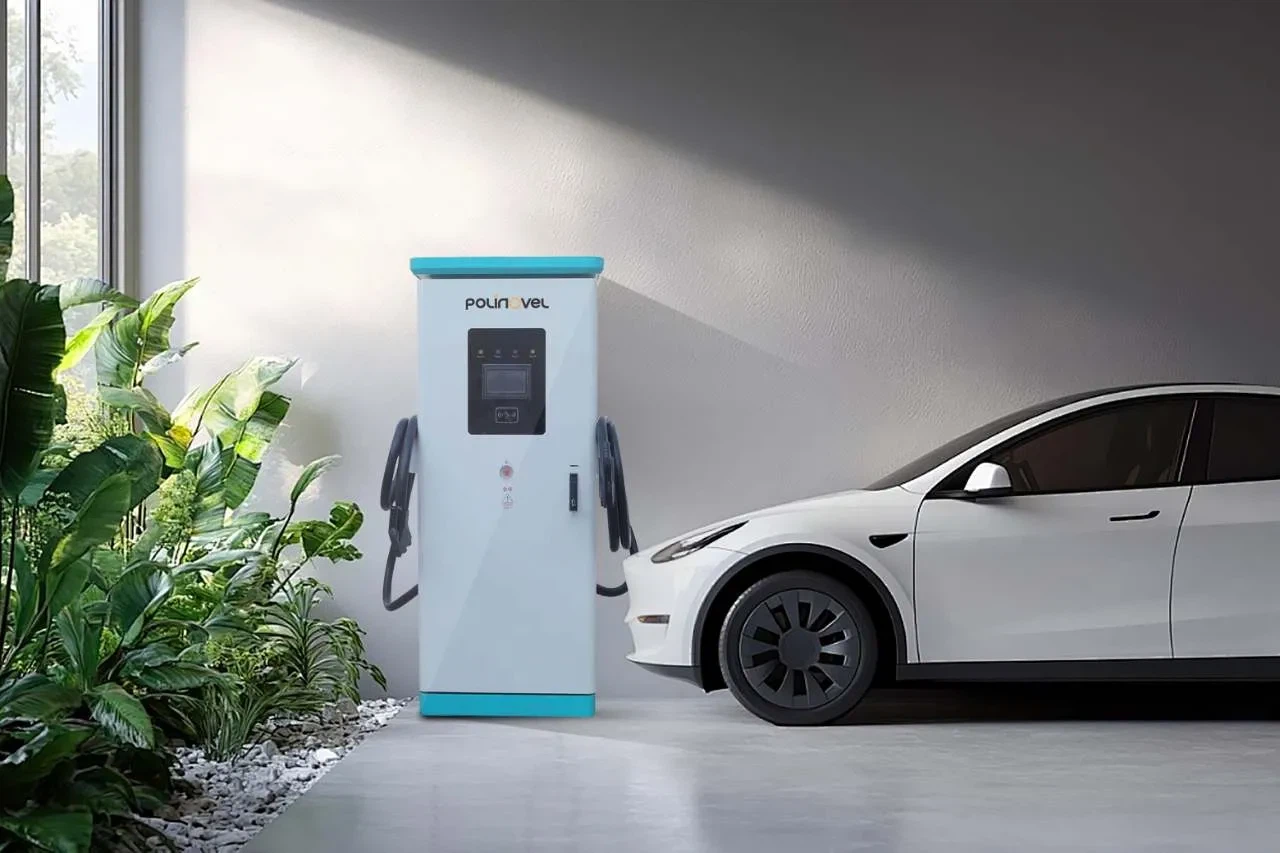
Support AC and DC charging across a wide power range to match daily charging and high-demand fast charging needs. One unified platform allows easy scaling from residential and commercial sites to fleet and public charging networks—without changing systems or suppliers.
-
Smart, Simple Operation
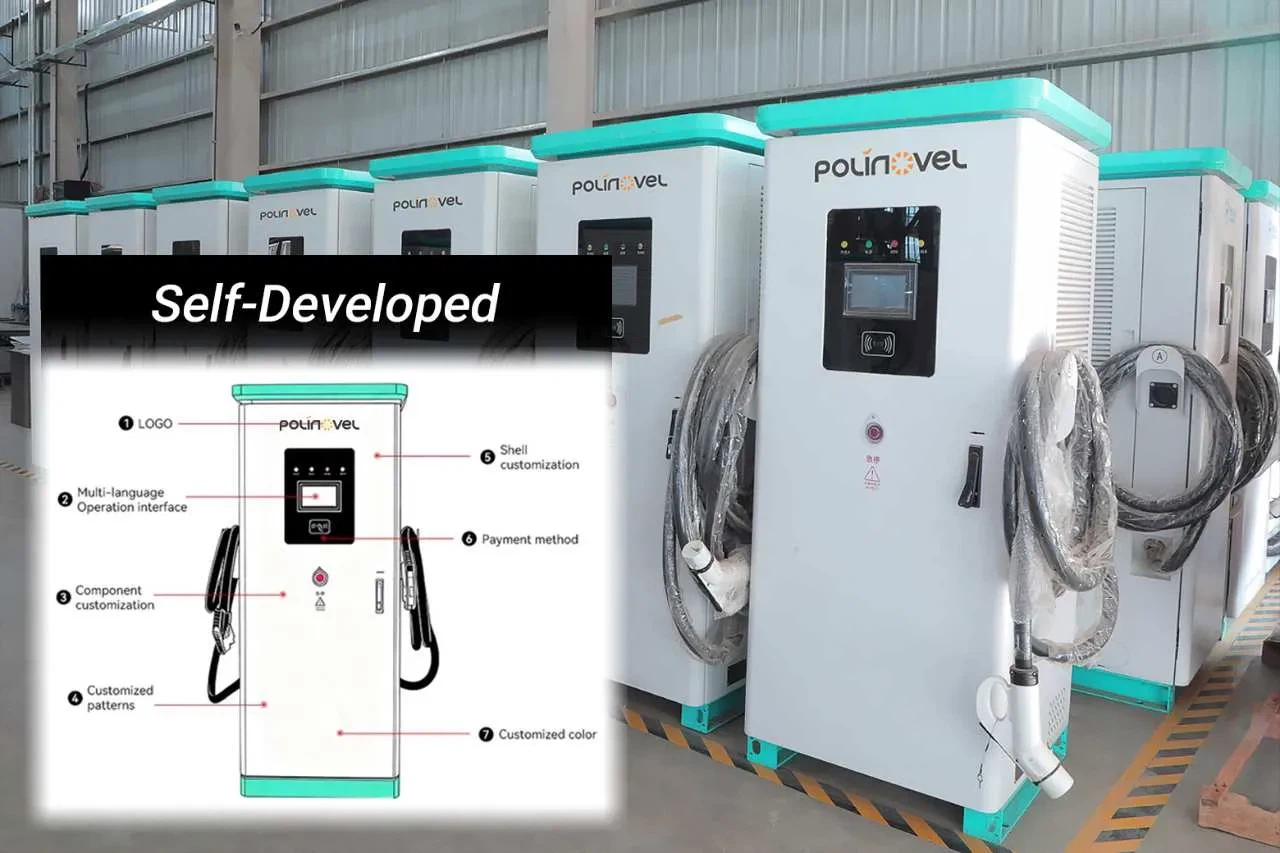
A self-developed control system enables stable operation, remote monitoring, and smooth platform integration. Smart connectivity helps you detect issues early, reduce maintenance effort, and keep charging systems running efficiently with less manual intervention.
-
Safe, Reliable, Built to Last
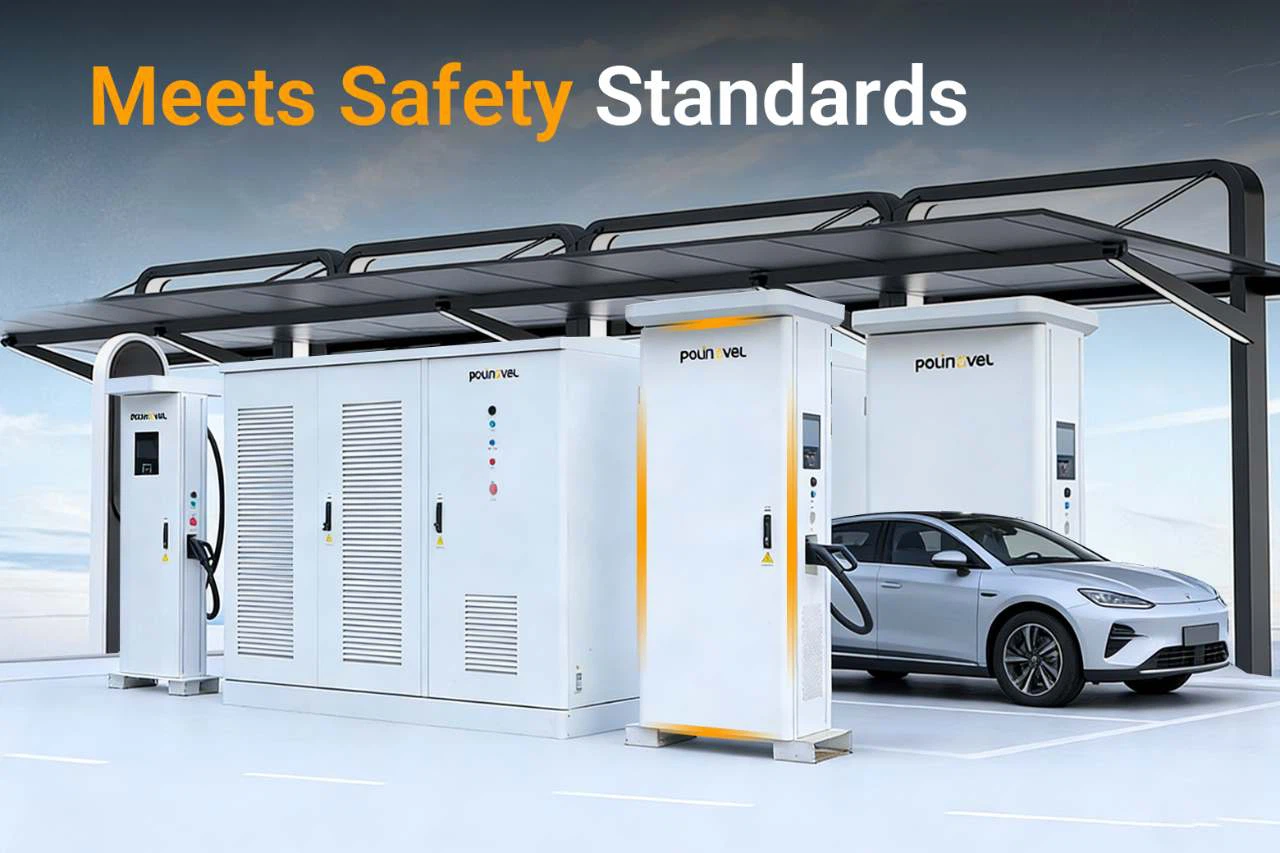
Designed with multi-layer protection, robust enclosure, and strict safety standards, Polinovel EV chargers deliver reliable performance over long service life. Global compliance supports worldwide deployment and reduces operational risk.
Explore Our Intelligent EV Chargers
-
![480-990KW Electric Vehicle DC EV Charging Station]() 480-990KW Electric Vehicle DC EV Charging StationPowerful, reliable, and high-efficiency DC charging for commercial fleets and high-demand applications.● Up to 990 kW DC output for fast chargingg● Split-type design with dynamic load allocation●read more
480-990KW Electric Vehicle DC EV Charging StationPowerful, reliable, and high-efficiency DC charging for commercial fleets and high-demand applications.● Up to 990 kW DC output for fast chargingg● Split-type design with dynamic load allocation●read more -
![60-360KW Dual-gun DC EV Fast Charger]() 60-360KW Dual-gun DC EV Fast ChargerHigh-power DC fast charging from 60 kW to 360 kW in a single cabinet, designed for commercial and fleet applications that demand fast turnaround, intelligent power control, and reliable long-termread more
60-360KW Dual-gun DC EV Fast ChargerHigh-power DC fast charging from 60 kW to 360 kW in a single cabinet, designed for commercial and fleet applications that demand fast turnaround, intelligent power control, and reliable long-termread more -
![7KW-22KW Wall Mounted AC Level 2 EV Charger]() 7KW-22KW Wall Mounted AC Level 2 EV ChargerDesigned for workplaces, commercial parking, and public charging locations, the 7–22 kW Integrated Charger delivers reliable AC charging with smart control, flexible installation, and proven safety.●read more
7KW-22KW Wall Mounted AC Level 2 EV ChargerDesigned for workplaces, commercial parking, and public charging locations, the 7–22 kW Integrated Charger delivers reliable AC charging with smart control, flexible installation, and proven safety.●read more


Frequently Asked Questions
Explore common questions about our EV chargers to understand charging power, safety protection, and fast charging performance for different applications.
-
How do Polinovel EV chargers ensure charging safety?
Polinovel EV chargers feature multiple built-in protections, including overvoltage, overcurrent, short-circuit, and leakage protection, ensuring safe, stable, and reliable charging for vehicles, users, and power systems.
-
What charging power levels do you offer?
Our EV chargers cover a wide range, from 7 kW for residential use to 990 kW for high-demand commercial and fleet applications, allowing you to choose the optimal solution for your scenario.
-
How fast can your EV fast chargers charge an electric vehicle?
Charging speed depends on the vehicle’s battery capacity and the charger’s power output. Polinovel EV fast chargers deliver high-power DC charging to significantly reduce charging time, helping vehicles and fleets get back to operation quickly.
Ev Charger Solutions
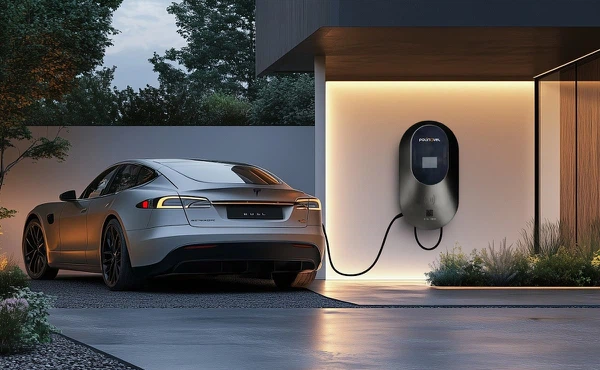
We offer comprehensive ev charging solutions:Covering residential, commercial, and public charging scenarios, our solutions employ cutting-edge charging management systems designed for flexible power configuration, rapid installation and deployment, and safe and reliable operation.
15+
Years Industry Experience
3000+
Installations Worldwide
24/7
Technical Support
5 Year
Warranty
How to choose a suitable smart ev charger
With the increasing popularity of new energy vehicles, the demand for home and commercial charging facilities is constantly growing. A suitable smart electric vehicle charger not only ensures safe and efficient charging, but choosing the right equipment also safeguards the reliable use of your vehicle for years to come.
Charging power and speed
Home chargers are typically categorized as follows:
- Level 1 :(1.4-1.9kW): Uses a standard household outlet; a full charge may take 20-40 hours, suitable for users with short daily commutes.
- Level 2 :(7-22kW): Requires a dedicated circuit installation; a full charge takes 4-8 hours; the mainstream choice for home users.
We recommend matching your power requirements to your average daily driving mileage and available charging time.
Intelligent Function Evaluation
The core value of a smart charger lies in its software capabilities:
- Remote control: Start, stop, and check charging status anytime via an app.
- Scheduled charging: Automatically charge during off-peak hours to save on electricity bills.
- Energy consumption statistics: Track power consumption and charging costs.
- OTA updates: Firmware can be remotely updated to continuously receive new features.
- Load balancing: Intelligently adjusts power to avoid overloading household circuits.
Compatibility and Interface Standards
Ensure the charger is compatible with your vehicle:
- Interface type: Chinese standard GB/T, European standard Type 2, American standard J1772, etc.
- Communication protocol: Does it support open protocols such as OCPP?
- Vehicle brand compatibility: Some brands have specific functional requirements.
Security and Certification
Safety is the bottom line and cannot be compromised:
- Certification Standards: Check for authoritative certifications such as CCC, CE, and UL.
- Protection Functions: Ensure comprehensive protection against overcurrent, overvoltage, leakage, and overtemperature.
- Protection Rating: Outdoor installation requires IP65 or higher waterproof and dustproof rating.
- Grounding Test: Ensure electrical safety of the installation environment.
Installation and after-sales service
- Installation Requirements: Assess whether your home's electrical circuit capacity meets your needs and whether expansion is required.
- Installation Costs: In addition to equipment costs, wiring and meter upgrades may incur additional expenses.
- Warranty Policy: Mainstream products typically offer a 5 year warranty.
- Customer Service Response: Choose a brand with a comprehensive after-sales service network.
Grade and cost performance
- Entry-level: Basic smart functions to meet daily needs
- Mid-range: Comprehensive functions, reliable brand
- High-end: High power, advanced smart functions, and superior build quality
Key features and advantages of ev chargers
Our ev chargers combine cutting-edge technology and innovative design to provide safe, reliable, smart, and efficient charging advantages for home and mobility applications.
AC Chargers and DC Chargers
Intelligentization and Interconnectivity
Power Technology Development
Charging speed has been greatly improved
Innovation in Heat Dissipation Technology
Enhanced Compatibility and Safety Assurance
Practical Industry Applications of EV Chargers
Residential/Private Charging Scenarios
Public Charging Infrastructure
- Commercial Parking Lot Charging: Charging facilities in shopping malls, supermarkets, and hotel parking lots
- Roadside Charging Stations: Public charging points along urban roadsides
- Transportation Hub Charging: Parking and Ride (P+R) parking lots at airports, train stations, and subway stations
- Fast Charging Station Network: DC fast charging stations deployed along highways
Industrial and Special Vehicles
Electric Mining Truck Charging Systems, Underground Electric Transport Equipment
Electric Tractors, Baggage Carts, Electric Shuttle Bus Charging
Factory Parks:
Electric Forklift Charging, Electric Commuter Vehicles Within the Factory Area
Certifications & Compliance
Our ev chargers meet the highest industry standards and regulatory requirements:
UL9540 & UL9540A
UL1741 & IEEE 1547
IEC 62619 & IEC 62933
CE & RoHS
ISO 9001 & ISO 14001
We are one of the most professional ev charger manufacturers and suppliers in China, specialized in providing high quality customized service. We warmly welcome you to wholesale high-grade ev charger made in China here from our factory.