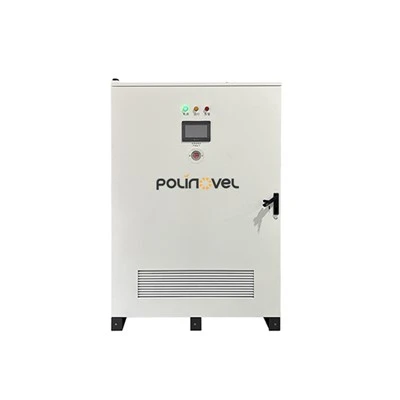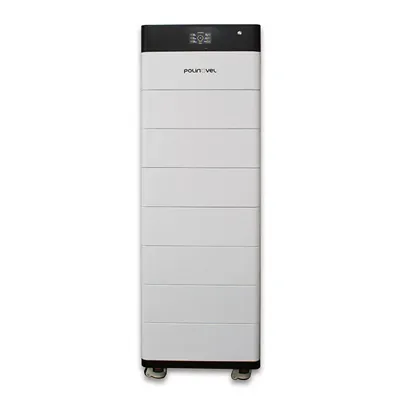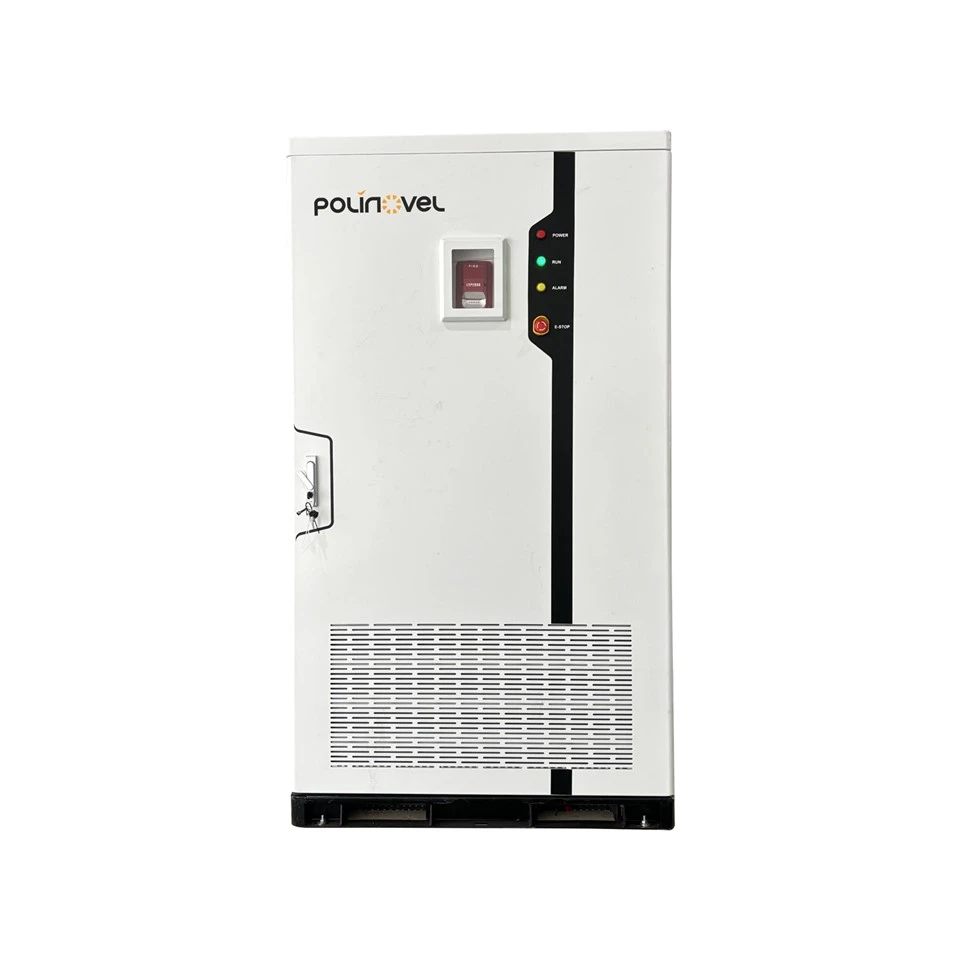


Product Advantages
Why This 241kWh Cabinet BESS Stands Out

Grade A LiFePO4 · 314Ah
1P240S single-string - no parallel imbalance. 100% factory-screened ≤3mV deviation per IEC 62620.

Liquid / Air Cooling Configurable
Glycol cold plates for >40°C environments: ±2°C cell uniformity, 15–20% longer cycle life vs air-cooled in hot regions.

All-in-One Modular Integrated
Battery + PCS + BMS + EMS + STS + cooling + fire suppression in one IP55 outdoor enclosure. Zero on-site assembly.

5-Layer Safety Architecture
Cell BMS → module fuse → rack thermal barrier → cabinet fire suppression → system emergency disconnect. Each independent.

≥89% DC Round-Trip Efficiency
IGBT-based PCS. AC-AC ≥86%. Liquid-cooled maintains 1–2% higher efficiency in >40°C environments.

Cloud EMS + Remote O&M
Real-time SOC/SOH/power/temperature dashboards. Anomaly alerts. OTA firmware updates. API for SCADA integration.
System Architecture
Inside the Integrated Cabinet BESS
Six subsystems, one enclosure. No external matching required.
125KW Bi-directional PCS
Grid-tied + off-grid modes. STS ≤20ms transfer. 380V/400V/415V 3-phase, 50/60Hz.
Energy Management System (EMS)
Peak shaving, TOU arbitrage, solar self-consumption, demand response. SCADA API.
Battery Management System (BMS)
Cell-level V/I/T monitoring. Active balancing across 240S string. SOC/SOH ±2% accuracy.
Static Transfer Switch (STS)
Sub-20ms grid↔off-grid. UPS-grade critical-load continuity.
Thermal Management & Cooling
Air: IP55 forced ventilation. Liquid: glycol cold plates, ±2°C uniformity.
Fire Suppression System
Smoke/gas detect → aerosol rapid → perfluorohexanone flooding. Zero residue.
241kWh Cabinet BESS Specification
BatteryParameter
| Model | CBS240 | |
| Rated Voltage | 768V | |
| Rated Capacity | 314Ah | |
| Energy | 241kWh | |
| Operating Voltage Range | 624-864V | |
| Series and Parallel Connection | 1P240S | |
System Parameter
| Grid Standard | 3L+N+PE |
| Rated Power | 125KW |
| Grid Voltage Range | 380V (-15% to +10%) |
| Rated Current | 190A |
| Maximum Conversion Efficiency | 97% |
| Over-loading Ability | 110% 1min |
| Rated Frequency | 50Hz |
| Grid Frequency Range | 50Hz±2.5Hz |
| Grid Total Distortion Rate (THDi) | ≤3% at full load |
| Three-phase Unbalance Degree | 100% |
| Power Factor | -1~+1 adjustable |
General Parameter
| Cooling System | Liquid cooling (air cooling optional) |
| Fire Extinguishing System | Perfluorohexanone + aerosol dual-stage |
| Operating Temperature | -20~50℃ |
| Noise | ≤60dB |
| IP Grade | IP54 |
| Size (W×D×H) | 1195×1400×2140mm (47.1×55.1×84.3in) |
| Weight | ≤2.8 ton |
Note: Standard conditions. Cooling, inverter, certifications configurable per project. Download Full Datasheet (PDF)
The Cabinet BESS are officially listed as compatible by several globally recognized inverter manufacturers. Each product has undergone rigorous testing and validation to ensure seamless communication, reliable operation, and full compatibility across diverse inverter platforms.


Certifications

241kWh Cabinet BESS - Technical FAQ
Q: Why does the 241kWh use 1P240S instead of parallel strings, and what's the real-world impact?
A: 1P240S puts 240 cells in series with zero parallel strings. This eliminates inter-string current imbalance - a common root cause of premature capacity fade in multi-parallel designs. With only one string, the BMS manages a simpler, more predictable charge/discharge profile. The trade-off: every 314Ah cell must pass tighter incoming screening (≤3mV, ≤5mΩ) to avoid weak-link degradation. In practice, this means more consistent cycle life across the full 241.15 kWh - users see less SOH divergence between years 3 and 10 compared to 2P or 4P architectures of similar total capacity.
Q: If a cell goes into thermal runaway inside this cabinet, what stops it from reaching adjacent modules?
A: Five layers fire sequentially: cell BMS flags the anomaly in <500ms and isolates it; module fuses cut fault current before propagation; rack-level ceramic barriers block heat transfer physically; if temperature or gas levels still rise, the cabinet's perfluorohexanone + aerosol system floods the compartment automatically (no residue, no electronic damage); and finally the STS disconnects the entire cabinet from the grid in ≤20ms. Because this is LiFePO4 - not NCM or NCA - the failing cell does not release oxygen, which is the main propagation driver in ternary chemistries. No layer depends on another to function. For a deeper look at how UL testing validates these safety layers, see our guide on BESS UL certification.
Q: 241kWh nominal, but how much AC energy actually comes out per full cycle?
A: At default EMS settings (5% bottom SOC reserve, 2% top), usable DC capacity is ~224 kWh per cycle. Multiply by ≥86% AC-AC round-trip efficiency (at 25°C, 0.5C) and you get roughly 193–207 kWh AC delivered to load - the range depends on ambient temperature and C-rate. In hot climates (>40°C), the liquid-cooled variant delivers 1–2% higher efficiency than air-cooled because tighter thermal control reduces internal resistance. If your project requires maximum output, the EMS SOC reserves are adjustable - but narrower reserves trade longevity for short-term capacity.
Q: This cabinet weighs ≤ 2.8 tons - what does the site need to support it?
A: Foundation: level concrete pad or steel frame rated ≥4,000 kg. The unit (1400×1300×2387 mm) needs 800mm clearance in front for service access and 300mm on other sides for ventilation. A standard ≥3.5t forklift can position it - no crane. Electrical: 3-phase 380/400/415V AC connection, local-code grounding, Ethernet or RS485 cable for EMS. Polinovel ships dimensioned foundation drawings and cable routing guides with every order, and offers free remote commissioning support via video call.
Q: When I parallel 4–8 of these 241kWh cabinets, how does the EMS prevent uneven aging?
A: The centralized EMS runs a weighted SOC balancing algorithm each control cycle (~100ms): cabinets with higher SOC discharge proportionally more, lower-SOC units receive more charge current. This keeps all cabinets within a tight SOC band and prevents any single unit from cycling disproportionately - which is the main cause of uneven aging in parallel BESS systems. Each cabinet retains independent BMS and PCS, so if one trips on a fault, the others absorb its load seamlessly. Communication: Modbus-TCP over Ethernet, 1-second polling. For systems >2 MWh, Polinovel recommends containerized BESS for better $/kWh at scale.
Q: Can the 125KW PCS handle grid-tied peak shaving during the day and off-grid backup at night in the same installation?
A: Yes - the EMS supports time-scheduled mode switching. Example: grid-tied TOU arbitrage 6AM–10PM, automatic off-grid backup 10PM–6AM. The STS handles each transition in ≤20ms. For setups where some loads need to be grid-tied while others run off-grid simultaneously (split-bus), additional switchgear is required beyond the standard configuration. Contact Polinovel engineering for split-bus project scoping and pricing.
Technical Insights for C&I Energy Storage

How Much Does a BESS Actually Cost in 2025?
Turnkey pricing, hidden costs, and ROI methodology for cabinet & container projects.

Large Scale Energy Storage - What's Changed?
Duration trade-offs, manufacturing constraints, and why EMS software matters more than people think.

When to Scale from Cabinet to Container BESS
Capacity thresholds, cost breakpoints, and form factor decision framework.
Hot Tags: 125kw 241kwh outdoor cabinet energy storage system, China 125kw 241kwh outdoor cabinet energy storage system manufacturers, suppliers, factory