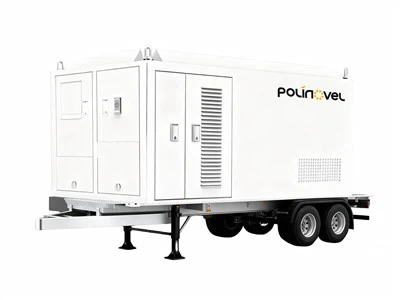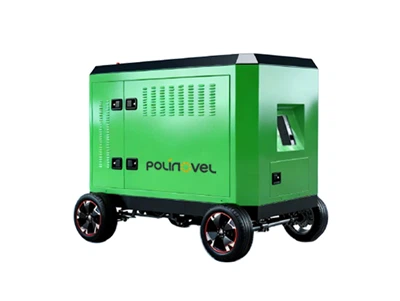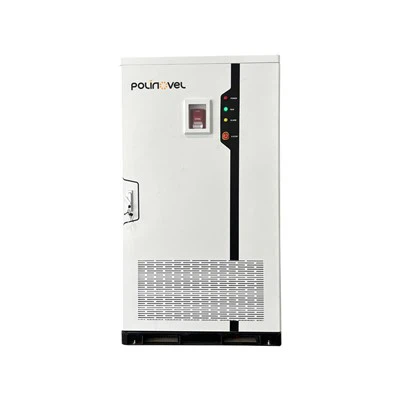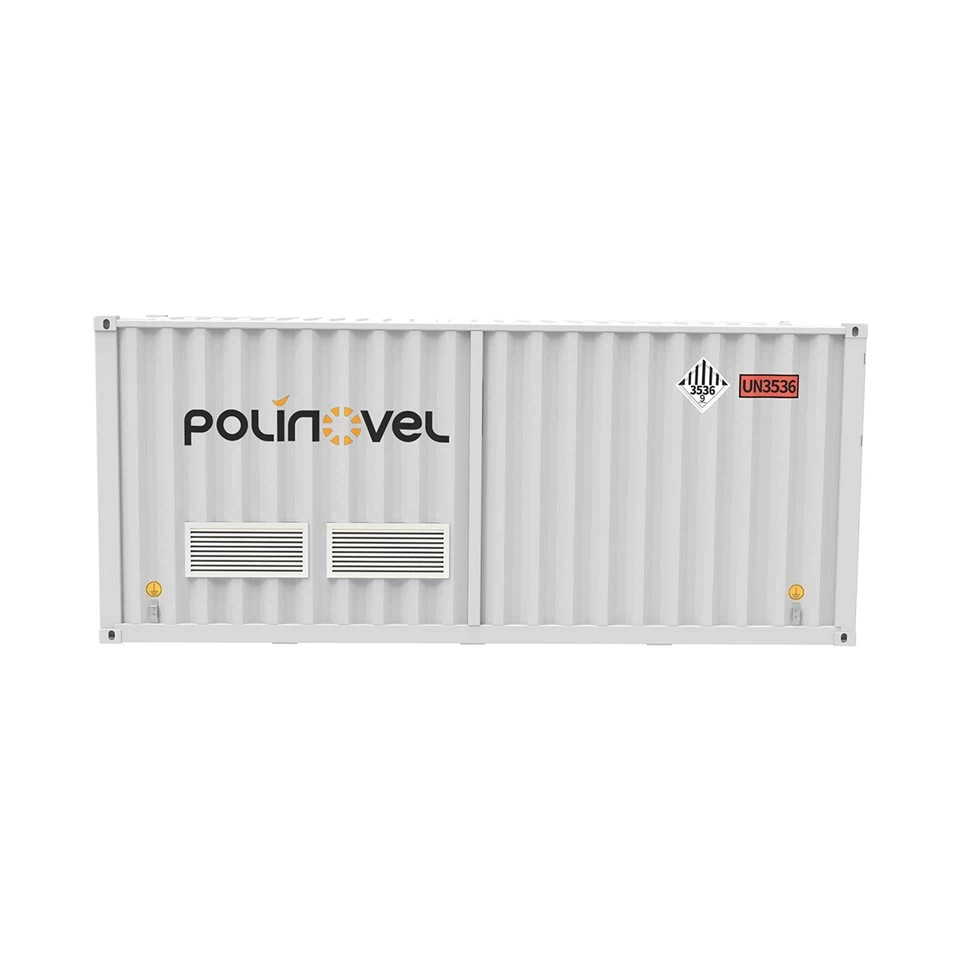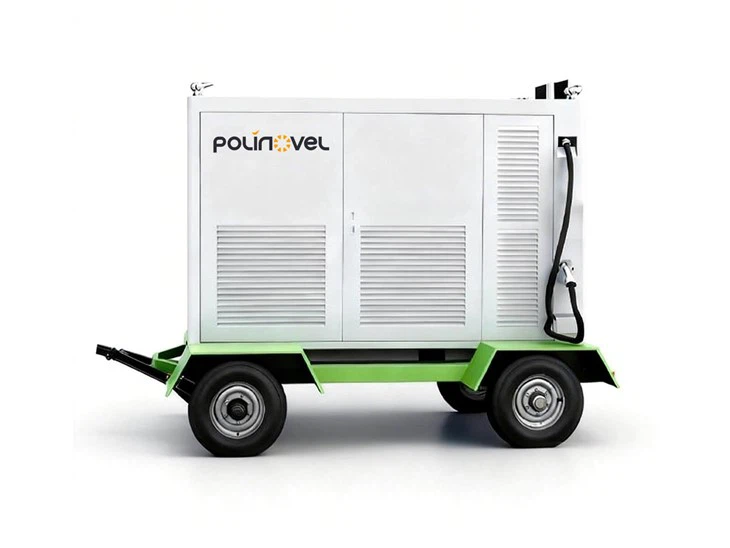


627kWh 320KW Mobile Battery Energy Storage System
The 627kWh 320kW Mobile BESS provides high-capacity, stable energy for industrial, commercial, and emergency applications. With its large 627 kWh capacity and dual high-power DC outputs, this mobile energy hub keeps EV chargers, construction sites, events, and backup systems running longer without interruption. Advanced liquid cooling and industrial-grade protection ensure safe, reliable operation even under heavy loads, while its mobile design allows fast deployment with minimal setup.

Optimized for Your Energy Needs
Efficient Mobile Deployment
Despite its large energy capacity, the mobile design allows flexible deployment and relocation, providing high-capacity power support without permanent infrastructure.
Optimized for Long-Duty Applications
Designed for prolonged operation, the mobile bess is ideal for sites requiring continuous energy supply, such as construction projects, ports, logistics hubs, and temporary charging stations.
Industrial-Grade Protection and Safety
IP54-rated enclosure, integrated fire suppression, and precise energy metering ensure safe operation while minimizing operational risks in commercial and industrial environments.
Intelligent Control and Monitoring
A 10-inch HMI touchscreen provides intuitive system control, real-time monitoring, and simplified energy management, enabling operators to efficiently oversee mobile energy deployments.
Specification
|
systematic name
|
class
|
parameter
|
|
|
Battery System (BESS)
|
Cell
|
nominal capacity (Ah)
|
314
|
|
Operating voltage range (Vdc)
|
3.2(2.8-3.65)
|
||
|
Nominal capacity (Wh)
|
1004.8
|
||
|
Battery Module
|
Grouping Scheme
|
1P52S
|
|
|
nominal capacity (Ah)
|
314
|
||
|
Operating voltage range (Vdc)
|
166.4(145.6-189.8)
|
||
|
Rated capacity (KWh)
|
52.25
|
||
|
levels of protection
|
IP65
|
||
|
coolant passage
|
liquid cooling
|
||
|
Battery pack (system component)
|
Grouping Scheme
|
3P208S, comprising 12 battery modules arranged in a 3
parallel and 4 series configuration
|
|
|
nominal capacity (Ah)
|
942
|
||
|
Operating voltage range (Vdc)
|
665.6(582.4-759.2)
|
||
|
Rated capacity (KWh)
|
627.00
|
||
|
Energy Storage Inverter(PCS)
|
direct current side
|
Operating voltage range (Vdc)
|
615-950
|
|
maximum current (A)
|
340
|
||
|
AC side
(three-phase four-wire,3W+N+PE)
|
rated voltage (V)
|
400
|
|
|
voltage deviation
|
-15%~+15%
|
||
|
power rating (KW)
|
210
|
||
|
maximum current (A)
|
334
|
||
|
Rated grid frequency (Hz)
|
50/60
|
||
|
Rated power (maximum power)(KW)
|
320
|
||
|
Charging system
|
input side
|
Maximum input power (A)
|
880
|
|
Input voltage (Vdc)
|
250-850
|
||
|
Number of output interfaces
|
2 lanes
|
||
|
outlet side
|
output power range (KW)
|
3-250 (rated power 160KW)
|
|
|
current range (A)
|
2-250
|
||
|
voltage range (V)
|
200-1000 (rated voltage 1000)
|
||
|
Constant (imp/KWh)
|
50
|
||
|
Measurement parameters
|
class of accuracy
|
0.5
|
|
|
measurement unit
|
KWh
|
||
|
Interface 1GB/T National Standard
DC Power Supply Base 1
|
1000Vdc , 250A
|
||
|
inputoutput interface
|
DC input
|
Interface 2GB/T National Standard
DC Power Supplementing Socket 2
|
1000Vdc , 250A
|
|
Interface 3GB/T National Standard
DC Discharge Gun 1
|
1000Vdc , 250A
|
||
|
DC output
|
Interface 4GB/T National Standard
DC Discharge Gun 2
|
1000Vdc , 250A
|
|
|
Interface 5 AC Interface 1
|
400Vac, 400A emergency power outlet
|
||
|
Exchange input/output through
the same port (Note: optional,
additional cost)
|
Interface 6 AC Interface 2
|
230Vac, 10A, National Standard Five-Pole
|
|
|
cooling-down method
|
Battery compartment liquid cooling + electrical
compartment air cooling
|
||
|
system parameter
|
essential parameter
|
fire extinguisher system
|
Gas Bonding
|
|
levels of protection
|
IP54
|
||
|
working temperature
|
-10℃-50℃
|
||
|
Size (length*width*height)
|
3205mm*1740mm*2117mm
|
||
|
weight of equipment (T)
|
Actuals
|
||
|
Outer shell material
|
Precision sheet metal
|
||
|
Corrosion resistance
|
C4
|
||
|
human-computer interface HMI
|
10-inch touch screen
|
||
Key Parameters
| Parameter | Meaning / Description |
|---|---|
| 627 kWh | Rated Energy Capacity: In theory, the energy storage system holds 627 kWh of electricity. In practice, the usable time depends on the continuous charging duration for electric vehicles (e.g., units, vehicles). |
| 320 kW | Rated Power Output: The system's maximum continuous power output is 320 kW, allowing it to sustainably discharge electricity (true continuous ≈ 1.96 hours if fully discharged to empty). |
| Ratio Interpretation (kW vs kWh) | kWh represents energy capacity, kW represents power output. The two combined can form a "micro energy storage system" concept. |
Example: If the system continuously outputs 320 kW, it can provide power for approximately 2 hours (627 kWh ÷ 320 kW). The actual usable energy will be affected by the discharge strategy and efficiency.
Working Principle and Operating Logic
Charging Phase
Energy is drawn from the power grid, generator, or renewable energy sources, and the PCS (Power Conversion System) converts AC power to DC power for battery storage.
Storage Phase
Electrical energy is stored in the battery cells in chemical form, and the BMS (Battery Management System) ensures safety and stability.
Discharge Phase
When demand arises, energy is released, and the PCS converts the battery's DC power to AC power (or provides DC output to the load).
Scheduling Algorithm
Optimal scheduling ensures SOC (State of Charge) management, peak and off-peak optimization, lifespan optimization, and optimal economic efficiency.
Why choose us?
In the practical application of mobile energy storage systems, capacity and power are merely basic parameters. What truly determines the value of the system is its reliability, controllability, and long-term performance under complex operating conditions. In our product design and delivery, we consistently focus on these three core objectives: "usable, user-friendly, and long-lasting."
Easy to deploy and easy to manage
The real advantage of mobile energy storage is rapid deployment.
Our system is highly standardized in interfaces, control logic, and operation workflows, minimizing on-site commissioning time. Whether deployed across multiple projects or relocated between sites, you benefit from a consistent, predictable operating experience with minimal learning curve.
Lower total cost of ownership over the entire lifecycle
We look beyond initial specifications and upfront costs.
By optimizing battery operating ranges, degradation control, and intelligent scheduling strategies, the system maintains higher efficiency and lower maintenance complexity over time. This helps you reduce hidden operational costs and achieve better long-term returns, not just acceptable short-term performance.
Reliability Design for Real-World Application Scenarios
The system is engineered for real applications, not ideal laboratory environments.
Frequent start-stop cycles, partial-load operation, outdoor temperature fluctuations, and transportation-induced vibration are all considered at the design stage. Structural integrity, cooling strategies, and electrical protection are selected to ensure stable, long-term performance in demanding field conditions.
Clear, traceable, and proactive safety logic
Safety is built as a transparent, multi-layered system.
From cell-level protection to system-level interlocking control, each safety mechanism follows clear trigger logic and hierarchy. Continuous closed-loop data exchange between the BMS, PCS, and EMS allows abnormal conditions to be detected, recorded, and actively managed-rather than relying solely on passive protection.
Performance Indicators and Operational Efficiency
| Indicator | Explanation |
|---|---|
| Cycle Life | The battery can withstand a certain number of charge/discharge cycles (affected by depth of discharge). |
| Depth of Discharge (DoD) | The percentage of battery capacity that can be used (higher DoD means higher usable capacity but may shorten life). |
| Efficiency (Round-trip) | Charge-discharge energy loss ratio; excellent systems can reach above 90%. |
| Response Speed | BESS can achieve millisecond-level response or regulation. |
Typical Application Scenarios
Renewable Energy Grid Integration
Storing solar/wind power to effectively mitigate fluctuations and improve the utilization rate of renewable energy.
01
Peak-Shaving and Valley-Filling for Electricity Price Arbitrage
Charging at low prices and discharging at high prices to achieve commercial returns.
02
Grid Ancillary Services
Providing frequency/voltage support, black start capabilities, and reserve capacity.
03
Emergency/Backup Power Systems
Quickly taking over the load during power outages to improve power supply reliability.
04
Temporary/Mobile Power Needs
Rapid deployment for engineering projects, event venues, and remote operations without relying on fixed infrastructure.
05
Mobile Energy Storage Strategies and Market Trends
Mobile energy storage is one of the fastest-growing energy sectors:
Market Size Continues to Grow
- The global mobile energy storage market is expected to maintain a compound annual growth rate of 20%-30%, with the market size exceeding US$100 billion between 2025 and 2030. China, as a major manufacturing and consumption market, will continue to increase its market share.
- Factors such as the outdoor economy, emergency needs, and energy transition will continue to drive market expansion, with huge potential in sub-markets such as home energy storage and industrial energy storage.
Product Technology Continues to Upgrade
- The proportion of high-capacity, high-power products is increasing, and products in the 500-2000Wh capacity range will become mainstream, meeting the power supply needs of high-power equipment such as air conditioners and electric stoves.
- Fast charging technology is becoming widespread, with charging to 80% in 30 minutes becoming a standard feature for high-end products, improving user convenience.
Diversified Application Scenarios
- In addition to traditional outdoor and emergency scenarios, mobile energy storage will be deeply applied in fields such as film and television production, mobile medical services, agricultural operations, and backup power for telecommunication base stations, with rapid growth in demand in the professional market.
- The trend of integration with smart homes and new energy vehicles is strengthening, enabling energy sharing and intelligent management.
Market Competition Intensifies
- Brand concentration is further increasing, with leading companies expanding their market share through technological, brand, and channel advantages, while small and medium-sized brands face survival pressure.
- Price competition and technological homogenization are becoming prominent issues; companies need to improve their competitiveness through differentiated innovation and service upgrades.
Policies and Standards are Improving
- Governments in various countries will introduce more supportive policies, such as subsidies and tax incentives, to promote the development of the mobile energy storage industry.
- Safety standards and certification requirements will become stricter, and companies need to strengthen product safety design and quality control to meet international market access requirements.
In practical applications, the decision to choose the 627 kWh / 320 kW specification hinges on whether it matches the project's energy consumption patterns and deployment conditions. This level of mobile energy storage system is more suitable for roles such as temporary power supply, peak shaving, emergency backup, and renewable energy smoothing, rather than as a substitute for long-term fixed power plants. Clearly defining the usage boundaries is essential for leveraging its technological advantages.
Hot Tags: 627kWh 320KW Mobile Battery Energy Storage System, China 627kWh 320KW Mobile Battery Energy Storage System manufacturers, suppliers, factory