


High-capacity containerized battery energy storage systems (BESS) are moving beyond the 5 MWh class as utility-scale projects continue to scale. Larger systems can deliver more energy within each container, helping reduce deployed units and simplify project coordination.
However, higher capacity does not automatically mean a better solution. Buyers must evaluate system design, integration level, and long-term performance-not only the MWh rating.
This article explores what changes beyond the 5 MWh class and how project teams should evaluate higher-capacity containerized BESS solutions.
Define System Boundaries Before Comparing 5 MWh+ Containerized BESS
As the market moves beyond the 5 MWh class toward higher-capacity containerized BESS solutions, the MWh rating alone is no longer enough to compare different systems.
A higher capacity rating does not always represent the same system scope, integration level, usable energy condition, or lifecycle performance. Before comparing higher-capacity BESS, buyers need to understand what is included behind the capacity number.
First, Confirm What the System Boundary Includes
Capacity terms can represent different system configurations depending on supplier terminology and project architecture. Before comparing containerized BESS solutions, buyers should first understand the system boundary behind the MWh rating.
Common configurations include DC battery containers, DC blocks, and AC/DC integrated containerized BESS solutions.
DC Battery Container / DC Block
This configuration mainly represents the DC-side energy storage subsystem, with all AC-side power equipment deployed independently. Its core integrated components include:
- Battery cells, modules, and racks
- Battery management system (BMS)
- DC protection equipment
- Thermal management system
- Safety monitoring systems
Power Conversion System (PCS), step-up transformers, and all AC-side grid-connected equipment are typically configured and installed separately outside the container.
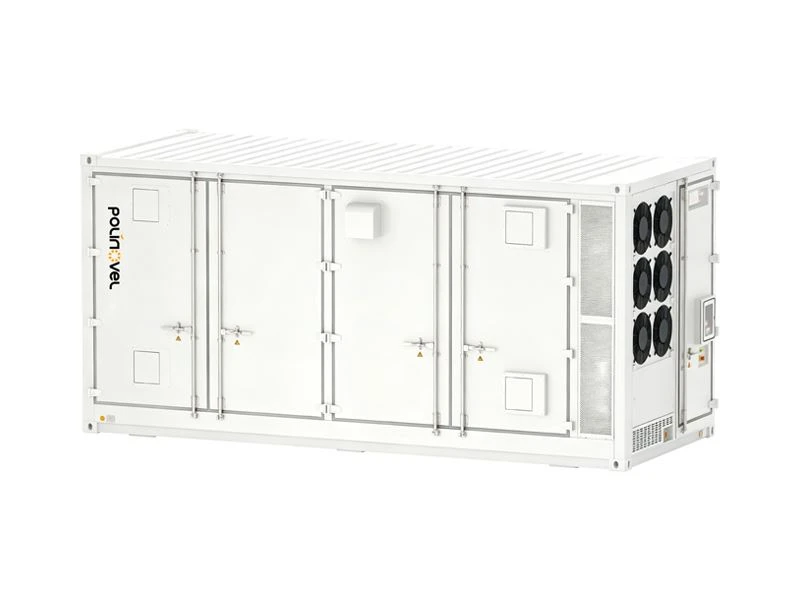

AC/DC Integrated Containerized BESS
This configuration integrates core energy storage and grid-connected functions within a single container boundary, minimizing on-site integration work. Its typical integrated components include:
- Complete battery energy storage system
- Power Conversion System (PCS)
- Energy Management System (EMS)
- Integrated AC/DC protection devices
- Auxiliary power and ventilation systems
- Communication interfaces
Some projects may also adopt other architectures, such as external PCS integration or centralized PCS configurations, depending on supplier design and project requirements.
In simple terms:
The key difference is not only the MWh rating, but also what equipment, interfaces, and responsibilities are included within the system boundary.
Second, Confirm What the Capacity Number Represents
Even when two containerized BESS solutions show the same MWh capacity, the actual usable energy output may be different. The stated capacity should be reviewed together with:
| Capacity Term | Meaning |
| Nameplate Capacity | Total rated energy installed in the battery system |
| BOL Usable Energy | Usable energy available at the beginning of operation |
| EOL Guaranteed Energy | Guaranteed usable energy after the specified service period |
Other factors should also be confirmed:
- Whether capacity is measured on the DC or AC side
- Whether auxiliary consumption is included
- Operating SOC window
- End-of-life energy guarantee
Only when the system boundary and capacity definition are clear can different containerized BESS solutions be compared fairly.
Why Large-Scale BESS Projects Are Looking for Higher-Capacity Containerized Solutions
The shift toward higher-capacity containerized BESS is not only about storing more energy in one container. It is about addressing growing challenges in site utilization, equipment integration, and project delivery.
Large-Scale Projects Are Increasing Deployment Complexity
As utility-scale projects grow, adding storage capacity often requires more BESS units, foundations, electrical and communication connections, lifting operations, and commissioning points.
At hundreds of megawatt-hours, these repeated activities become a significant part of project execution. Design decisions must therefore account for the complete delivery chain-from transport and installation to electrical integration and lifecycle maintenance.
Site Constraints Are Becoming More Important
Large battery storage projects require more than battery installation space.
Developers also need to consider:
- PCS and transformer areas
- Medium-voltage equipment
- Fire separation requirements
- Maintenance access
- Internal transport routes
- Cable pathways
In many projects, available land and site layout can become limiting factors. This is why developers are paying more attention to how much energy can be deployed within each system unit and how the complete BESS layout can be optimized.

Project Teams Need More Integrated Delivery
As BESS projects become larger, coordination between different systems becomes increasingly important.
A utility-scale BESS project may involve battery systems, PCS, Energy Management Systems, protection equipment, transformers, fire safety systems, and grid interfaces.
More independent equipment interfaces can increase integration work, commissioning complexity, and responsibility coordination between suppliers.
As a result, many project teams are looking for solutions with higher levels of factory integration, standardized interfaces, and clearer system responsibility.
Where Does Higher Capacity Create Real Value-and Where Does It Not

Higher capacity can create value when it helps reduce repeated project activities, improve BESS-side energy density, and simplify system deployment.
These benefits are realized only when capacity is matched with the right system configuration, including usable energy, power requirements, integration level, and operating conditions.
What Higher Capacity Can Potentially Reduce
Fewer System Units for Large-Scale Deployments
One of the most direct benefits of increasing system capacity is reducing the number of BESS units required for the same project energy target.
Example:
Assuming a 100 MWh project target:
| Configuration | Calculation | Required Units |
| 5 MWh BESS Unit | 100 MWh ÷ 5 MWh | 20units |
| 6.25 MWh BESS Unit | 100 MWh ÷ 6.25 MWh | 16 units |
This simplified comparison shows the potential reduction in deployed units.
For larger projects, fewer system units may help reduce repeated activities across the project lifecycle, including equipment delivery, lifting operations, electrical connections, and commissioning points.
However, system quantity should not be evaluated by nameplate capacity alone. The actual number of required units depends on factors such as usable energy, lifecycle guarantees, redundancy requirements, and availability targets.
A higher-capacity system reduces the number of units only when the systems are compared on the same basis.
Reduced Repeated Installation and Integration Work
As project scale increases, repeated installation activities can become a significant part of execution complexity. Each additional BESS unit may require:
- Site preparation
- Foundation work
- Transportation and lifting
- Cable connections
- Communication setup
- Testing and commissioning
By deploying fewer larger-capacity units, project teams may reduce some repeated site activities and coordination work.
However, this does not remove the need for project-level electrical design. Transformers, medium-voltage equipment, fire protection systems, and grid interfaces still require independent planning.
Higher BESS-Side Energy Density
Higher-capacity systems can deliver more stored energy within each deployed unit. This can be valuable for projects where:
- Available land is limited
- Installation points need to be minimized
- Site layout flexibility is important
However, BESS-side energy density should not be confused with total project footprint reduction.
System Integration Depends on Architecture
Higher unit capacity does not necessarily mean a higher level of system integration. A DC battery container with external PCS and an AC/DC integrated BESS may have similar MWh ratings but different equipment boundaries, interface requirements, and supplier responsibilities.
Integration benefits should therefore be evaluated separately from battery capacity.

What Still Requires Independent Project Design
Increasing container capacity can reduce some repeated deployment activities, but several project elements still require independent engineering design.
Power Equipment Requirements
More stored energy does not automatically reduce PCS or transformer requirements. Battery capacity mainly determines energy availability, while power equipment depends on:
- Rated power output
- Discharge duration
- Grid requirements
- Operating strategy
A higher MWh system may still require similar MW-level equipment if the power requirements remain unchanged.
Complete Project Footprint
A larger BESS unit may reduce containerized BESS quantity, but it does not automatically reduce the complete project footprint. Developers still need to consider:
- Medium-voltage equipment
- Transformer layout
- Fire protection requirements
- Maintenance access
The battery system is only one part of the overall site design.
Lifecycle Performance
Higher nameplate capacity does not automatically guarantee better long-term performance. Key evaluation factors include:
- BOL/EOL energy guarantees
- Capacity degradation
- Cycling conditions
- Operating environment
Summary Table
| Project Objective | What a High-Capacity System May Provide | What Still Requires Separate Evaluation |
| Reduce the number of system units | Fewer containerized BESS units | Usable energy and redundancy requirements |
| Reduceon-site work | Fewer foundations and external interfaces | PCS, transformer, and medium-voltage system design |
| Improve BESS-side energy density | More MWh per deployed unit | Complete site layout and operational requirements |
| Simplify system delivery | More factory integration | Transport, lifting, and local site conditions |
| Reduce interface complexity | More coordinated system functions | Availability and impact of individual system failures |
What Must Scale as System Capacity Increases
For a fixed project energy target, increasing unit capacity means each BESS unit represents a larger share of the total stored energy. This makes thermal management, fault isolation, monitoring architecture, and serviceability critical factors in maintaining system reliability.
Utility-scale BESS designs must also be evaluated against applicable codes, standards, and local requirements. For North American projects, UL 9540 addresses ESS product safety, while UL 9540A provides the test method for evaluating thermal runaway fire propagation.
Thermal Management Must Keep Up with Higher Energy Density
Higher-capacity BESS designs typically store more energy within a limited container footprint, increasing the importance of effective thermal management. This requires maintaining consistent operating conditions across cells, modules, and racks to reduce temperature variations and support long-term performance.
Important considerations include:
- Temperature consistency between battery racks
- Cooling system reliability
- Operation under different ambient conditions
- Thermal performance during high-power charging and discharging
For large-scale projects, effective thermal management helps maintain battery performance, reduce degradation risks, and support predictable system operation over the project lifecycle.

Fault Isolation Must Become More Precise
Reducing the number of BESS units can simplify deployment, but each remaining unit represents a larger share of project capacity. A fault in a high-capacity system may affect more stored energy, making detection, isolation, and recovery capabilities increasingly important.

Key functions include:
- Rack or string-level protection
- DC protection devices
- PCS protection coordination
- BMS–PCS–EMS communication
- Remote monitoring and diagnostics
The objective is not only to prevent failures, but also to limit their impact and maintain as much system availability as possible.
Serviceability Must Match Larger System Units
Higher-capacity systems also change maintenance considerations. A single container may contain more energy, more equipment, and more responsibility. As a result, accessibility and service planning become increasingly important.
Project teams should consider:
- Access to replaceable components
- Maintenance procedures
- Impact of planned shutdowns
- Remote troubleshooting capability
Transport and installation requirements must also be evaluated early, including:
- Container weight
- Lifting requirements
- Site access
- Foundation conditions
A high-capacity BESS solution is successful only when it can be delivered, operated, and maintained under real project conditions.
Summary Table:
| Design Change | What Must Scale with the System |
| More energy is stored in each unit | Thermal control and temperature consistency |
| Each unit represents more project capacity under a fixed project target | Fault isolation and availability planning |
| More functions are integrated within one system boundary | Protection, control, and interface coordination |
| Internal packing density increases | Maintenance accessibility and serviceability |
| Unit weight or transport complexity increases | Transport, lifting, and installation planning |
How Should Buyers Select the Right Containerized BESS Configuration
System selection should start with the actual project requirements, including system boundary, rated power, operating conditions, site constraints, and delivery expectations.
Choose the System Architecture Before Comparing Capacities
Before comparing capacities, buyers should define how the battery system, PCS, and other electrical equipment will be configured. Two common architectures are:
DC Battery Container with External PCS
In this architecture, the battery container and PCS are provided as separate system components. This approach may be suitable when:
- EPC teams already have preferred PCS solutions
- Project owners require flexible equipment selection
- Different suppliers need to be combined
- The project has strong integration capability
Advantages may include:
- More flexibility in component selection
- Easier adaptation to specific project requirements
- Independent optimization of battery and power conversion systems
AC/DC Integrated Containerized BESS
In an integrated architecture, more system functions are coordinated within one solution, including:
- Battery system
- PCS
- EMS
- Protection functions
- Auxiliary systems
This approach may be suitable when projects prioritize:
- Faster deployment
- Standardized system delivery
- Reduced integration coordination
- Clearer responsibility boundaries
Check Whether Higher Capacity Solves a Real Project Constraint
A 5 MWh+ containerized BESS may provide greater value when projects face specific challenges, such as:
Large-scale deployment requirements
For projects requiring hundreds of megawatt-hours of storage, reducing the number of system units can simplify repeated deployment activities.
Limited site resources
When land, installation points, or construction windows are limited, higher energy density may become an important consideration.
Need for standardized delivery
Projects with strict schedules may benefit from more factory-integrated solutions. However, higher-capacity systems may provide less advantage when:
- Project size is relatively small
- Transportation weight restrictions are strict
- Smaller fault domains are preferred
- Existing system standards are already established
- Maximum flexibility between different suppliers is required
The best configuration depends on the actual project constraints.
Provide the Right Inputs for System Configuration
Selecting a suitable containerized BESS requires clear project inputs beyond energy capacity. Project teams should provide the key design inputs that determine system configuration, including:
| Project Information | Details to Provide |
| Required Power | Rated charge and discharge power in MW |
| Required Usable Energy | Required usable capacity in MWh |
| Discharge Duration | 2 hours, 4 hours, or another target duration |
| Grid Voltage | Required grid connection voltage |
| Main Application | Renewable integration, peak shaving, grid support, backup power, or other applications |
| System Architecture Preference | DC-side system, AC/DC integrated BESS, or undecided |
| Ambient Conditions | Temperature, altitude, humidity, and site conditions |
| Available Site Area | Layout limitations and installation space |
| Required Standards | IEC, UL, local grid requirements, or project specifications |
| BOL/EOL Requirement | Required usable energy at beginning and end of project life |
| Transport Limitations | Weight, lifting, access, and logistics requirements |
| Target COD | Expected commercial operation date |
Selecting a containerized BESS requires balancing energy capacity, power requirements, system architecture, safety design, and lifecycle expectations.
With experience in containerized battery storage solutions, Polinovel supports project teams in evaluating suitable configurations based on application requirements, system boundaries, and integration needs.
Planning a containerized BESS project?
Share your required power, usable energy, application, and site conditions with Polinovel. Our team can help evaluate a suitable system configuration for your project.