

Liquid cooling vs air cooling is no longer a simple technical choice in modern BESS projects. It is a decision that directly impacts system reliability, battery degradation, and long-term project returns.
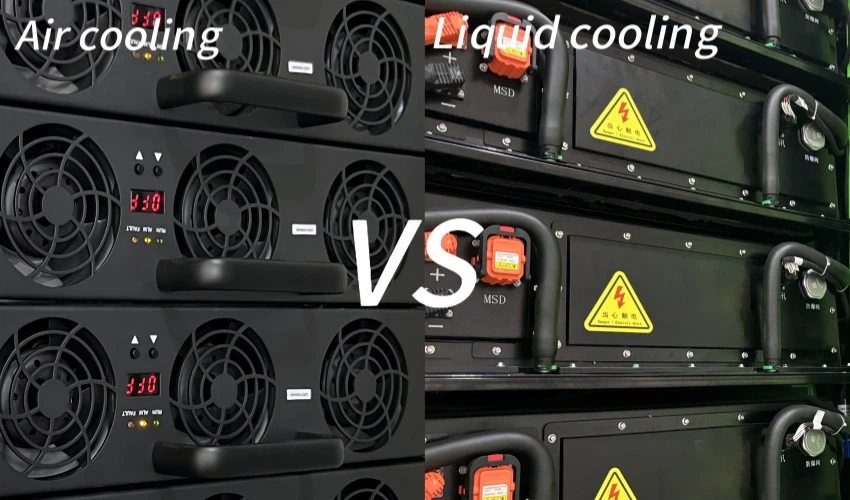
Air cooling uses fans or HVAC airflow to remove heat from battery racks, while liquid cooling uses coolant circulation and cold plates to transfer heat away from battery modules more directly. The difference is not only how heat is removed, but also how effectively battery temperature can be controlled over the life of the system.
Many developers start with air cooling because of its lower upfront cost. But in high-density systems, poor temperature control can lead to uneven cell aging, reduced efficiency, and earlier-than-expected capacity loss. This creates a real trade-off: saving on CAPEX today or protecting performance and revenue over the next 10+ years.
This guide provides a detailed analysis of the differences between liquid cooling and air cooling, helping to determine the solution best suited to specific project objectives.
How Air-Cooled Battery Systems Work
Air cooling remains the standard for BESS installations. This method relies on fans and ducting to circulate air and dissipate heat.
Key Features & Advantages:
- Lower CAPEX: Air cooling usually costs less upfront, both in equipment and installation.
- Simple Architecture: The architecture is straightforward and contains no complex piping. No coolant loops are required. This design choice minimizes maintenance and removes any potential for internal leaks.
- Easy Maintenance: The system relies on common HVAC components. This makes routine upkeep highly accessible. Local contractors can manage repairs and inspections without specialized factory support.
Limitations:
- Poor Heat Conductivity: Compared with liquid, air simply doesn't carry heat away as effectively.
- The "Hot Spot" Issue: Core cooling remains a challenge in dense configurations. Air molecules fail to reach the innermost cells consistently. These localized hot spots compromise the thermal uniformity of the system.
- High Parasitic Load: In hotter climates, fans often need to run at higher speeds for longer periods, which increases auxiliary energy use. At ambient temperatures near 40°C, air cooling consumption often reaches 8–12% of total discharged energy. In contrast, liquid cooling typically requires only 3–5%. These figures vary based on specific system configurations, but the efficiency gap remains significant.

Typical Application Scenarios:
- Small-scale & C&I Projects: Works well for smaller systems where heat is easier to control.
- Low C-rate Use: A good fit for systems running below 0.5C, such as backup power.
- Cooler Climates: Performs better in places where the ambient temperature stays relatively low.
How Liquid-Cooled Battery Systems Work
Liquid cooling is an advanced battery thermal management solution.
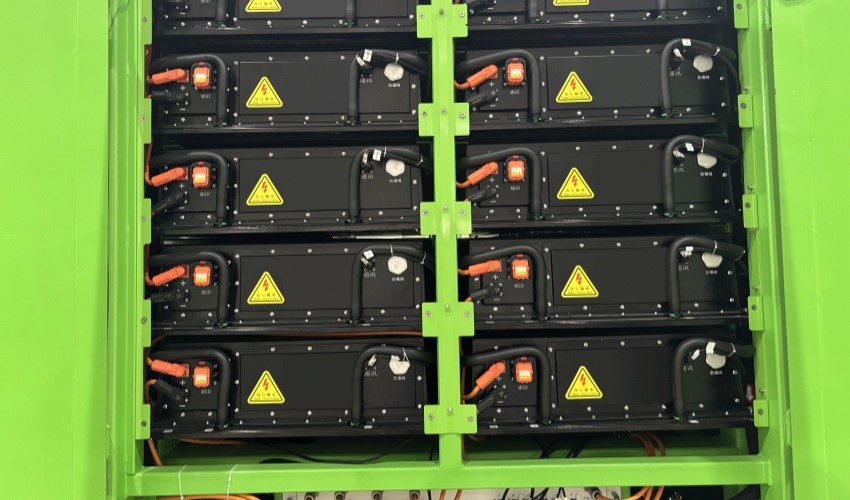
It uses a circulating coolant, usually a water-glycol mix. The liquid flows through cold plates and takes heat directly from the battery cells. As energy density goes up, more projects are choosing this method for modern BESS systems.
Key Features & Advantages:
- Better Heat Transfer: Liquid carries heat more effectively than air. This allows the system to cool faster and more efficiently.
- Precise Temperature Uniformity: It keeps the temperature difference between cells small, usually within 1–3°C. This helps extend battery life.
- More Compact Design: Without large air ducts, the system can be built in a tighter space. This makes it easier to fit more capacity into the same footprint.
Potential Challenges:
- Higher Initial CAPEX: The complexity of pumps, valves, and piping makes the upfront investment higher than air cooling.
- Complex Maintenance: It requires regular monitoring of coolant levels and system seals to prevent potential leakages. In modern designs (including Polinovel systems), automotive-grade sealed pipes, leak-proof connectors, and leakage sensors are used to minimize leak risk-typically below 0.1% under proper operation.
- System Weight: These systems are usually heavier because of the coolant and additional heat exchange components.
Typical Application Scenarios:
- Large-Scale Utility Projects: Necessary for MW-level stations where reliability and longevity are the highest priorities.
- High Power/High C-rate: Essential for fast-charging or frequency regulation applications (1C or higher).
- Extreme Environments: Works well in hot climates or polluted areas, such as regions with salt spray or heavy dust.
Liquid Cooling vs. Air Cooling: A Side-by-Side Comparison
The table below presents a detailed comparison between liquid cooling and air cooling.
| Air Cooling | Liquid Cooling | Liquid Cooling |
| Heat Transfer Medium | Air (Convection) | Liquid (Conduction) |
| Temperature Uniformity | Poor (ΔT≈5-10°C) | Superior (ΔT≤3°C) |
| Cooling Efficiency | LOW | High (Up to 30x more efficient) |
| Energy Density | Lower (Requires air ducts) | Higher (Compact design) |
| Initial CAPEX | Low | High |
| Maintenance | Simple (Filter cleaning) | Complex (Coolant/Pump checks) |
| Parasitic Power Loss | High (Fans at high speed) | Low (Efficient heat exchange) |
| Protection Grade | Lower (Open air cycle) | Higher (Fully sealed system) |
Why Cooling Choice Matters: Three Risks of Getting It Wrong
Inadequate cooling risks more than just "low efficiency"; it can trigger a total loss of asset value. Three primary factors drive this risk:
1. The "Thermal Runaway" Risk
If the cooling system cannot remove heat fast enough during high-power operation, the temperature will keep rising.
- The Risk: When heat builds up beyond control, it can trigger thermal runaway. This is a chain reaction where one failed cell affects the others. The failure can spread across the entire rack. In severe cases, it may lead to fire or even explosion, damaging the system and the site.
2. Accelerated "Capacity Fade."
High operating temperatures are a primary driver of battery degradation. This heat accelerates internal wear, directly cutting into the total energy capacity over time.
- The Risk: If the cooling system is not effective, capacity can drop much earlier than expected. In some cases, a system designed for long-term use may fall to around 70% capacity within a few years. This can make it harder to meet energy delivery targets. It may also lead to penalties, along with earlier and unplanned battery replacement.
3. The "Weak Link" System Failure
As we've discussed, air cooling often creates uneven temperatures.
- The Danger: The hottest cells in the container will degrade first. Because cells are connected in series/parallel, these few "weak links" limit the performance of the entire megawatt-scale system. You end up with a massive container where most cells are healthy, but the system is useless because a small percentage of them have "died" from heat stress.
Air Cooling vs Liquid Cooling Cost Comparison
The real cost difference between air cooling and liquid cooling is not just about the upfront price. It comes from how the system performs over time-especially in terms of efficiency, battery lifespan, and maintenance.
1. CAPEX(Capital Expenditure )
- Air Cooling: Wins on upfront price. The hardware is simpler, making the initial investment significantly lower.
- Liquid Cooling: Higher upfront cost. The complex system of pumps and cold plates usually adds a 15-25% premium to the CAPEX.
2. The "3°C Rule" and Battery Degradation
According to the Arrhenius equation, battery degradation accelerates exponentially with temperature. As a rule of thumb, for every 10°C increase in operating temperature (within 20–60°C range), the aging rate roughly doubles.
- Air Cooling: Typically results in a temperature difference (ΔT) of 5–10°C between cells. This causes "weak link" syndrome-the hottest cells fail first, reducing the capacity of the entire string.
- Liquid Cooling: Liquid cooling excels at thermal stability, holding temperature variances (ΔT) within a tight ≤3°C range. Data from the National Renewable Energy Laboratory (NREL) supports this advantage, showing that such precise thermal management can boost battery longevity by as much as 20–30%.
👉 Financial Impact: This delay prevents Battery Augmentations (≤ 0.5C), such as solarisation (adding new battery modules mid-life to compensate for capacity degradation-a costly operation in BESS projects), which is one of the most expensive maintenance costs over the system lifecycle.
3. Space and Site Preparation
ROI is also affected by the cost of the land and foundation.
- Density: Liquid cooling allows for tighter cell packing because it doesn't need bulky air ducts. It typically offers 30-40% higher energy density.
- Site Cost: You can fit 5MWh+ into a standard 20ft container using liquid cooling, whereas air cooling often caps at 3.4MWh. This reduces land lease costs and civil engineering expenses by nearly a third.
4. Maintenance and Environmental Protection
- Air Cooling: An "open" system that breathes outside air. In dusty or salty environments (coastal or desert), filter maintenance and internal corrosion significantly increase OPEX.
- Liquid Cooling: A "closed" system (IP55/IP65). It isolates the batteries from external contaminants, ensuring higher Uptime and lower emergency repair costs.
ROI Summary Table
| Metric | Air Cooling | Liquid Cooling | Financial Winning |
| Initial CAPEX | Baseline | +15% to 20% | Air Cooling (Short-term) |
| Asset Lifespan | 7-8 Years | 10-12 Years | Liquid Cooling (Long-term) |
| Daily Revenue | Lower RTE | Higher RTE | Liquid Cooling(Continuous) |
| LCOS | Higher | Lower | Liquid Cooling |
Round-Trip Efficiency (RTE) Difference
Better temperature uniformity gives liquid cooling a 1–2% edge in round-trip efficiency. Over the system's lifespan, this performance boost translates directly into superior financial returns.
The Verdict: Which One Wins the ROI Battle?
The "better" choice depends entirely on your project's duty cycle and financial horizon:
- Choose Air Cooling if: Your project is small-scale (< 1 MWh ), used infrequently for simple backup power (< 0.5 °C), and you have a very limited initial budget. In these cases, the high CAPEX of liquid cooling may not be justifiable.
- Choose Liquid Cooling if: You are deploying a utility-scale or high-density system (especially with 314Ah+ cells. The higher initial investment is a strategic move to secure lower LCOS, higher Round-Trip Efficiency, and an asset that lasts 20% longer.
How to Choose Between Air Cooling and Liquid Cooling in BESS
Choosing between air and liquid cooling is not about which one is better. It is about which one fits your project. To make the decision easier, you can look at four key factors.

1. Battery Capacity and Energy Density
As battery capacity increases, thermal management becomes more challenging.
- Air Cooling is generally suitable for systems using lower-capacity cells (around 200Ah) or projects with sufficient space for low-density layouts.
- Liquid Cooling becomes more relevant when using high-capacity cells such as 314Ah and above, where compact system design creates internal heat concentration ("heat core").
👉 In high-density configurations, liquid cooling often provides more stable temperature control.
2. Discharge Intensity (C-Rate)
The higher the discharge rate, the more heat the system generates.
- For low C-rate applications (≤ 0.5C), such as solar energy shifting or backup storage, air cooling may be sufficient.
- For high C-rate scenarios (≥ 1C), including EV charging station energy storage and frequency regulation, liquid cooling is typically preferred to handle rapid heat buildup.
👉 This is especially important in high-power BESS applications, where thermal stress directly affects system stability.
3. Site Environment and Climate
Environmental conditions can significantly influence cooling performance.
- In controlled indoor environments or mild climates, air cooling can operate efficiently.
- However, for projects in high-temperature environments, such as deserts or tropical regions, a more robust solution is required.
👉In these situations, cooling systems designed for hot climates-often using liquid cooling-provide better protection against heat, dust, and humidity. Good thermal management is key to keeping BESS systems reliable in desert and tropical regions. For coastal or chemically aggressive environments, systems can be specified with C4/C5 anti-corrosion protection, typically validated through salt spray testing (e.g., ASTM B117).
4. Financial Horizon (CAPEX vs. LCOS)
Cooling choice is not only technical. It is also a financial decision.
- Air cooling usually has a lower upfront cost. This makes it a good option for short-term or budget-limited projects.
- Liquid cooling costs more at the beginning. However, it can bring better value over time. It helps improve efficiency, extend battery life, and reduce maintenance needs.
👉 For projects with a longer horizon (10–15 years), liquid cooling often results in a lower levelized cost of storage (LCOS).
Quick Decision Bridge
For a quick comparison, see the table below.
| Project Condition | Air Cooling | Liquid Cooling |
| System Size | Suitable for small to mid-scale systems (<1MWh) |
Preferred for large-scale battery energy storage systems (>1MWh) |
| Battery Type & Density | Lower-capacity cells (~200Ah), low-density layouts | High-capacity cells (314Ah+), high-density systems |
| Discharge Rate (C-rate) | ≤ 0.5 C (solar, backup) | ≥ 1C (EV charging, frequency regulation) |
| Application Scenario | Solar energy storage, off-grid, microgrid |
EV charging, high-power BESS |
| Climate & Environment | Mild climates, indoor use | High temperature environments, desert and tropical regions |
| Initial Cost (CAPEX) | Lower | Higher |
| Long-Term Cost (LCOS) | May increase over time | Lower over lifecycle |
| Best Fit | Cost-sensitive, low-intensity projects | High-performance, long-term ROI-focused projects |
The Golden Rule: Consult the Manufacturer
Data sheets only tell half the story. The performance of a cooling system is heavily influenced by your specific site layout, local humidity, and cycling frequency.
One common misconception is that the cooling method is tied to a specific BESS format. In reality, both outdoor cabinet BESS and containerized BESS can be designed with either air cooling or liquid cooling, depending on the project requirements.
Direct consultation with the manufacturer remains the most reliable strategy. Professional engineers use thermal simulations to map out specific load profiles, ensuring the design avoids both the waste of over-engineering and the hazards of insufficient cooling.
The BESS industry is evolving. Air cooling serves small-scale or low-intensity projects as a budget-friendly, reliable choice. However, liquid cooling has become the industry standard for high-capacity systems. It is now the essential technology for next-generation, high-performance energy storage.
At Polinovel, we work with both air-cooled and liquid-cooled systems for demanding environments. Whether you are upgrading an existing site or planning a new 5+ MWh project, our team can help you estimate the LCOS based on your specific conditions.
Ready to optimize your energy storage?
Contact Our Technical Team for a free thermal risk assessment and a detailed ROI comparison. Let's build a system that stays cool, stays safe, and stays profitable for decades.
FAQ About Liquid Cooling vs Air Cooling
Q: What is the difference between liquid cooling and air cooling in BESS?
A: Air cooling uses fans and airflow to remove heat, while liquid cooling uses coolant to absorb heat directly from battery cells. Liquid cooling provides better temperature control, especially in high-density systems.
Q: Which is better: liquid cooling or air cooling for BESS?
A: It depends on the application. Air cooling is suitable for small-scale or low-power projects with limited budgets. Liquid cooling is better for high-density or high-performance systems where temperature control, efficiency, and lifespan are critical.
Q: Is liquid cooling more expensive than air cooling?
A: Yes, liquid cooling usually has higher upfront costs due to more complex components. However, it can reduce long-term costs by improving efficiency, extending battery life, and lowering maintenance needs.
Q: What is the typical temperature difference in air-cooled vs liquid-cooled systems?
A: Air-cooled systems often have temperature differences of 5–10°C between cells, while liquid-cooled systems can maintain a tighter range, typically within 1–3°C.
Q: Does liquid cooling improve energy efficiency in BESS?
A: Yes. Liquid cooling reduces the need for high-power fans and provides more efficient heat transfer, which can improve overall system efficiency and reduce parasitic energy loss.
Q: Is liquid cooling necessary for utility-scale energy storage?
A: While not always mandatory, liquid cooling is becoming the preferred choice for utility-scale projects due to its ability to handle high energy density, improve reliability, and support long-term performance.