


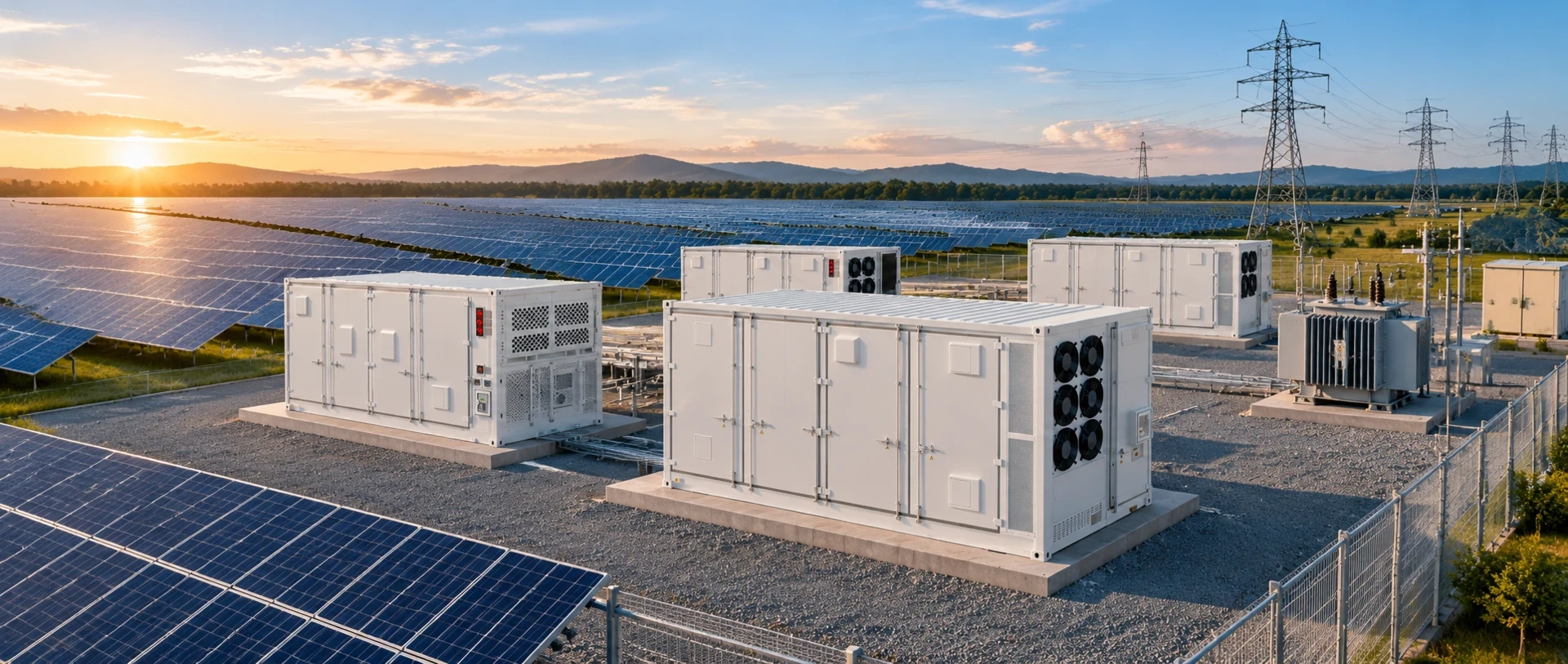
Choosing lithium-ion battery storage containers for solar farms involves more than matching battery capacity to PV output. Project developers also need to consider charging and discharging power, storage duration, system configuration, and grid connection limits.
This guide explains how to evaluate these factors and select a BESS configuration that matches different solar farm requirements.
Why Do Solar Farms Need Lithium-Ion Battery Storage Containers?
Solar farms do not always generate electricity when the grid needs it most. During peak sunlight hours, power generation may exceed grid demand or permitted export capacity. This creates a need for energy storage.
Lithium-ion battery storage containers help solar farms store surplus electricity and make better use of available solar generation.
Store Excess Solar Generation for Later Use
Solar power generation is usually highest around midday, while electricity demand may peak later in the afternoon or evening. Battery storage allows solar farms to capture excess energy and discharge it when solar output declines.
This process, known as energy shifting, is a common application of utility-scale battery storage. The U.S. Energy Information Administration (EIA) explains how batteries in regions with high solar generation can store electricity during midday and release it during evening peak demand periods.
- Store surplus electricity during peak solar generation.
- Supply stored energy when solar output decreases.
- Make better use of available solar power.
Reduce Solar Energy Curtailment
Some solar farms face grid export restrictions. When generation exceeds the permitted limit, operators may need to reduce their output.
A properly sized BESS can absorb part of this surplus electricity instead of allowing it to go unused. The EIA's overview of battery applications on the power grid also explains how storing excess solar and wind generation for later use can help reduce renewable energy curtailment.
Improve Power Supply Flexibility
Solar generation changes with weather and sunlight conditions. A BESS gives operators more control over power delivery and helps them follow planned operating schedules.
Depending on the project requirements, the system can support:
- Scheduled power delivery.
- Adjustments to power output based on grid requirements.
- Coordinated charging and discharging through the EMS.
These functions help operators manage changing generation conditions and control when stored electricity is delivered.
Solar Farm BESS Sizing: Capacity, Power, and Discharge Duration
Selecting a battery storage container for a solar farm starts with two questions: how much surplus solar energy needs to be stored, and how quickly should it be delivered? The answers depend on the project's generation profile, storage duration, and grid connection limits. Simply matching battery capacity to installed PV capacity is not enough.
Evaluate Solar Generation and Available Excess Energy
The first step is to estimate how much excess solar energy the project needs to store. Historical generation data or projected PV output can help. Compare this data with the site's grid export limit to identify:
- Daily Generation Patterns: When does solar output peak? How long does it exceed the grid export limit?
- Seasonal Variations: How does available surplus energy change throughout the year?
- Grid Export Limits: How much electricity can the solar farm deliver directly to the grid?
- Available Surplus Energy: How much excess generation can the battery capture during the charging window?
Both energy and power matter here. A solar farm may have plenty of surplus energy, but only a short time to store it. This means the BESS needs enough capacity to hold the excess electricity and enough charging power to absorb it within the available window.
For example, if PV output often exceeds the grid export limit around midday, the battery must be able to capture that surplus before solar generation starts to decline.
Match Energy Capacity with Power and Discharge Duration
Battery capacity and power output serve different purposes. Capacity determines how much energy can be stored, while power determines how quickly it can be charged or discharged.
A simple sizing example illustrates the relationship. If a project needs to deliver 2MW for four hours, the required delivered energy is: 2MW × 4 hours = 8MWh.
However, 8MWh is the required delivered energy, not necessarily the battery's rated capacity. The final configuration must account for usable SOC range, conversion losses, auxiliary consumption, and capacity degradation over time.
Check Grid Connection and Operating Limits
The BESS must also meet the site's electrical and grid requirements. Before finalizing the configuration, check:
- Maximum Export Capacity: How much power can the solar farm deliver to the grid? Can the BESS operate within this limit?
- Grid Voltage and Frequency: Do the Power Conversion System (PCS) and other electrical equipment meet the grid connection requirements?
- Charging and Discharging Limits: What are the maximum charging and discharging power ratings of the battery and PCS?
- Reactive Power Requirements: Can the PCS support the required active and reactive power at the same time?
These factors affect both battery sizing and PCS selection. Buyers should also check the PCS's continuous output capability under actual operating conditions. Its nominal power rating alone may not tell the whole story.
Battery Storage Container Configurations for Solar Farms
Choosing a battery storage container involves more than selecting the required MWh capacity. The system architecture also affects equipment layout, PCS integration, installation, and grid connection.
Here, separate and integrated configurations refer to how battery and power conversion equipment are arranged within the BESS. They are different from AC-coupled and DC-coupled PV+BESS topologies, which describe how the solar PV system connects electrically to the battery. Buyers should evaluate both aspects based on their site layout, existing equipment, and grid connection requirements.
Independent AC/DC Container BESS Solutions
An independent AC/DC container arrangement separates the battery storage equipment from the AC-side power conversion and transformer equipment. This allows project developers to plan the battery and power conversion sections according to the site's electrical design.
This configuration may be worth considering when:
- The project requires different battery capacity and power combinations.
- Separate equipment layouts better suit the available installation space.
- The EPC team wants flexibility when planning electrical connections and system integration.
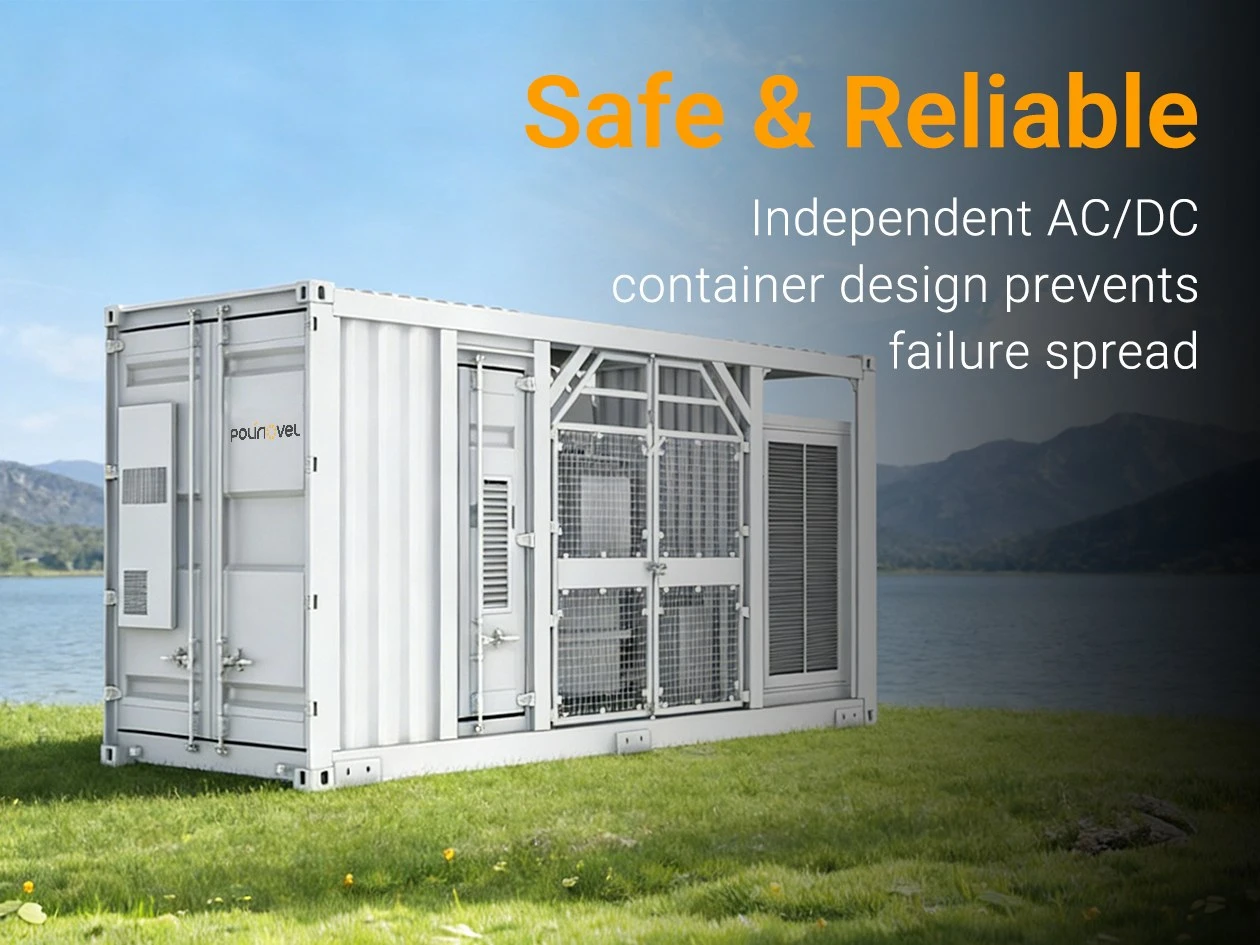
For example, Polinovel's 3.85–5MWh On-Grid Liquid-Cooled BESS offers three configurations:
| Rated Energy | Rated Power |
| 3.858MWh | 1.9MW |
| 4.244MWh | 2.1MW |
| 5.016MWh | 2.5MW |
The system uses LFP 314Ah cells and an independent AC/DC container architecture with an integrated inverter booster unit. The battery container uses liquid cooling, while the inverter booster unit is air-cooled.
AC/DC Integrated Battery Storage Container Solutions
An AC/DC integrated BESS combines more system components within a single container. Battery racks, PCS, EMS, cooling, and fire protection are integrated into the system design. This can reduce the need to coordinate multiple separate equipment enclosures during installation.
An integrated configuration may be suitable when:
- The project prioritizes a higher level of system integration.
- Installation space and equipment arrangement are important considerations.
- The buyer prefers battery and power conversion equipment supplied as a coordinated system.

Polinovel's 6.25MWh Battery Energy Storage System Container is one example of this approach. Key specifications include:
- 6.25MWh energy capacity.
- LFP 587Ah battery cells.
- Integrated PCS and EMS.
- 430kW × 4 rated output.
- Liquid cooling and integrated fire protection.
- 20ft container design.
How Do These BESS Configurations Compare?
The following table compares their main specifications and system configurations.
| Comparison | 3.85-5MWh BESS | 6.25MWh BESS |
| Energy Capacity | 3.858-5.016MWh | 6.25MWh |
| Rated Power | 1.9-2.5MW | 1.72MW |
| Architecture | Independent AC/DC containers | AC/DC integrated |
| Battery Cells | LFP 314Ah | LFP 587Ah |
| PCS Configuration | Inverter booster unit | Integrated PCS |
| EMS | Confirm supply scope | Integrated |
| Cooling Configuration | Liquid-cooled battery container; air-cooled inverter booster unit | Liquid-cooled battery system |
| Container Design | Separate AC/DC arrangement | 20ft integrated design |
The higher energy capacity of the 6.25MWh system does not mean it delivers more power. Its rated output is 1.72MW, compared with up to 2.5MW for the 5.016MWh configuration.
Dividing energy capacity by rated power gives a theoretical energy-to-power ratio of approximately 3.63 hours for the 6.25MWh system. The 3.858–5.016MWh configurations have corresponding ratios of around 2 hours. However, these figures are based on rated values and should not be treated as actual discharge durations. Actual discharge time depends on usable energy, operating SOC range, PCS conversion losses, auxiliary consumption, operating power, and battery degradation.
This distinction matters when evaluating solar farm requirements. A project focused on storing more energy may prioritize a different configuration from one that needs higher discharge power.
What Technical Specifications Should Buyers Compare?
After choosing a BESS configuration, buyers need to look beyond the headline capacity. Technical specifications determine how the system performs, connects to the grid, and operates under site conditions. Several factors deserve particular attention before making a purchase decision.
Battery Capacity and Power Rating
Rated energy and power output are two different specifications. A battery may have a high MWh rating but still deliver less power than a project requires. Before comparing products, check:
- Rated Energy: The nominal amount of energy stored in the battery.
- Usable Energy: The energy available within the permitted operating SOC range.
- Rated Power: The continuous charging and discharging power supported by the system.
- Discharge Duration: How long the system can deliver power at a specified output.
These figures should match the project's expected charging and discharging schedule, rather than being evaluated separately.
Battery Voltage and PCS Compatibility
The battery voltage range must match the operating requirements of the PCS. A mismatch can limit system operation or require additional electrical equipment.
Buyers should verify:
- DC operating voltage range of the battery system.
- PCS input voltage compatibility.
- AC output voltage and transformer configuration.
- Grid voltage and frequency requirements.
For utility-scale solar farms, these details should be checked during the electrical design stage, not left until equipment installation.
Cooling and Fire Protection
Large battery containers generate heat during charging and discharging. Temperature differences between battery cells can also affect operating consistency and long-term performance.
Liquid cooling is commonly used in utility-scale BESS to manage battery temperature. Buyers should also examine the fire protection design, including:
- Temperature, smoke, and gas detection.
- Fire suppression systems.
- Ventilation and pressure relief arrangements.
- Alarm and emergency response functions.
The protection design should be evaluated as a complete system, rather than judged by the presence of a single fire suppression device.
BMS, EMS and Communication
A containerized BESS relies on coordinated control between its battery and power conversion equipment. Buyers should confirm which control functions are included in the supply scope.
- BMS (Battery Management System): Monitors battery voltage, current, temperature, and operating status.
- EMS (Energy Management System): Manages charging and discharging according to energy requirements and operating strategies.
- PCS Communication: Coordinates power conversion with battery operating limits.
- Communication Interfaces: CAN, RS485, and Ethernet may be used for communication between system components.
Before ordering, confirm the communication protocols, control interfaces, and monitoring functions required by the project's existing or planned energy management platform.
How Do Battery Storage Containers Fit Different Solar Farm Projects?
Not every solar farm has the same energy storage requirements. A new solar installation can include BESS planning from the beginning, while an existing facility may need to work around its current electrical infrastructure. Grid export restrictions can also influence how much battery capacity and charging power a project requires.
New Solar Farm Projects
For a new solar farm, battery storage can be considered during the initial engineering and system design stages. This gives developers more flexibility when planning the relationship between PV generation, battery capacity, and grid connection. Key considerations include:
- PV and BESS Sizing: Match battery capacity and charging power with the expected solar generation profile.
- Electrical Integration: Coordinate PCS, transformers, and grid connection equipment during system design.
- Site Layout: Allow sufficient space for battery containers, power conversion equipment, and maintenance access.
Existing Solar Farms Adding Battery Storage
Adding BESS to an operating solar farm requires careful planning. Unlike a new project, the battery system must work with equipment that is already installed.
Before selecting a container, check:
- Existing PV Inverters: Determine whether the current inverter setup supports the planned BESS integration.
- Transformer and Connection Capacity: Check whether the existing electrical infrastructure can accommodate the additional battery system.
- Installation Space: Allow enough room for battery containers, power conversion equipment, and maintenance access.
- Control System Compatibility: Confirm that the new BESS can communicate with the existing monitoring and energy management systems.
An AC-coupled configuration may be worth considering for some retrofit projects, especially when retaining the existing PV inverters is preferred. The final choice depends on the site's electrical design and integration requirements.
Solar Farms with Grid Export Limitations
Solar farms with strict export limits need to assess their actual generation and export data before selecting a BESS. The goal is to understand when excess power occurs, how long it lasts, and how much energy needs to be managed.
Before choosing a configuration, project developers should review:
- PV Generation and Export Data: Identify when PV output exceeds the permitted export limit and how frequently this happens.
- Surplus Power Profile: Determine the peak excess power and how long the battery needs to absorb it.
- Charging Availability: Check whether the battery has enough charging power and available SOC capacity during these periods.
- Discharge Schedule: Determine when stored energy can be delivered and whether the grid connection allows the planned output.
A larger battery does not automatically solve export limitations. The charging window, PCS power rating, and EMS control strategy must also match the project's operating requirements.
What Should You Prepare Before Requesting a BESS Quote?
Before requesting a quote for lithium ion battery storage containers, it helps to define your project's basic technical requirements. Providing clear information allows suppliers to evaluate suitable battery capacity, power ratings, system architecture, and grid integration requirements.
You do not need to have every engineering detail finalized. However, the following information can help start the discussion
| Project Information | Details to Provide |
| Solar PV Capacity | Installed capacity in MWp or MWac |
| Required Energy Capacity | Target battery storage capacity in MWh |
| Power Output | Required charging and discharging power in MW |
| Discharge Duration | Expected operating hours |
| Project Type | New solar farm or existing facility retrofit |
| Grid Requirements | Grid voltage, frequency, and export limits |
| Installation Conditions | Project location, available space, and environmental conditions |
| Project Timeline | Expected procurement and delivery schedule |
If some specifications are still under evaluation, estimated values and preliminary project information can also be useful.
Choosing lithium-ion battery storage containers for solar farms requires more than comparing MWh ratings. Battery capacity, charging and discharging power, system configuration, and grid requirements all need to match the project's operating conditions.
Planning a solar farm BESS project? Contact Polinovel today for a tailored configuration recommendation and project quotation.