



To size an outdoor energy storage cabinet for peak shaving, first determine how much power the facility needs to reduce and how long the reduction must last. Rated battery capacity alone is not enough. Discharge power, usable energy, and charging time all affect the selection.
This article explains the key sizing factors, calculation methods, and a practical 125 kW / 261.2 kWh cabinet example.
Why Do Industrial Facilities Use Energy Storage Cabinets for Peak Shaving?
Industrial electricity demand often changes throughout the day. When several machines or production lines operate at the same time, power consumption can rise quickly. Depending on the electricity tariff, these periods of high demand may increase a factory's monthly bill.
What Are Peak Demand Charges?
Peak demand charges are tied to the highest level of power a facility draws from the grid during a billing period. The U.S. Energy Information Administration (EIA) defines these charges based on a customer's maximum electricity demand under the applicable rate schedule. Depending on the utility tariff, demand may be measured over 15-, 30-, or 60-minute intervals.
It is useful to distinguish between two terms:
- Energy Consumption (kWh): How much electricity a facility uses over time.
- Peak Demand (kW): The highest level of power drawn during a specific measurement interval.
Related Reading: KW Vs KWh Explained: Understanding Power And Energy Units
For example, two factories may consume roughly the same amount of electricity in a month but have different peak demand levels. The factory with the higher recorded peak may pay more in demand charges. This is why controlling short periods of high power consumption can make a difference to electricity costs. The actual savings depend on the utility's rate structure.
How Does Battery Storage Reduce Peak Demand?
A battery can help a factory keep its grid demand under control during periods of heavy electricity use. Instead of drawing all the required power from the grid, the facility can use stored energy to cover part of the load.
The process involves three main steps:
1. Charge: The battery recharges when facility demand is lower or when suitable energy sources, such as excess solar power, are available.
2. Discharge: When electricity demand rises, the battery supplies part of the load. This reduces the power the facility needs to draw from the grid.
3. Control: A meter at the point of common coupling (PCC) measures the facility's grid import. Where current transformers (CTs) are used, they provide current measurements to the metering equipment. The EMS compares the measured demand with a preset limit and signals the Power Conversion System (PCS) when battery discharge is needed. As facility demand drops, the EMS can adjust the discharge or schedule recharging according to the operating strategy.
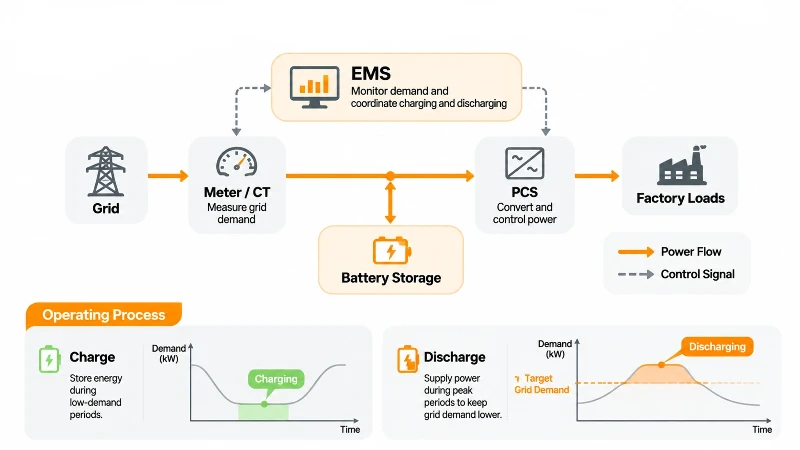
A study by Lawrence Berkeley National Laboratory also examines how behind-the-meter battery storage can help lower demand charges. Charging when electricity demand is low and discharging during peak periods allows facilities to manage the amount of power they draw from the grid.
What Determines the Size of an Outdoor Energy Storage Cabinet?
Rated capacity alone does not tell you whether an outdoor energy storage cabinet is suitable for a peak shaving project. The facility's power requirements, the length of each discharge period, and the time available for recharging all need to be considered. These three factors help determine the right configuration.
1. Peak Power Demand and Energy Capacity
Two ratings are particularly important when sizing a battery for peak shaving: power and energy capacity.
- Power (kW): Shows how much power the battery can deliver at a given time. For peak shaving, it needs to cover the difference between the facility's current peak demand and its target grid demand.
- Energy Capacity (kWh): Indicates how much energy the battery can supply. This determines whether the system can maintain the required demand reduction throughout the peak period.
A higher power rating does not necessarily mean longer discharge time. Both ratings need to match the facility's actual load requirements.
2. Discharge Duration and Usable Battery Capacity
A battery's rated capacity does not represent the amount of energy available for every peak shaving cycle. The usable amount depends on the permitted Depth of Discharge (DOD), the State of Charge (SOC) reserve that needs to be maintained, and energy losses during conversion.
These limits affect how much energy can actually reach the facility during the peak period. They should be included when calculating the required battery capacity.
3. Charging Time and Operating Schedule
A battery may cover one peak period but still be unable to support the next if there is not enough time to recharge. The facility's operating schedule therefore matters when selecting a cabinet. Check how much time is available between peak periods and whether the charging power is sufficient to restore the energy used.
Grid capacity, electricity rates, and excess solar generation can also affect when the battery can recharge and how much energy it can recover.
How to Calculate the Required Capacity of an Energy Storage Cabinet
Once the key sizing factors are understood, the next step is to translate the facility's electricity demand into specific power and energy requirements. The following four steps provide a practical approach to estimating the required cabinet capacity.
Step 1: Analyze the Facility's Electricity Load Profile
Start by reviewing the facility's historical electricity data. Monthly consumption figures show how much electricity the factory uses, but they do not reveal when demand reaches its highest point or how long those peaks last. The load profile provides this information.
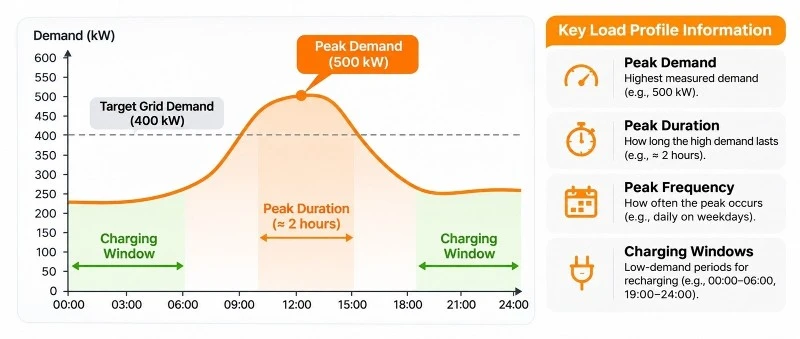
Pay attention to four things:
- Peak Demand: The highest measured average power demand during the billing period, based on the utility's specified demand interval.
- Peak Duration: How long the facility's demand stays at a high level.
- Peak Frequency: How often these high-demand periods occur.
- Charging Windows: Periods when electricity demand is lower and the battery has time to recharge.
The meter data should match the utility's demand measurement interval. For example, if the tariff calculates peak demand using 15-minute intervals, use 15-minute load data to identify the peaks that affect the electricity bill.
Step 2: Calculate the Required Power Output
Once the peak demand is identified, determine how much grid demand the battery needs to reduce.
The basic formula is: Prequired= Ppeak- Ptarget
For example, assume a factory has a peak demand of 500 kW and wants to limit grid demand to 400 kW.
| Parameter | Value |
| Existing Peak Demand | 500kW |
| Target Grid Demand | 400kW |
| Required Battery Output | 100kW |
In this case, the battery must supply approximately 100 kW during the peak period. The selected PCS must also support this output under the expected operating conditions.
Step 3: Estimate the Required Battery Capacity
Power determines how much electricity the battery can deliver at once. Discharge duration determines how much energy it needs to store.
Start with the usable energy requirement:
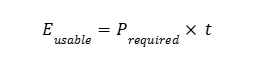
For this example, assume the battery needs to supply 100 kW continuously for two hours. This two-hour period represents the assumed discharge duration, which is separate from the utility's 15-minute demand measurement interval mentioned earlier.

However, the rated battery capacity must be higher because not all stored energy can be delivered to the AC loads.
A simplified sizing formula is:
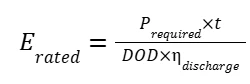
Assume a permitted DOD of 90% and a battery-to-AC discharge efficiency of 95%.
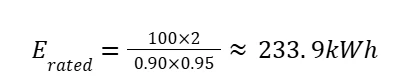
This gives the following preliminary requirement:
| Parameter | Value |
| Required Discharge Power | 100kW |
| Discharge Duration | 2 hours |
| Usable Energy Required | 200kWh |
| Assumed DOD | 90% |
| Assumed Discharge Efficiency | 95% |
| Estimated Rated Battery Capacity | 233.9kWh |
NREL's battery storage research identifies rated power, energy capacity, and storage duration as important measures of a battery system's performance.
The calculation above provides an initial estimate, not a final battery size. Other factors can change the actual requirement. These include SOC reserves, energy consumed by auxiliary equipment, operating temperature, and battery aging. The manufacturer's specified usable capacity also needs attention. If the datasheet already provides usable AC energy, do not apply DOD or conversion losses again. This would count the same losses twice.
Step 4: Check Charging Requirements
The battery needs to recharge before the next peak period. If there is not enough time, it may not be ready for the next discharge cycle. This can affect the facility's daily operation.
Check the following points:
- Charging Power: Can the PCS provide enough charging power to recharge the battery within the available charging window?
- Charging Window: How much time is available between two peak demand periods?
- Grid Capacity: Can the facility draw enough power to recharge the battery without creating another demand peak?
- Solar Availability: Is excess PV generation available to recharge the battery?
The EMS can manage charging and discharging based on the facility's load, electricity tariffs, and battery SOC. It can adjust the charging schedule to make better use of available charging periods.
Practical Example: Sizing a 125 kW / 261.2 kWh Outdoor Energy Storage Cabinet
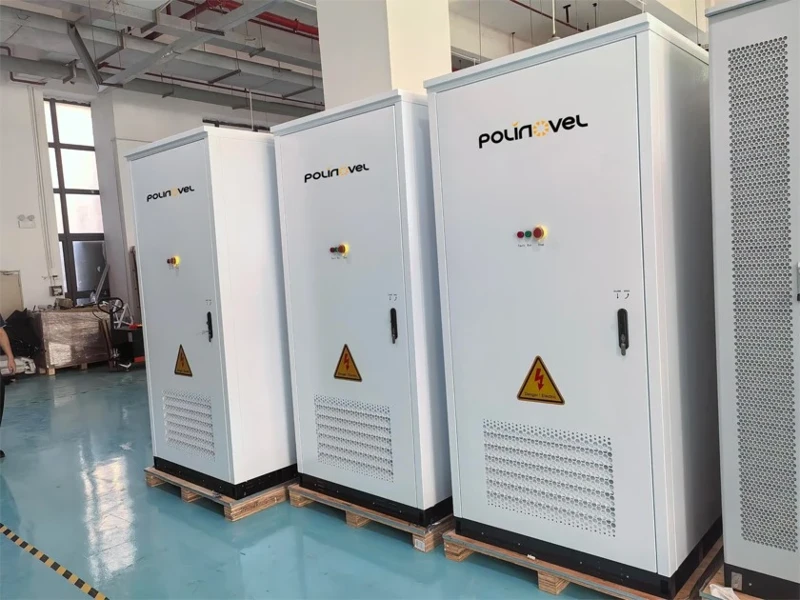
Understanding the 125 kW / 261.2 kWh Configuration
Polinovel's 125 kW / 261.2 kWh All-in-One C&I Energy Storage Cabinet is designed for commercial and industrial applications, including peak shaving and energy cost management.
Its main specifications include:
| Parameter | Specification |
| Battery Technology | LiFePO4 |
| Rated Battery Energy | 261.2kWh |
| Rated AC Output Power | 125kW |
| Maximum PCS Conversion Efficiency | 98.6% |
| Cooling Options | Liquid Cooling / Air Cooling |
| Enclosure Protection | IP54 |
These two main ratings serve different purposes:
- 125 kW rated output: Determines the maximum rated AC power the cabinet can deliver under specified operating conditions.
- 261.2 kWh rated energy: Indicates the total nominal energy stored in the battery.
Together, they provide a starting point for evaluating whether the cabinet can meet a facility's power and energy requirements.
Matching the Cabinet to Peak Shaving Requirements
Consider the factory example from the previous section. Its peak demand is 500 kW, and the target grid demand is 400 kW. The battery therefore needs to provide 100 kW for two hours.
Based on the preliminary sizing calculation, the estimated rated battery capacity requirement is 233.9 kWh.
How does the Polinovel CBS261 compare with these requirements?
| Parameter | Project Requirement | CBS261 |
| Required Discharge Power | 100kW | 125kW rated AC output |
| Estimated Rated Battery Capacity | 233.9kWh | 261.2kWh rated energy |
The CBS261 has higher rated power and battery energy than the preliminary requirements for this project:
- Power Output: The cabinet has a rated AC output of 125 kW, which is 25 kW above the required 100 kW. This gives it a 25% power margin.
- Battery Energy: Its rated battery energy is 261.2 kWh, compared with the estimated requirement of 233.9 kWh. The difference is 27.3 kWh, representing an approximately 11.7% margin based on rated capacity.
Based on these figures, the CBS261 could be a suitable configuration for the example application. However, the rated specifications alone do not confirm that the cabinet can deliver 100 kW continuously for two hours.
The manufacturer's guaranteed usable AC energy needs to be checked against the specified SOC range and operating temperature. Auxiliary consumption, battery aging, and PCS operating limits also affect the actual performance. Under site conditions, the cabinet must be able to maintain the required AC output throughout the two-hour discharge period.
For facilities with higher power requirements or longer peak periods, multiple cabinets can be connected in parallel to increase system capacity. The CBS261 supports up to five cabinets through an AC combiner cabinet.
What Should You Check Before Choosing an Outdoor Energy Storage Cabinet?
Once the power and energy requirements are clear, the next step is to check whether the cabinet can meet them under actual site conditions. For outdoor C&I installations, buyers should pay attention to thermal management, PCS and BMS configuration, enclosure protection, fire safety, and future expansion.
1. Battery Chemistry and Thermal Management
Battery chemistry and temperature control both matter when selecting an outdoor energy storage cabinet. They affect how the battery performs under different conditions and how long it can remain in service.
LiFePO4 (LFP) is a common choice for commercial and industrial energy storage. When comparing different configurations, pay attention to the following points:
- Cycle Life: Check the expected number of cycles under the specified DOD, temperature, and operating conditions. Cycle life figures should always be considered alongside their test conditions.
- Operating Temperature: Check the permitted temperature ranges for both charging and discharging. These limits may differ.
- Cooling Method: Air cooling and liquid cooling handle battery heat in different ways. The right option depends on cabinet capacity, heat generation, ambient temperature, and maintenance requirements.
Temperature control also affects battery aging over time. NREL research examines how temperature and cycling conditions influence battery performance, thermal behavior, and service life.
2. PCS, BMS, and EMS Configuration
An outdoor energy storage cabinet relies on several components to manage power conversion and battery operation. Buyers should understand the role of each:
| Component | Main Function |
| Power Conversion System (PCS) |
Converts power between DC and AC and controls battery charging and discharging. |
| Battery Management System (BMS) | Monitors battery voltage, current, temperature, and SOC. |
| Energy Management System (EMS) | Coordinates energy dispatch and manages system operation. |
Before choosing a cabinet, check:
- Whether the PCS rated output meets the required discharge power.
- Whether the BMS provides battery monitoring and protection.
- Whether the EMS supports load monitoring, peak demand control, and remote management.
3. Outdoor Protection, Fire Safety, and System Expansion
An outdoor energy storage cabinet needs to withstand conditions that may not affect indoor installations. Dust, water, and other environmental factors can affect the enclosure and its long-term operation. Fire protection and future expansion also deserve attention.
- Enclosure Protection: Check the cabinet's IP rating and make sure it suits the dust, water exposure, and installation conditions at the site.
- Fire Safety: Look at the available protection features, including temperature monitoring, smoke or gas detection, ventilation, and fire suppression. The required setup depends on the project and local regulations.
- System Expansion: Check whether multiple cabinets can operate in parallel. Also confirm the maximum number of connected units and whether the EMS can coordinate their operation.
UL Solutions provides guidance on energy storage system testing and certification. UL 9540 covers complete energy storage systems, while UL 9540A is a test method for evaluating thermal runaway fire propagation. They serve different purposes. When reviewing a system, check its actual certification documents and relevant test reports to see which standards and tests apply.
Common Mistakes When Sizing an Energy Storage Cabinet
Choosing an energy storage cabinet based on incomplete information can lead to an unsuitable system configuration. Here are four common sizing mistakes to avoid:
| Common Mistake | Why It Matters | Better Approach |
| Using Daily Electricity Consumption Alone | Total energy consumption does not show when peak demand occurs or how high it reaches. | Analyze historical load profiles and identify peak demand periods. |
| Ignoring Peak Duration | A battery may provide sufficient power but lack the energy capacity to sustain it. |
Calculate both required discharge power and duration. |
| Confusing Rated Capacity with Usable Capacity | DOD, SOC limits, and conversion losses reduce the energy available to the facility. | Account for usable energy and system efficiency when sizing the battery. |
| Overlooking Charging Requirements | Insufficient charging time may prevent the battery from supporting multiple peak periods. | Check PCS charging power, available charging windows, and EMS scheduling. |
Choosing the right energy storage cabinet starts with understanding your facility's peak demand, required discharge duration, usable battery capacity, and charging schedule. Matching these factors helps ensure the system meets actual operating needs without unnecessary investment in excess capacity.
Planning a peak shaving project? Contact Polinovel today! Share your facility's load profile, target demand reduction, and expected discharge duration. Our team can help evaluate a suitable energy storage solution for your project.