Integrated PCS & Step-Up Transformer for BESS
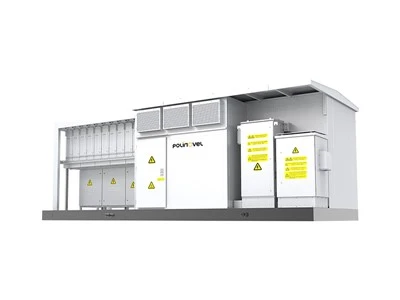
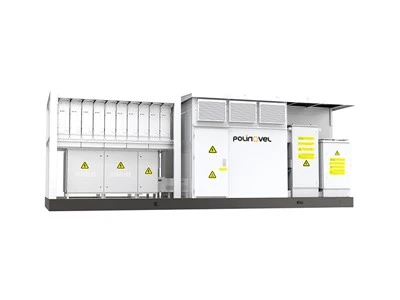
Integrated PCS & Step-Up Transformer for BESS is designed for energy storage plants that need a compact, centralized conversion and step-up solution.
By integrating PCS conversion, step-up transformer connection, battery group control, and protection design, it helps reduce equipment matching, field wiring, lifting work, and installation complexity. With independent battery group management and grid-adaptive operating modes, it supports reliable centralized BESS operation while keeping the site layout easier to deploy and maintain.

Why this integrated PCS transformer station
Our Battery Storage Container products offer a range of advantages.
PCS Conversion and Step-Up in One Unit
Unlike a standard PCS that mainly handles DC/AC conversion, this integrated solution combines centralized PCS conversion with step-up transformer connection in one unit. It helps convert battery DC power into AC output and step up the voltage for medium-voltage BESS connection.
Grid-Adaptive Operating Modes
With PQ, VF, SVG, VSG, high/low voltage ride-through, off-grid operation, and black start functions, the system can support different operating requirements in grid-side and utility-scale energy storage applications.
High-Efficiency Three-Level Topology
Built with a three-level topology, the system supports efficient power conversion with a maximum system efficiency of up to 98%. This helps improve energy transfer performance for centralized battery energy storage systems.
Multi-Level Electrical Protection
The integrated design includes electrical protection and software-hardware safety functions to support safer operation in high-power BESS projects. This helps improve system reliability where power conversion, voltage step-up, and grid connection operate together.
Specification
| DC Parameters | |
| Max. DC Voltage | 1500V |
| Max. DC Current | 1936A×4 |
| Battery Group Voltage Range | 1000–1500V |
| Number of Connectable Battery Groups | 2 / 4 |
| AC Parameters (Grid-connected) | |
| Rated Output Power | 6900kVA |
| Rated AC Voltage | 10–35kV |
| Rated Grid Frequency | 50/60Hz |
| AC Current THD | <3% (Rated Power) |
| Power Factor Adjustable Range | -1~+1 |
| System Features | |
| Isolation Method | Dry-type / Oil-immersed Transformer |
| Max. System Efficiency | 98% |
| Protection Rating | IP65 (Converter) / IP54 (Others) |
| Operating Temperature Range | -40~+60℃ (>45℃ Derating) |
| Allowable Humidity Range | 0–100% (Non-condensing) |
| Max. Operating Altitude | 5000m (>4000m Derating) |
| Cooling Method | Temperature-controlled Forced Air Cooling |
| Communication Interface | RS485 / CAN / Ethernet |
| HMI Interface | Bluetooth + APP |
| Mechanical Parameters | |
| Dimensions | 7200×3400×3050mm (Dry-type) |
| Weight | 30000kg |
System Architecture
As a centralized power conversion system (PCS) combined with a step-up transformer, this BESS PCS skid forms the electrical link between the low-voltage battery DC bus and the medium-voltage grid. It does not include the batteries themselves; it accepts 1000–1500 V DC from two or four battery energy storage containers, inverts it to AC, and steps the voltage up to a project-configured 10–35 kV for grid connection.

What is inside the integrated station
Centralized PCS section
The centralized PCS converts the battery DC power to AC and, in the reverse direction, controls the charge profile of each battery group. Independent battery group management lets two or four groups be operated and protected separately within the same power block.
Step-up transformer section
The step-up transformer for BESS raises the low-voltage AC to a medium-voltage level for grid connection. Both dry-type and oil-immersed transformers are available so the station can match site fire-safety, climate, and utility requirements.
Station controller & communication
A station controller coordinates the PCS and protection devices and exchanges data with the plant-level energy management system (EMS) over RS485, CAN, or Ethernet.
Why integrate the PCS and step-up transformer
Combining the PCS, transformer, and MV connection into one skid-mounted station changes the engineering effort an EPC contractor carries on site.
| Integrated PCS + transformer station | Separate PCS & transformer | |
|---|---|---|
| Supplier interfaces | Single integrated unit | Multiple units to match and coordinate |
| Foundations | One skid foundation | Separate foundations for each part |
| Field wiring | Pre-wired at the factory | Extensive on-site LV/MV wiring |
| Commissioning | Factory-tested, faster on site | Longer on-site testing |
| Responsibility boundary | Clear, single interface | Split across suppliers |
Configure the station to the project
The 6.9 MVA station is configured, not sold as a fixed part number -
the options below are set during engineering so a single delivered unit matches one grid voltage and one transformer type.
2-group or 4-group battery input (1000–1500 V DC)
Dry-type or oil-immersed step-up transformer
Project-configured MV output: 10, 20, 33 or 35 kV
50 Hz or 60 Hz grid frequency
Grid-following (PQ) or grid-forming (VSG) operation
Power factor adjustable across −1 to +1
Transport, installation and commissioning
The station is pre-integrated and tested at the factory, so on-site scope is mainly foundation, cabling and grid connection. With a footprint of 7200×3400×3050 mm and a weight around 30,000 kg, the unit is planned as an over-width load, and its temperature-controlled forced-air cooling system is sized for a −40 °C to +60 °C operating range.
Factory pre-integration and testing
On-site work: DC input + MV output only
Foundation and civil works by EPC
DC / MV cable entry and grounding interfaces
Factory (FAT) and site (SAT) acceptance testing
Maintenance access designed into the layout
Integrated PCS & step-up transformer for BESS - FAQ
Q: Is this product a battery?
A: No. It is a centralized PCS and step-up transformer station. It converts and steps up power between the battery DC bus and the medium-voltage grid, but the batteries are supplied separately as battery energy storage containers.
Q: What is included in the integrated station?
A: A centralized PCS, a step-up transformer (dry-type or oil-immersed), station control and communication, and auxiliary power and thermal management, with MV switchgear / RMU configured per project. DC cables, MV cables, and the foundation are normally provided by the EPC.
Q: Can it connect to 33 kV or 35 kV?
A: Yes. The MV output is configured to a single grid voltage within the 10–35 kV range, including 33 kV and 35 kV, based on the project transformer configuration.
Q: How are two or four battery groups managed?
A: The station provides independent charge and discharge management for each battery group, so two or four groups can be operated and protected separately within the same 6.9 MVA power block.
Q: Is the 98% efficiency PCS efficiency or system efficiency?
A: The listed 98% is the maximum system efficiency. The exact measurement point and load condition are confirmed on the project datasheet.
Q: Does it support grid-forming operation?
A: Yes. Alongside grid-following PQ control, the station supports VSG (grid-forming) operation, HVRT/LVRT ride-through, off-grid VF control, and black start, subject to the local grid code.
Q: What information is needed for a quotation?
A: Required power (MW/MVA), battery DC voltage range, number of battery groups, grid voltage and frequency, country, any grid-forming requirement, transformer preference, ambient temperature, altitude, and target delivery date.

Request an Engineering Proposal
Tell us your project parameters and our engineers will return a configured single-line diagram,
scope of supply and budgetary quote - no battery cells required, station only.
Hot Tags: integrated PCS and step-up transformer for BESS, BESS PCS skid, step-up transformer for BESS, turnkey BESS substation, centralized PCS station, skid-mounted MV substation, 6.9 MVA PCS transformer station, 1500V DC PCS, 10-35kV BESS transformer, energy storage transformer, grid-forming BESS, containerized MV substation, utility-scale BESS power block