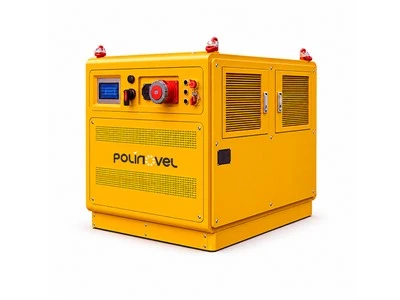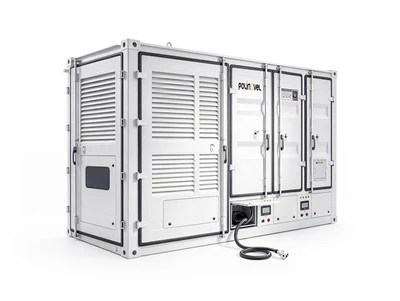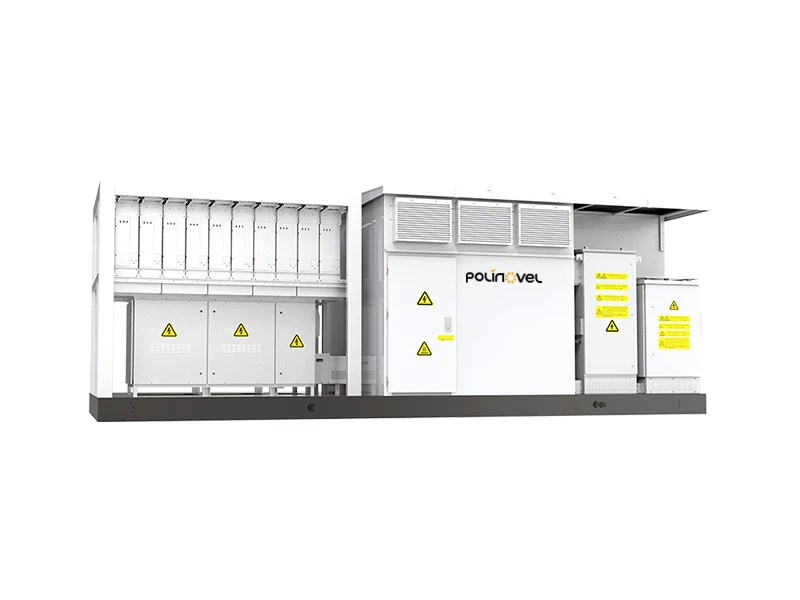
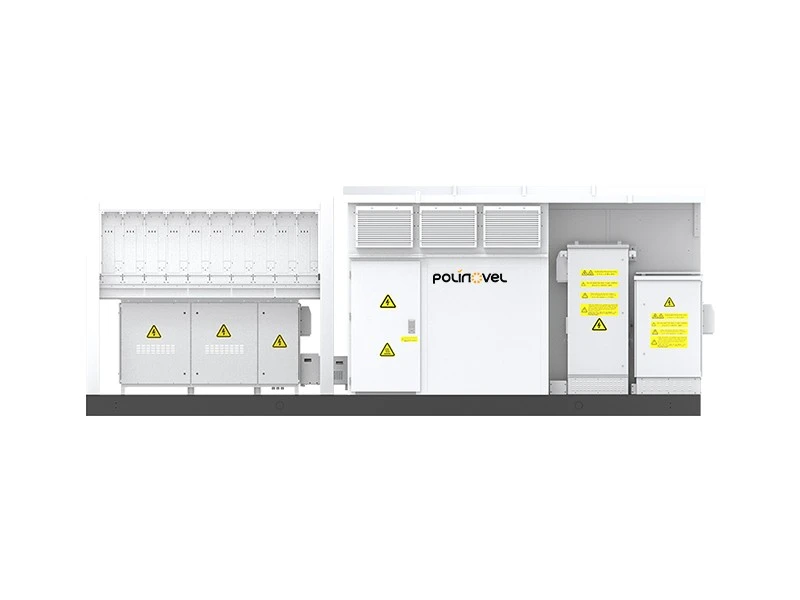
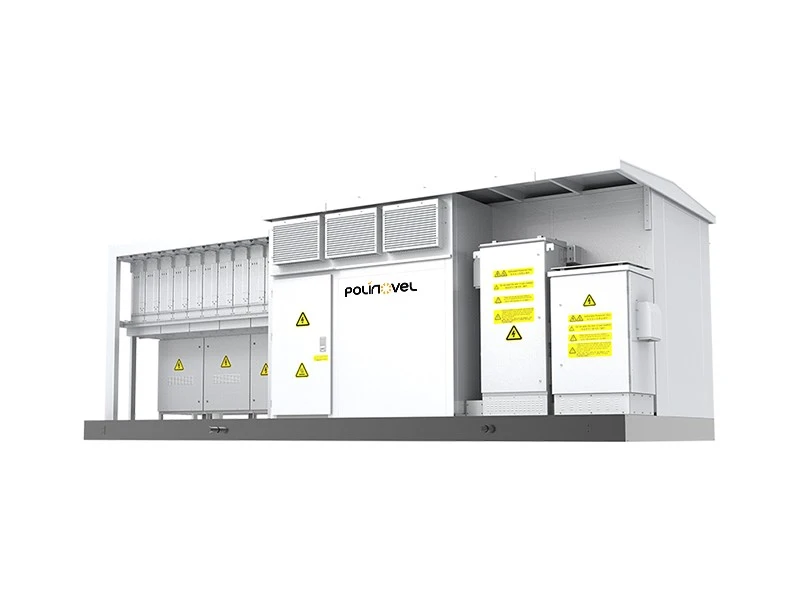
What is the PCS-Boost Container?
The PCS-Boost container is a prefabricated containerized solution that integrates a string-type Power Conversion System (PCS) with a medium-voltage step-up stage; it is designed for energy storage projects requiring flexible battery-side management and medium-voltage grid connection.It combines power conversion, voltage step-up, protection, and grid-support control in one integrated electrical unit.
With a string PCS architecture, the system is suitable for projects involving phased expansion, battery replacement, or different battery cluster conditions. It helps improve system adaptability, simplify battery-to-grid integration, and support stable long-term BESS operation.
A string architecture manages energy at the level of individual battery clusters rather than through a single shared converter. That makes the unit well suited to projects with phased expansion, staged battery replacement, or clusters that no longer share identical conditions. It sits alongside the PCS Turnkey Station with MV Transformer in the broader PCS Container range, and is offered in 4.3 MW and 5 MW configurations.
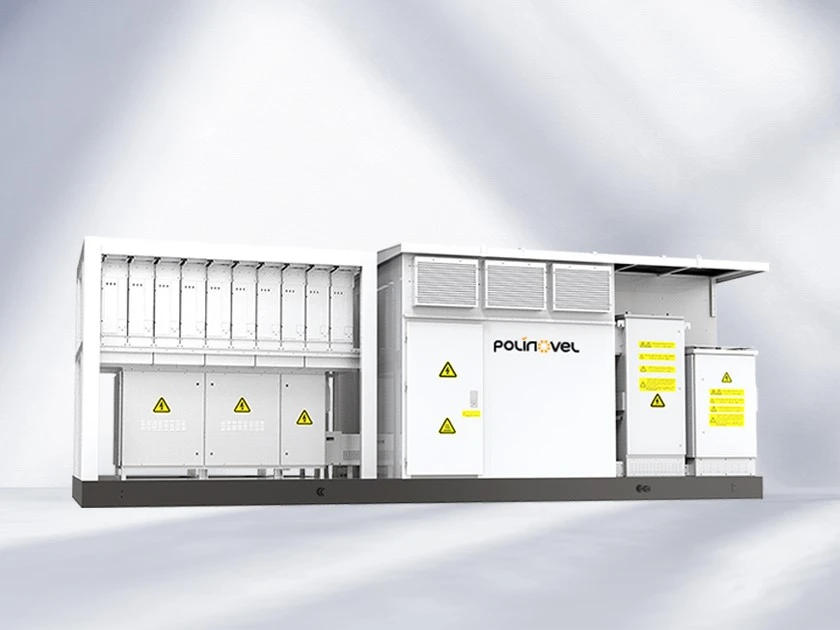
Polinovel PCS-Boost Container Key Features
Designed to simplify project selection and deployment decisions.
Cluster-Level Battery Adaptability
The string PCS design supports cluster-level battery management, helping the system better adapt to different battery cluster conditions. It also supports mixed use of new and existing batteries, making it suitable for phased replacement, system upgrades, and long-term BESS maintenance.
01
High-Efficiency PCS Boost Design
Built with a three-level topology, the PCS Boost Container supports high-efficiency DC/AC power conversion with voltage step-up in one integrated unit. With a maximum system efficiency of up to 98%, it helps improve energy conversion performance for medium-voltage BESS applications.
02
Wide-Temperature Stable Operation
Intelligent multi-stage fan speed control supports stable operation under wide temperature conditions. With 50°C non-derating capability, the system is designed for demanding outdoor energy storage sites where temperature changes can affect PCS performance.
03
Grid-Support and Multi-Level Protection
The system supports constant power, constant current, and constant voltage control, as well as primary frequency regulation, VSG, and black start functions. Integrated modular design and multiple protection functions help improve grid adaptability and system operating safety.
04
PCS-Boost Container Specification
Both configurations share the same 1000–1500 V DC window, 10–35 kV output and 98% peak efficiency. They differ in rated power and in how many battery clusters they manage independently.
| DC Parameters | ||
| Max. DC Voltage | 1500V | |
| Max. DC Current | 241×20A | 241×24A |
| Battery Voltage Range | 1000–1500V | |
| Grid-side Parameters | ||
| Rated AC Power | 4300kW | 5000kW |
| Max. AC Power | 4730kW | 5500kW |
| Rated Grid Voltage | 10–35kV | |
| Rated Grid Frequency | 50/60Hz | |
| THD at Rated Power | <3% | |
| Power Factor Adjustable Range | -1~+1 | |
| System Features | ||
| Isolation Method | Dry-type / Oil-immersed Transformer | |
| Max. System Efficiency | 98% | |
| Protection Rating | IP66 (Converter) / IP54 (Others) | |
| Operating Temperature Range | -40~+60℃ | |
| Allowable Humidity Range | 0–100% | |
| Max. Operating Altitude | 5000m | |
| Cooling Method | Intelligent Air Cooling (Converter) | |
| Communication Interface | RS485 / CAN / Ethernet | |
| Mechanical Parameters | ||
| Dimensions | 35kV: 7200×2800×2896mm (Dry-type) / 6058×2438×2600mm (Oil-immersed) 10kV: 6300×2438×2896mm (Dry-type) / 6058×2438×2600mm (Oil-immersed) |
|
| Weight | 18000kg (35kV) / 15000kg (10kV) | |
System architecture
How the PCS-Boost Container connects batteries to the MV grid
Each battery cluster feeds a string PCS module. The modules share a low-voltage AC bus, the step-up transformer raises voltage to medium voltage, and the MV switchgear connects the block to the grid. Control and communication run in parallel with the power path.

The unit exposes DC inputs on the battery side and a single MV connection on the grid side, with the low-voltage stage, protection and controls enclosed.
Polinovel PCS-Boost Scope of Supply
Standard scope
- String PCS modules
- LV AC switchboard and distribution
- Step-up transformer (dry-type or oil-immersed)
- MV switchgear / ring main unit
- Protection and control system
- Auxiliary power supply
- Intelligent air cooling and ventilation
- Communication gateway (RS485 / CAN / Ethernet)
- Internal power and control cabling
- Container enclosure
Optional
- Dry-type vs oil-immersed transformer selection
- 10 kV or up to 35 kV MV output
- Extended corrosion protection
- Condensation heating
- Grid-forming / black-start configuration
- SCADA / PPC integration package
Project side
- Concrete foundation and civil works
- Battery-to-PCS DC cabling
- MV export cable to the point of connection
- External grounding
- Site EMS / PPC connection
- Utility interconnection equipment
Battery system and BMS compatibility
The string architecture accepts 20 or 24 battery-cluster inputs, each rated up to 241 A, across a 1000–1500 V DC window. Because clusters are managed individually, the unit can operate with clusters at different states of health and supports the mixed use of new and existing batteries within the stated limits.
The station communicates over RS485, CAN and Ethernet, which covers common BMS interfaces used in containerized BESS blocks. Exact cluster grouping, per-input current sharing and the data points required for third-party battery validation should be confirmed against the battery system for each project.
Grid-support functions and control modes
The PCS-Boost Container supports constant power, constant current and constant voltage control, along with the grid-support functions below.
| Function | Capability | Typical application |
|---|---|---|
| P/Q control | Active and reactive power control, PF −1 to +1 | Grid-connected BESS |
| V/F reference | Establishes voltage and frequency | Island operation |
| VSG | Virtual synchronous generator / synthetic inertia | Weak grids |
| Black start | Energises a local bus without grid support | Grid restoration |
| Primary frequency regulation | Fast active-power adjustment | Ancillary services |
Designed for harsh outdoor sites
−40 / +60°C
Operating range, 50°C non-derating
5000 m
Maximum operating altitude
0–100%
Allowable humidity range
IP66 / IP54
Converter / other compartments
Standards & compliance
| Standard family | Applies to |
|---|---|
| IEC 62477-1 | PCS / power electronics safety |
| IEC 60076 | Step-up transformer |
| IEC 62271 | MV switchgear |
| IEC 61000 | EMC |
| Local grid code | Grid connection & grid support |
Installation & commissioning
Factory assembly & FAT
The block is assembled and factory-tested before shipment, so most integration is verified before it leaves the works.
Transport & lifting
The container footprint keeps transport and craning within standard handling for the selected voltage class.
Foundation & cabling
The unit is set on a prepared foundation; DC, MV and grounding cables are terminated at the defined interfaces.
SAT & grid-code testing
Site acceptance testing, controls checkout and any required grid-code verification precede energisation.
Where the PCS-Boost Container fits
Utility-scale BESS
Repeatable MV blocks for grid-connected storage, deployed across utility-scale plants that connect at 10–35 kV.
Solar- and wind-plus-storage
Prefabricated MV connection alongside renewable generation, reducing on-site electrical work.
Frequency regulation & ancillary services
Fast active-power response and reactive-power control where the grid code and market allow.
Battery retrofit & capacity expansion
Cluster-level control suits phased additions and staged replacement of ageing battery clusters.
FAQ
Q: Is the MV transformer included in the PCS-Boost Container?
A: Yes. The step-up transformer - dry-type or oil-immersed - is part of the standard block, along with the string PCS modules, LV switchboard, MV switchgear, protection and controls.
Q: How many battery clusters can be connected?
A: 20 clusters on the 4.3 MW configuration and 24 on the 5 MW configuration, each input rated up to 241 A across a 1000–1500 V DC window.
Q: Can new and existing batteries operate together?
A: The string architecture manages clusters independently, which supports mixed use of new and existing batteries and clusters at different states of health, within the stated voltage and current limits. Specifics should be confirmed for each battery system.
Q: Does it support grid-forming operation?
A: VSG, black start and primary frequency regulation are supported. Whether grid-forming is enabled depends on the project control strategy and the local grid code.
Q: Can the grid voltage and transformer type be customised?
A: Output is configurable from 10 kV up to 35 kV, and the isolation transformer can be dry-type or oil-immersed depending on site preference and regulations.
Q: What information is needed to size a unit?
A: Typically: required MW and MWh, battery voltage and cluster count, grid voltage and frequency, transformer preference, any grid-forming requirement, and the delivery schedule.

Get a sizing proposal for your project
Share your project MW/MWh, battery configuration and grid voltage, and we can match a 4.3 MW or 5 MW PCS-Boost Container configuration and provide a single-line diagram and datasheet.
Hot Tags: PCS-Boost Container, string PCS turnkey station, PCS MV skid, PCS container with MV transformer, utility-scale PCS, medium voltage PCS station