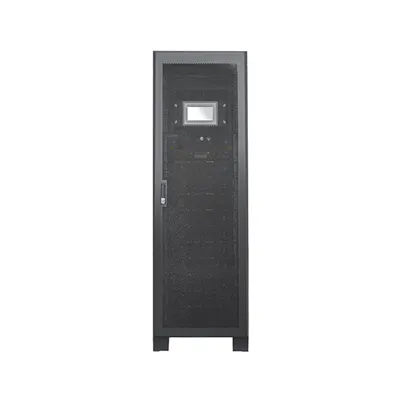
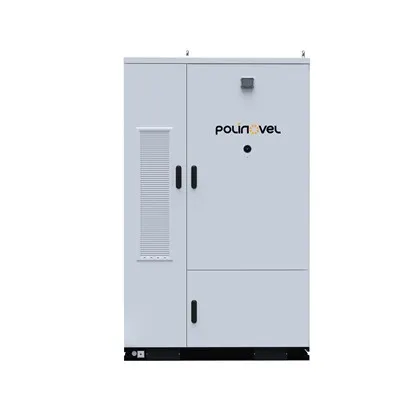
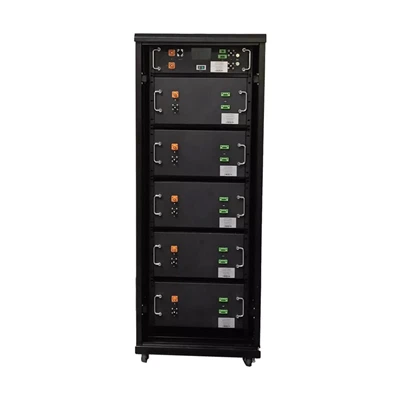
The AI Data Center Lithium UPS Battery Backup System is built for UPS backup and AI computing power applications where space efficiency, high power output, and power reliability are critical. With high power density, redundant safety protection, simplified installation, and intelligent remote monitoring, it helps deliver compact and dependable lithium backup power for mission-critical facilities.
Designed for AI data centers, computing facilities, financial centers, and industrial control systems, this system helps protect high-value workloads while reducing deployment complexity and daily maintenance needs.Using LiFePO4 (LFP) chemistry, high power density, redundant safety protection, simplified installation, and intelligent remote monitoring, it delivers compact, dependable lithium backup power for mission-critical facilities - from a 49.152 kWh entry configuration up to 73.7 kWh in a single 600 × 1000 × 2000 mm cabinet. It bridges the critical IT load to generator power while cutting battery-room footprint and maintenance versus traditional lead-acid UPS batteries.

Why AI Data Centers Need High-Rate Lithium UPS Batteries
AI workloads change the rules for UPS battery selection. Traditional data center batteries were sized mainly around backup duration and footprint; AI data centers add continuous high-power support, frequent cycling, and far less tolerance for interruption. Four pressures stand out:
Rapid GPU load fluctuations
Sharp step loads as training jobs sync and release demand high-rate cells and a responsive BMS - not slow-recovering lead-acid.
Higher rack power density
More power per cabinet means backup energy must come from the smallest footprint, freeing white space for compute.
Lower tolerance for interruption
A millisecond dropout can corrupt a training run or a transaction; instant backup protects high-value workloads.
Frequent cycling & thermal stress
LFP offers strong thermal stability while the cabinet tracks temperature continuously across charge/discharge events.
Optimized for Your Energy Needs
Lower TCO
Long service life, reduced maintenance, fewer replacements, and simplified management help lower total cost of ownership compared with traditional lead-acid UPS battery systems.
Space Optimized
High power density helps deliver strong UPS backup performance with fewer battery cabinets, saving valuable space in data centers, equipment rooms, and critical facilities.
Reliable Safety
LFP battery technology, intelligent BMS, and redundant safety design help support stable operation and reduce risks in mission-critical backup power applications.
Smart Monitoring
Real-time battery visibility and remote monitoring help operators track system status, alarms, temperature, and performance data for easier maintenance and faster decisions.
Specification
| Capacity Configuration | Module Model | Module Numbers | Dimensions (W × D × H) | Rated energy |
| 409.6V 120Ah | 51.2V 120Ah | 8 | 600 × 1000 × 2000mm | 49.152kWh |
| 460.8V 120Ah | 9 | 55.296kWh | ||
| 512V 120Ah | 10 | 61.44kWh | ||
| 563.2V 120Ah | 11 | 67.58kWh | ||
| 614.4V 120Ah | 12 | 73.7kWh |
Applications
Purpose-built for facilities that cannot tolerate downtime and are moving away from bulky,
maintenance-heavy VRLA battery strings:
AI data centers and GPU training clusters
high, fast-changing power draw from accelerated computing
High-density server rooms and edge sites
scarce floor space and rising rack power
Colocation and cloud / hyperscale facilities
multi-tenant uptime guarantees
Financial, trading, and transaction data centers
zero-interruption requirements
Telecom core and backbone sites
continuous critical-load support
Industrial control rooms and mission-critical infrastructure
process and safety continuity
Lithium UPS Battery vs Lead-Acid UPS Battery
| Criterion | Lithium (LFP) UPS Battery | Lead-Acid (VRLA) UPS Battery |
|---|---|---|
| Service / design life | Longer design life, fewer replacements | Shorter life, frequent replacement |
| Footprint & density | Higher density, fewer cabinets | Larger battery room for same backup |
| Weight | Significantly lighter per kWh | Heavy; raises floor-loading concerns |
| Recharge speed | Faster recovery after an event | Slower recharge |
| Maintenance | BMS-based monitoring, low upkeep | Manual inspection and upkeep |
| Fit for AI workloads | Better for high-rate, frequent response | Less suited to frequent high-current events |
For the units behind any sizing exercise, see kW vs kWh explained and
Multi-Layer Safety Architecture
Cell level
LiFePO4 cells for thermal stability, cell balancing, and per-cell temperature awareness.
Module level
Over-voltage, under-voltage, over-current, short-circuit, and over-temperature protection per 51.2 V module.
Cabinet level
BMS, insulation / fault monitoring, audible & remote alarms, and a redundant safety design, with optional pack-level aerosol fire suppression.
System level
Remote monitoring, fault isolation, redundant protection, and emergency shutdown.
The AI data center lithium battery UPS backup power system is CE, UN38.3, IEC 62619 and UL 9540A certified.See why your BESS needs UL certification.
How Lithium-ion UPS Backup Works

- BMS-to-UPS communication via dry-contact and RS485 / CAN signaling for coordinated charge/discharge and alarms
- Cabinet parallel expansion to scale backup energy as the facility grows
- Remote monitoring for status, alarms, temperature, and performance
- Generator-bridge sizing to reliably cover the transfer window
For rapid-deployment power on site, see how mobile BESS works for data center power; for rack-level selection,
how to choose server rack battery systems; and for the full anatomy,
Where It's Deployed
AI GPU training data centers
High-rate LFP with responsive BMS handles sharp step loads - protecting long runs and costly accelerators.
Colocation & cloud data centers
High density in a compact cabinet meets strict SLAs without giving up rack space.
Financial & trading systems
Instant DC support with redundant protection preserves transaction integrity through grid events.
Industrial control & critical facilities
Reliable, monitored backup keeps process and safety systems continuously powered.
FAQ
Q: What is a lithium UPS battery system for AI data centers?
A: A high-voltage LFP battery cabinet that provides DC backup power to a UPS, holding the critical IT load during a power event and bridging to generator power - replacing lead-acid UPS batteries with a more compact, longer-life, fully monitored system.
Q: Why use LFP batteries instead of lead-acid for UPS backup?
A: LFP offers longer service life, higher energy density (fewer cabinets), lighter weight, faster recharge, and BMS-based monitoring - generally the better fit for AI loads with frequent high-current events.
Q: How long can the system provide backup power?
A: Backup time is load-dependent and sized to bridge the load to generator start-up, set by the cabinet's usable energy (49.152–73.7 kWh per cabinet) relative to the UPS load.
Q: Can it work with existing UPS systems?
A: It is designed to integrate with standard UPS systems via DC connection and BMS communication. Share your UPS make, model, and DC bus voltage to confirm compatibility.
Q: How many battery cabinets can be connected in parallel?
A: Up to 10 cabinets can be connected in parallel to scale backup energy.
Q: What BMS protections are included?
A: Over-voltage, under-voltage, over-current, short-circuit, and over-temperature protection, plus state-of-charge management, alarms, and remote visibility.
Q: Is the system suitable for high-rate discharge?
A: Yes - it is built for high power output, supporting up to ~2C continuous and ~3C peak discharge to suit UPS and AI computing applications.
Q: What certifications are available?
A: Typically CE, UN38.3, IEC 62619, and UL 9540A; requirements vary by destination market and project.
Q: How does remote monitoring work?
A: The BMS streams real-time status, alarms, temperature, and performance data - viewable on the touchscreen and remotely - for faster decisions and planned maintenance.
Q: How do I size a UPS battery system for an AI data center?
A: Start from the UPS load (kW), required bridge time to generator, and DC bus voltage; then select cabinet voltage/energy and number of parallel cabinets. Our team can size it with you.

Smarter Energy, Stronger Operations.
Polinovel delivers high-performance energy storage to strengthen operations against power disruptions, lower costs through intelligent peak management, and deliver sustainable, future-ready power.
Other Lithium UPS Battery Application Solutions


Hot Tags: AI Data Center Lithium UPS Battery Backup System, China AI Data Center Lithium UPS Battery Backup System manufacturers, suppliers, factory