enLanguage

High-Rate lithium ion UPS Backup Power System

High-Rate lithium ion UPS Backup Power System
Details:
Purpose-built lithium backup power for UPS applications requiring 10-60 minute runtime, high-rate discharge, and faster deployment.

● LFP chemistry for enhanced safety and long service life
● Space-saving design for modern equipment rooms
● Pre-assembled delivery for faster deployment
● Smart BMS monitoring for battery visibility
● Reliable backup power for mission-critical loads
Send Inquiry
Download
Description
Technical Parameters
High-Rate lithium ion UPS Backup Power System

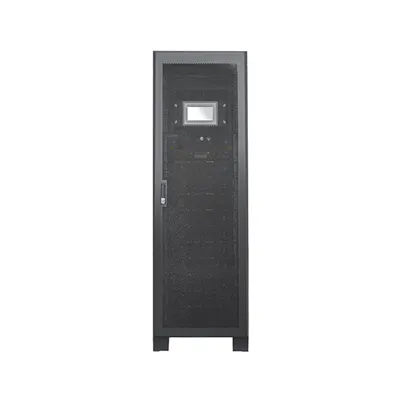
Polinovel High-Rate Lithium ion UPS Backup Power System is engineered for critical backup power applications that require short-duration, high-power discharge in a compact footprint. Built with LFP cells, advanced BMS, and a modular cabinet-based design, it delivers stable UPS backup performance, long service life, and enhanced safety.

Available from 49.15 kWh to 86 kWh across 409.6–716.8 V, it delivers strong, stable discharge in a compact 800×750×2000 mm footprint .Its high power density helps reduce battery cabinet quantity and save valuable space in data centers, financial facilities, healthcare buildings, and industrial control systems. With real-time monitoring, intelligent protection, and pre-assembled delivery, this lithium UPS battery simplifies installation and daily management while helping lower total cost of ownership.

High-Rate Lithium Ion UPS Backup Power System
Optimized for Your Energy Needs


Lower Lifecycle Cost

With long service life, fewer battery replacements, reduced maintenance needs, and lower installation effort, the system helps reduce total cost of ownership over time.


High-Rate Backup Power

Built with high-rate lithium-ion cells, the system supports strong short-duration discharge performance for UPS backup applications where fast and stable power output is required.


Reduced Maintenance

Lithium-ion technology requires less routine maintenance than traditional lead-acid batteries, helping lower labor workload, reduce inspection pressure, and simplify daily UPS battery management.


Flexible System Expansion

The modular cabinet-based design supports flexible capacity configuration and future expansion, making it easier to match different UPS runtimes, load levels, and project requirements.


Simplified Deployment

Pre-assembled cabinet delivery helps simplify on-site installation, shorten project delivery cycles, and reduce setup time for faster critical power backup deployment.


Predictable Battery Performance

Real-time monitoring and intelligent protection help operators track battery conditions more clearly, reduce unexpected failures, and support safer, more predictable UPS operation.

 
Compare Properties


Capacity Configuration Module Specification Module Numbers Dimensions (W × D × H) Rated Energy 
409.6V 120Ah
51.2V 120Ah
8 800 × 750 × 2000mm 49.15kWh
460.8V 120Ah 9 55.296kWh
512V 120Ah 10 61.44kWh
563.2V 120Ah 11 67.5kWh
614.4V 120Ah 12 73.7kWh
716.8V 120Ah 14 86kWh


Why Choose High-Rate lithium ion UPS Backup Power


High-Rate Performance in a Compact, Pre-Assembled Cabinet,dependable short-duration backup for critical loads,
with less space and less installation effort.


Short-Duration High-Power Backup

Built with high-rate lithium-ion cells for strong, fast, and stable discharge across 10–60 minute UPS backup windows.


Compact Cabinet Design

High power density in an 800×750×2000 mm cabinet helps save valuable equipment-room space - typically up to around 50% less footprint than an equivalent VRLA lead-acid battery bank sized for the same backup duty.


LFP Chemistry for Safer Operation

LiFePO4 cells support strong thermal stability, long service life, and reliable operation for mission-critical backup power.


Smart BMS Monitoring

The integrated BMS tracks key battery conditions and supports intelligent protection, reducing unexpected failures during UPS operation.


Pre-Assembled for Faster Deployment

Delivered as a pre-assembled cabinet to cut on-site wiring, shorten project delivery, and simplify both new builds and battery replacement.


Voltage & Energy Configuration

Six factory configurations from 409.6 V to 716.8 V let you match the cabinet to your UPS DC bus, load level, and runtime target.


wmpage35-img4.webp

How to Select the Right UPS Battery Cabinet

Match the cabinet to your UPS first by DC bus voltage, then confirm runtime against load.The nominal voltage of each model is the cabinet's DC voltage - choose the configuration that falls within your UPS DC bus / battery voltage window, then verify that the rated energy and discharge profile meet your required backup time at the expected load.The 409.6 V through 716.8 V range covers common three-phase UPS DC bus classes. If you are unsure which voltage your UPS expects, share the UPS model and we will confirm compatibility.


Safety & Compliance

For mission-critical procurement, lithium UPS battery systems are evaluated against a recognised set of cell-, system-,
and installation-level safety standards. LFP chemistry and a smart BMS form the intrinsic safety foundation

LFP Cell Chemistry


Lithium iron phosphate offers inherently strong thermal and chemical stability compared with other lithium chemistries, supporting safer operation in occupied equipment rooms.

Smart BMS Protection

Continuous protection against over-charge, over-discharge, over-current, short circuit, and over/under-temperature, with cell-level monitoring and alarms.

Applicable Standards


Standards typically applied to lithium UPS battery systems for data-center and critical-facility use :

UL 1973/IEC 62619/IEC 62133/UL 9540A/NFPA 855/IEC 62040-1/-2 /UN 38.3/CERoHS

Monitoring & Integration

Smart BMS Visibility, Ready for Your Facility Systems

The smart BMS reports state of charge, state of health, cell voltage, temperature, and current in real time, and supports intelligent protection so operators can track battery status clearly and reduce unexpected downtime.

For data centers and managed facilities, the system is designed to integrate with upstream monitoring through standard communication interfaces, so battery status is visible inside your existing DCIM or building-management platform.


Communication interfaces

The system typically provides RS-485, CAN bus, and dry-contact interfaces as standard, with Modbus (RTU / TCP-IP) and SNMP for integration into DCIM and building-management platforms, plus an EPO input and optional local touchscreen/HMI. Confirm the exact protocol set and connector types for your selected model.


Deployment & Maintenance

Pre-Assembled Delivery, Less Field Wiring

The cabinet ships as a pre-assembled battery system, reducing on-site installation work, shortening project delivery time, and simplifying deployment for both new UPS projects and battery-replacement projects.

Lithium-ion technology requires less routine maintenance than traditional lead-acid batteries, helping lower labor workload and inspection pressure while supporting more predictable day-to-day UPS battery management.


Faster to commission

Factory pre-assembly and a single-cabinet format mean fewer connections to make on site and a shorter path from delivery to live backup.


Applications


Where High-Rate Short-Duration Backup Fits
-Mission-critical environments that need fast, stable power through short interruptions and the bridge to generator power

Data Centers, Edge & Equipment Rooms

Holds servers, storage, and network gear through grid dips and bridges to the generator. Compact cabinets free rack space, and the BMS streams live status into your DCIM. For AI and high-density compute, see the AI Data Center Lithium UPS Battery Backup System.

Financial Facilities

Protects banking, payment, trading, and transaction systems where even a momentary interruption means lost transactions and compliance risk - stable high-power backup for the critical seconds-to-minutes.

Healthcare Buildings

Dependable backup for hospital, laboratory, imaging, and life-safety electrical systems, with low maintenance and cell-level monitoring suited to occupied buildings.

Industrial & Process Control

Keeps PLCs, control rooms, SCADA, and process monitoring alive through interruptions, where an unplanned stop can affect safety, scrap, or restart cost. See how industrial power backup systems work.

Telecom & Network Sites

High-rate backup for core and edge telecom and network equipment that needs a strong, immediate power source during the switchover window - see the basics of telecom backup power.

Lead-Acid Replacement / Retrofit

Cuts the footprint, weight, and maintenance of an existing VRLA battery room - used for UPS battery replacement after confirming the DC voltage window, charging profile, and communication requirements.


Lower Lifecycle Cost for UPS Backup

Compared with traditional lead-acid battery systems, lithium-ion UPS battery cabinets help reduce maintenance workload, battery replacement frequency, and installation complexity. With smart BMS monitoring and pre-assembled delivery, the system supports easier daily management and more predictable battery operation over its service life.

LFP UPS battery systems typically deliver on the order of 3–5× the service life of VRLA lead-acid batteries, occupy up to roughly 50% less floor space for the same backup duty, and remove most scheduled battery maintenance - lowering labour and inspection workload across a 10-year-plus design life. Fewer replacement cycles also mean fewer maintenance-window downtime risks for critical loads.

Attribute High-Rate LFP UPS Cabinet VRLA Lead-Acid
Design service life ≥ 10 years ~3–6 years
Cycle life several thousand cycles ~200–500 cycles
Footprint compact - up to ~50% less large battery rooms
Weight significantly lighter heavy
High-rate discharge flat voltage, stable at high C capacity drops at high rate
Recharge speed fast slow
Maintenance minimal, BMS-monitored scheduled checks & testing
Monitoring cell-level BMS / remote limited
Upfront cost higher lower
Total cost of ownership lower over service life higher over time


Other Lithium UPS Battery Options


Scalable Lithium-ion UPS Battery Backup System

When you need room to expand capacity over time or size for longer runtime - a modular, scalable UPS battery platform.

AI Data Center Lithium UPS Battery Backup System

Always-on backup engineered for AI data centers and high-density computing, with touchscreen control and a redundant safety design.

Data Center LiFePO4 UPS Battery Backup System

LiFePO4 UPS backup tailored for data-center power rooms and critical IT loads.


Browse the full Energy Storage UPS battery range → 


FAQ

Q: What is a high-rate lithium-ion UPS battery backup system?

A: A high-rate lithium-ion UPS battery backup system is designed for short-duration, high-power discharge in UPS applications. It supplies backup power to critical loads during power interruptions, generator start-up, or grid instability - in a compact cabinet footprint.

Q: What backup runtime does this system support?

A: It is built for 10–60 minute UPS backup applications. Actual runtime depends on UPS load, DC bus voltage, cabinet model, battery configuration, and project conditions.

Q: What capacity range is available?

A: It covers 49.15 kWh to 86 kWh, with nominal voltages from 409.6 V to 716.8 V and 120 Ah capacity.

Q: Is this product suitable for data centers?

A: Yes. It suits data centers, equipment rooms, financial facilities, healthcare buildings, industrial control systems, and other mission-critical UPS applications that need short-duration backup.

Q: Can this lithium UPS battery replace lead-acid batteries?

A: It can be used for UPS battery replacement or new UPS backup projects, but the UPS DC voltage window, charging profile, communication requirements, protection settings, and installation conditions must be checked before replacement.

Q: Does the system include BMS monitoring?

A: Yes. The system uses smart BMS monitoring with intelligent protection so operators can track battery conditions and support safer, more predictable UPS backup operation.

Q: What communication interfaces are available for monitoring?

A: The system typically provides RS-485, CAN bus, and dry-contact interfaces as standard, with Modbus (RTU / TCP-IP) and SNMP for integration into DCIM and building-management platforms, plus an EPO input and an optional local touchscreen/HMI. Confirm the exact protocol set and connector types for your selected model.

Q: What is the operating temperature range?

A: For best service life the recommended operating temperature is around 20–30 °C. The cells are typically rated to discharge from about –10 °C to +55 °C and charge from 0 °C to +50 °C, with storage roughly –20 °C to +45 °C; confirm the exact environmental limits on the datasheet for your model. For background, see our guide to lithium battery temperature range.

Q: What safety standards apply to this lithium UPS battery system?

A: Lithium UPS battery systems for data-center and critical-facility use are typically evaluated against standards such as UL 1973, IEC 62619, UL 9540A, NFPA 855 and IEC 62040, plus UN 38.3 for transport and CE / RoHS. Certification scope varies by configuration and market, so request the current certificates and test reports for the specific models you are evaluating. Related reading: why UL certification matters for energy storage.

Q: How long does the battery last - cycle life and service life?

A: LFP UPS batteries offer a long working life - generally a 10-year-plus design life and several thousand charge/discharge cycles, far beyond lead-acid. Actual cycle life depends on depth of discharge, discharge rate, and temperature; high-rate duty at higher C-rates will reduce the figure, so confirm the rated cycles at your intended discharge profile.

Q: How much space can it save versus lead-acid batteries?

A: For the same backup duty, a high-rate LFP cabinet typically occupies up to around 50% less floor space than an equivalent VRLA lead-acid battery bank, while also offering roughly 3–5× the service life and far lower maintenance - which together lower total cost of ownership over the system's life.

Q: How do I select the right model?

A: Selection is based on UPS DC bus voltage, load power, required runtime, available installation space, and redundancy requirements. Provide these details to request a runtime calculation.

Q: Is the cabinet delivered pre-assembled?

A: Yes. The cabinet-based system is designed for pre-assembled delivery to simplify on-site installation and shorten deployment time.


Shenzhen Polinovel Tech Co., Ltd

Request a Runtime Calculation for Your UPS Project

Every UPS project has different runtime and load requirements. Send your UPS power, DC voltage, required backup time, and project conditions - we'll recommend a suitable high-rate lithium UPS battery cabinet configuration.


Hot Tags: High-Rate lithium ion UPS Backup Power System, China High-Rate lithium ion UPS Backup Power System manufacturers, suppliers, factory

Send Inquiry
Smarter Energy, Stronger Operations.

Polinovel delivers high-performance energy storage solutions to strengthen your operations against power disruptions, lower electricity costs through intelligent peak management, and deliver sustainable, future-ready power.