


For many battery energy storage projects, obtaining batteries is no longer the hardest part of development. Securing a grid connection at the required power level, cost, and timeline is increasingly becoming the critical constraint.
A BESS may already have land, battery containers, PCS equipment, and financing in place and still remain years away from commercial operation if the selected point of interconnection cannot support the project without additional studies, network upgrades, operating restrictions, or new electrical infrastructure.
The challenge is therefore bigger than the interconnection queue itself. Project feasibility can depend on the point of interconnection, charging and discharging limits, grid studies, network upgrade costs, PCS capability, transformers, switchgear, protection, and grid-code requirements.
For utility-scale BESS development, grid connection should influence site selection and system design before the battery and PCS configuration is treated as final.
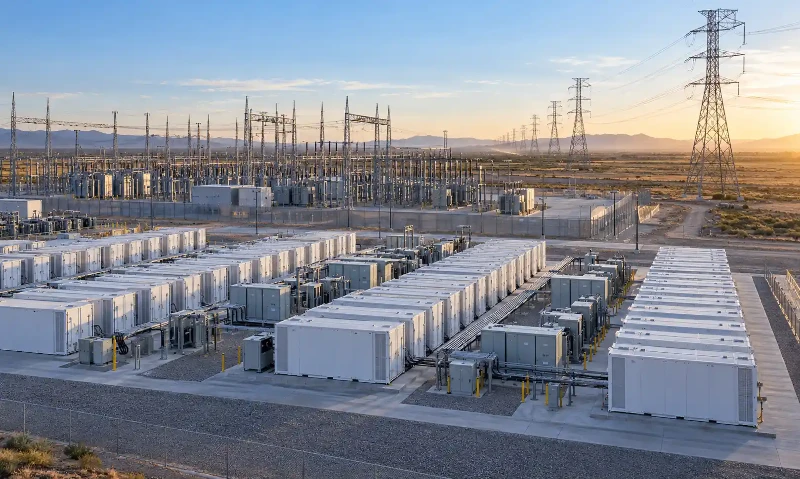
BESS Interconnection in 2026: The Problem in One Minute
Grid capacity has become a major constraint on new generation, storage, and large electricity loads.
According to the IEA Electricity 2026 analysis of power grids, more than 2,500 GW of renewable generation, storage, and large-load projects are stalled in grid connection queues worldwide. New grid infrastructure can also take approximately 5–15 years to plan, permit, and complete in many cases.
In the United States, Berkeley Lab's 2026 interconnection queue analysis reported more than 2,060 GW of generation and storage actively seeking grid interconnection at the end of 2025, including approximately 749 GW of storage. For projects reaching commercial operation in 2025 in regions with available data, the median period from interconnection request to commercial operation exceeded five years.
Not every queued project will be built, but these figures show the scale of competition for substations, transmission capacity, study resources, transformers, and viable connection points.
For BESS developers, interconnection therefore needs to influence site selection and system design from the beginning of the project-not after the battery system has already been specified.
What Does BESS Interconnection Actually Mean?
BESS interconnection is the technical, electrical, regulatory, and contractual process required to connect a battery energy storage system to a utility or transmission network.
A typical grid-connected BESS architecture may follow this electrical path:
Battery containers → DC collection → PCS → switchgear → step-up transformer → protection and metering → point of interconnection → grid
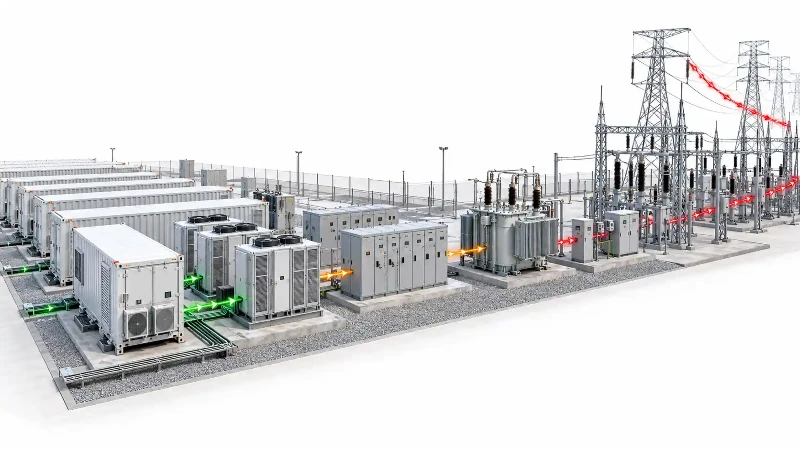
The point of interconnection, or POI, is the location where the project connects to the existing power network. Its voltage level, available capacity, grid conditions, and upgrade requirements can strongly influence project cost and schedule.
MW, MWh, and Grid Connection Capacity Are Different
MW describes how quickly a BESS can charge or discharge. MWh describes how much energy it stores.
A 100 MW / 400 MWh BESS and a 100 MW / 200 MWh BESS have different durations, but both may present a maximum 100 MW discharge condition to the grid.
Grid operators therefore need to understand:
- maximum charging MW
- maximum discharging MW
- storage duration
- PCS capability
- reactive power capability
- expected operating modes
- control behavior
The power conversion system (PCS) is particularly important because it determines how DC battery power is converted and exchanged with the AC grid.
This distinction is also why increasing battery MWh does not necessarily have the same interconnection impact as increasing project MW.
Why Is BESS Grid Connection Becoming a Bottleneck?
Existing Grids Were Designed for Different Power Flows
Many power networks were developed around a relatively simple model:
Centralized generation → transmission → distribution → electricity consumers
Today's grid must increasingly accommodate solar, wind, BESS, EV charging, data centers, industrial electrification, and other distributed or large flexible resources.
BESS also introduces bidirectional power flow because the same project behaves as a load while charging and as a generator while discharging.
The challenge is therefore not simply adding more grid capacity. Capacity must also exist at the right location and voltage level, with suitable protection, controls, substations, and transmission infrastructure. Understanding overall energy storage system grid compatibility is therefore an important part of early BESS design.
Grid Expansion Is Slower Than Project Development
Transmission lines and substations can require years of planning, permitting, procurement, and construction. Battery projects can often be developed more quickly than the infrastructure required to connect them.
This creates a structural mismatch between rapidly growing storage pipelines and available grid hosting capacity.
Interconnection Studies Create Another Constraint
Before approving a connection, the grid operator needs to determine whether the BESS would create unacceptable system conditions.
Depending on the project and jurisdiction, studies may evaluate:
- power flow and thermal loading
- voltage performance
- short-circuit conditions
- system stability
- reactive power
- protection coordination
- harmonics
- network contingencies
Large queues and project withdrawals can also create repeated study work when the assumptions used for other projects change.
In the United States, FERC Order No. 2023 introduced reforms including cluster studies, stronger site-control and commercial-readiness requirements, increased financial commitments, and withdrawal penalties intended to improve interconnection queue processing.
Network Upgrades Can Change the Business Case
A technically feasible BESS can still become commercially unattractive if the interconnection study identifies major grid upgrades.
Potential requirements include:
- feeder reinforcement
- new transformers
- substation expansion
- switchgear upgrades
- protection changes
- new interconnection lines
These costs can become significant enough to change the original project economics.
Electrical Equipment Can Become the Next Critical Path
Even after interconnection studies progress, the project still needs physical grid-connection equipment such as step-up transformers, medium-voltage switchgear, protection panels, cables, metering, and SCADA equipment.
The U.S. Department of Energy has also identified transformer supply-chain constraints and long equipment lead times as an ongoing challenge for grid expansion.
Engineering and procurement therefore need to progress together as project certainty increases. Waiting too long can delay COD, while ordering highly customized equipment too early can create redesign risk.
From Site Selection to Energization: The BESS Interconnection Process
The exact process differs between countries, utilities, ISOs, and RTOs, but most utility-scale BESS projects pass through several common stages.
1. Identify a Candidate Point of Interconnection
Before finalizing the battery architecture, developers should understand:
- available voltage level
- distance to the substation or transmission line
- available export capacity
- available charging capacity
- known network constraints
- other large projects seeking the same grid capacity
Cheap land does not automatically make a good BESS site if the practical POI requires expensive reinforcement.
2. Define the BESS Power and Energy Requirements
The project should establish:
- maximum discharge MW
- maximum charging MW
- required MWh
- storage duration
- PCS configuration
- transformer concept
- expected operating profile
These parameters directly affect the interconnection study.
3. Submit the Technical Interconnection Data
The application may require information such as:
- single-line diagrams
- PCS or inverter models
- transformer parameters
- charging and discharging limits
- reactive power capability
- protection data
- equipment ratings
- control modes
Interconnection is therefore an engineering process, not only an administrative queue application.
4. Complete Grid Studies and Review Network Upgrades
The project may enter feasibility, cluster, system-impact, facilities, or equivalent studies depending on the applicable market.
If the proposed configuration causes network violations, the project may need new equipment, operating restrictions, network upgrades, or in some cases a revised connection strategy.
5. Execute the Interconnection Agreement and Build the Connection
The interconnection agreement typically defines approved capacity, required upgrades, cost responsibilities, operating requirements, and construction milestones.
The project then moves into procurement and construction of the approved grid-connection equipment.
6. Test, Commission, and Energize
Before commercial operation, testing may include:
- protection systems
- metering
- SCADA communication
- PCS controls
- active and reactive power
- remote commands
- emergency shutdown
- applicable grid-code behavior
Why the Point of Interconnection Can Make or Break a BESS Project
Two BESS projects can use similar battery containers and PCS equipment but have completely different economics because they connect to different parts of the grid.
Consider two hypothetical 100 MW / 400 MWh systems.
One connects near a substation with suitable voltage infrastructure and available hosting capacity. The other connects to a constrained network where the same 100 MW export requires substantial reinforcement.
The second project may face:
- higher network upgrade costs
- longer development timelines
- lower approved export capacity
- charging restrictions
- additional land or interconnection-line requirements
This is why POI feasibility should be evaluated before the BESS architecture is treated as final.
Why BESS Studies Must Consider Both Charging and Discharging
A BESS can behave as both a generator and a load.
During discharge, it exports power. During charging, it imports power. Both conditions can affect transformers, feeders, substations, voltage, and network loading.
A project may therefore have enough grid capacity to discharge at its intended power but still face restrictions when charging under another network condition.
In the United States, FERC Order No. 2023 requires transmission providers, when requested by the interconnection customer, to use operating assumptions in interconnection studies that reflect the proposed charging behavior of electric storage resources. The requirement is described in FERC's generator interconnection reform fact sheet.
This matters because a BESS should not automatically be modeled as though it charges at maximum power during every grid peak or discharges continuously at maximum output if that does not reflect the proposed operating strategy.
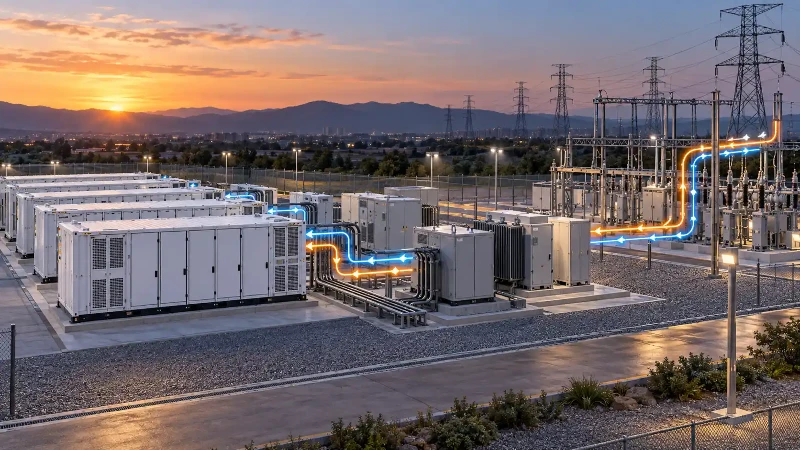
What Does the Grid Operator Evaluate in a BESS?
| Requirement | Why It Matters |
|---|---|
| Active power | Defines maximum charging and discharging MW and ramp behavior. |
| Reactive power | Determines whether the PCS can support voltage and power-factor requirements. |
| Voltage and frequency | Confirms acceptable operation and applicable ride-through requirements. |
| Fault behavior | Supports short-circuit analysis and protection-system design. |
| Harmonics | Evaluates potential power-quality impacts from power electronics. |
| Protection | Ensures BESS, transformer, feeder, and utility protection operate correctly together. |
| SCADA and telemetry | Enables monitoring, remote commands, alarms, and system-operator control where required. |
| Import and export limits | Defines how much power the BESS can exchange with the grid. |
Exact requirements depend on the country, utility, voltage level, and applicable grid code. They should be confirmed before PCS, transformer, and control-system specifications are finalized.
How Grid Connection Constraints Change BESS Economics
A BESS interconnection problem is not limited to waiting longer for approval.
A project can receive a technically acceptable connection and still have a weaker business case if that connection includes expensive upgrades or operating restrictions.
Network Upgrade Costs
Substation work, transformers, switchgear, transmission reinforcement, protection, and interconnection lines can materially increase project CAPEX. These costs should be evaluated alongside battery, PCS, installation, and lifecycle assumptions in a broader BESS cost analysis.
Delayed Commercial Operation
A later COD can affect financing, contracted revenue, construction costs, equipment storage, and the market conditions available when the BESS finally begins operation.
Export and Charging Limits
A constrained POI may limit the maximum MW that the BESS can discharge or the power available for charging.
Adding more MWh does not solve an MW constraint at the grid connection.
Curtailment and Conditional Operation
Some projects may be permitted to connect subject to temporary export, charging, or operating restrictions.
These conditions may reduce the need for immediate network reinforcement, but they must be included in the project's revenue and financing model.
The key commercial question is therefore not only:
How much does the BESS cost?
It is:
How much usable grid-connected capability will the project actually receive, when will it become available, and under what operating restrictions?
Strategies for Making Better Use of Limited Grid Capacity
Solar or Wind Plus Storage Behind a Shared POI
Co-locating BESS with solar or wind can sometimes improve utilization of an existing connection.
Renewable generation does not operate at maximum output every hour. A battery can potentially charge when renewable generation is high and discharge when renewable production is lower, while the plant controller keeps the combined facility within approved POI limits.
The electrical architecture also matters. Understanding the differences between AC-coupled and DC-coupled battery storage can help developers evaluate how the BESS, renewable generation, PCS, and shared connection point interact.
This does not eliminate interconnection requirements, but it can allow multiple resources to use shared grid infrastructure more effectively.
FERC Order No. 2023 includes provisions supporting multiple co-located generating facilities behind a shared point of interconnection under the applicable U.S. interconnection framework.
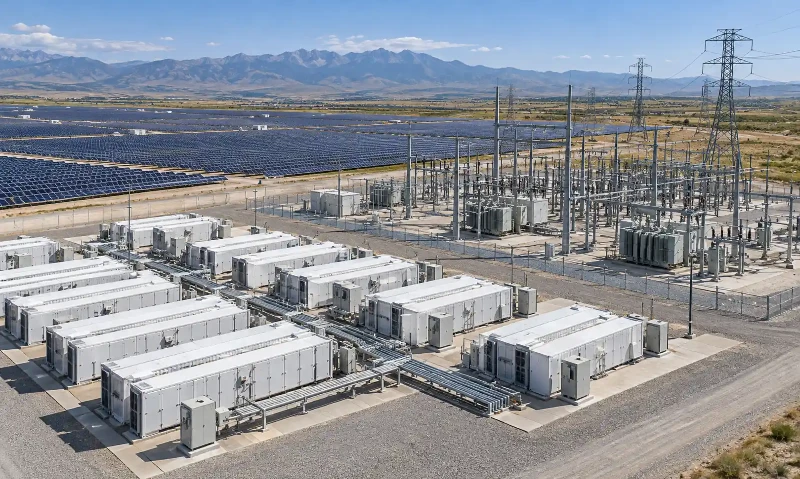
Non-Firm or Conditional Grid Connections
A non-firm connection can allow a project to use otherwise unavailable hosting capacity by accepting temporary limitations when the grid is constrained.
These may include:
- export limits
- charging limits
- dynamic operating envelopes
- curtailment under specified conditions
The IEA estimates that conditional non-firm connection agreements could potentially enable approximately 750–900 GW of advanced-stage projects currently waiting in queues worldwide.
BESS is particularly suited to flexible arrangements because charging and discharging can be controlled. However, the commercial value depends on how often restrictions are expected and whether they remain compatible with the project's revenue strategy.
Frequently Asked Questions
What is BESS interconnection?
BESS interconnection is the technical and contractual process of connecting a battery energy storage system to a utility or transmission network through an approved point of interconnection.
How long does BESS interconnection take?
There is no universal timeline. In the United States, Berkeley Lab reported that projects reaching commercial operation in 2025 in regions with available data had a median period of more than five years from interconnection request to COD. Actual timelines vary by grid operator, project maturity, study requirements, and network upgrades.
What is the point of interconnection for a BESS?
The POI is the electrical location where the BESS connects to the existing grid. Its voltage, hosting capacity, grid conditions, and required upgrades can strongly affect project cost and schedule.
Does a BESS interconnection study consider charging?
Yes. A BESS imports power while charging and exports power while discharging, so both operating conditions can affect grid loading and should be represented appropriately in the applicable study process.
Does adding more MWh require a new interconnection study?
Not necessarily. Increasing stored energy while keeping the same maximum MW can have a different grid impact from increasing charging or discharging power. Whether additional review is required depends on the specific project modification and applicable interconnection rules.
Can solar and BESS share the same point of interconnection?
Yes, in some project structures and regulatory frameworks. The combined resources must remain within the approved POI limits and comply with applicable interconnection, protection, and control requirements.
Conclusion: Design the BESS Around the Grid, Not Just the Battery
Battery storage technology has scaled rapidly, but grid infrastructure and interconnection processes cannot always expand at the same pace.
For utility-scale BESS projects, the stronger development sequence is:
POI feasibility → grid requirements → charging and discharging MW → interconnection studies → electrical architecture → battery and PCS configuration → procurement → commissioning
This does not make battery selection less important. It recognizes that the commercial value of a BESS exists only when the system can charge and discharge through a technically feasible and economically viable grid connection.
Developers that evaluate POI constraints, study assumptions, network upgrades, charging requirements, and electrical equipment early are less likely to reach an expensive point in development and discover that the grid requires a different project.