


For battery energy storage projects beginning construction after December 31, 2025, Section 48E eligibility now depends in part on whether the project receives material assistance from a Prohibited Foreign Entity (PFE).
For energy storage technology beginning construction in 2026, the Clean Electricity Material Assistance Cost Ratio, or MACR, must be at least 55%. The threshold rises to 60% in 2027, 65% in 2028, 70% in 2029, and 75% for projects beginning construction after 2029. If the applicable MACR falls below the statutory threshold, the energy storage technology is treated as receiving material assistance from a PFE and is not eligible for the Section 48E credit.
For BESS developers, EPC contractors, project owners and procurement teams, this makes supply-chain diligence part of tax-credit planning. Cell sourcing, component manufacturing, supplier ownership, contractual control and cost documentation can all affect the analysis.
What Changed for BESS Projects in 2026?
The One Big Beautiful Bill Act added new PFE restrictions to Sections 45Y, 48E and 45X. Treasury and the IRS followed with Notice 2026-15, which provides interim guidance on calculating MACR and applying safe harbors while further regulations and updated safe-harbor tables are developed.
For Section 48E energy storage technology, the material-assistance restriction applies to property whose construction begins after December 31, 2025. The practical result is that technical performance alone is no longer enough when assessing tax-credit eligibility. Developers also need to understand who is manufacturing key equipment, where PFE exposure exists in the supply chain and how those costs affect the project-level MACR.
This is why FEOC compliance for battery energy storage has become a procurement, financing and project-development issue rather than simply a supplier-screening exercise.
FEOC vs. PFE: Use the Right Terminology
"FEOC," or Foreign Entity of Concern, remains widely used across the battery and clean-energy industries. Under the current tax-code framework, however, the broader term that matters for these rules is Prohibited Foreign Entity (PFE).
Section 7701(a)(51) defines a PFE as either:
- a Specified Foreign Entity (SFE); or
- a Foreign-Influenced Entity (FIE).
The SFE definition incorporates several existing statutory categories and government lists, including certain foreign entities of concern, Chinese military companies, entities appearing on specified federal lists and foreign-controlled entities. PFE status therefore cannot be determined simply by looking at the country printed on a product label.
A BESS product manufactured outside the United States is not automatically PFE-produced solely because of geography. Conversely, equipment assembled in the United States is not automatically free of PFE risk if relevant ownership, contractual-control or production relationships trigger the statutory rules.
When Can a Company Become a Foreign-Influenced Entity?
The FIE definition goes beyond a simple ownership test.
For one category of FIE, Section 7701(a)(51)(D) includes circumstances in which:
| Test | Trigger |
|---|---|
| Appointment authority | An SFE has direct authority to appoint a covered officer |
| Single-SFE ownership | At least 25% |
| Aggregate SFE ownership | At least 40% |
| Debt issued to SFEs | At least 15% |
The rules also contain a second category involving payments under contracts, agreements or arrangements that give a specified foreign entity effective control over a qualified facility, energy storage technology or certain manufacturing activities.
Effective control can involve more than equity ownership. Contractual rights over production timing, energy-storage operations, data access, component sourcing, intellectual property or exclusive operation and maintenance arrangements can become relevant depending on the facts.
For BESS procurement, that means supplier screening should extend beyond the manufacturer's headquarters. Ownership structure, debt arrangements, licensing agreements and retained operating rights may also need review.
How the Material Assistance Cost Ratio Works
For Section 48E energy storage technology, the Clean Electricity MACR is based on direct costs attributable to manufactured products and their components, not the total EPC contract value.
Notice 2026-15 instructs taxpayers to identify relevant manufactured products and manufactured product components, determine the associated direct costs and then determine which of those costs are attributable to products or components mined, produced or manufactured by a PFE.
Project-level costs such as every civil-work expense, general EPC markup or other unrelated soft costs should not simply be added to the denominator to improve the ratio. The calculation follows the statutory direct-cost framework and the applicable IRS guidance.
BESS MACR Thresholds by Beginning-of-Construction Year
| Construction Begins | Minimum Clean Electricity MACR |
|---|---|
| 2026 | 55% |
| 2027 | 60% |
| 2028 | 65% |
| 2029 | 70% |
| 2030 and later | 75% |
The relevant threshold is determined by the calendar year in which construction begins.
A Simple BESS MACR Example
Assume a battery energy storage project has:
| Item | Illustrative Amount |
|---|---|
| Total relevant direct costs | $100 |
| PFE-attributable direct costs | $30 |
| Non-PFE direct costs | $70 |
A 70% MACR would be above the threshold for energy storage technology beginning construction in 2026, 2027 or 2028, and would equal the 70% threshold for a 2029 project.
The same cost profile would fall below the 75% threshold for energy storage technology beginning construction after December 31, 2029.
Why Battery Cell Sourcing Has an Outsized Impact on BESS MACR
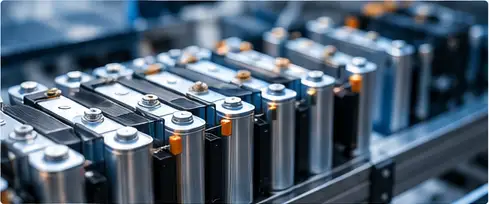
Battery cells deserve particular attention because of their weighting in current IRS safe-harbor tables.
Notice 2025-08 assigns 52.0% of the cost percentage to battery cells in a grid-scale BESS, defined for that table as a BESS with nameplate capacity greater than 1 MWh. For distributed BESS at or below 1 MWh, the assigned cell percentage is 26.9%.
The same grid-scale table assigns additional percentages to packaging, battery-pack production, inverter/converter components, the battery container or housing, the BMS and thermal management system.
The 52% figure should therefore not be interpreted as a universal statement that cells always represent exactly 52% of every commercial BESS invoice. It is an assigned safe-harbor cost percentage used under the applicable IRS framework.
Notice 2026-15 allows taxpayers, during the specified interim period and subject to its requirements, to use applicable 2023–2025 safe-harbor tables when calculating the Clean Electricity MACR.
If a grid-scale BESS uses the Cost Percentage Safe Harbor and all of the cell portion is treated as PFE-produced while all other listed components are non-PFE, the simplified assigned-cost result would leave only 48% as non-PFE percentage before considering other facts. That would fall below the 55% threshold for an energy storage project beginning construction in 2026.
Cell sourcing can therefore become one of the most consequential variables in BESS FEOC/PFE compliance, but it is not the only one.
Which BESS Components Should Procurement Teams Review?
A useful supply-chain review should follow the system architecture rather than treating the BESS as one black-box product.

| BESS Area | Examples of Relevant Components |
|---|---|
| Battery pack/module | Cells, packaging, production |
| Inverter/converter | PCB assemblies, electrical parts, thermal management, enclosure/skids |
| Battery container/housing | Enclosure, BMS, thermal management, production |
Procurement teams should therefore request enough information to understand both the product architecture and the relevant manufacturing parties behind high-value components.
For cells in particular, developers should know the actual cell manufacturer rather than relying only on the brand shown on the exterior BESS container.
PFE Compliance Is Not the Same as Domestic Content
PFE restrictions and the Domestic Content Bonus Credit address different questions.
PFE rules ask whether prohibited foreign entities provide material assistance under the applicable MACR framework.
Domestic-content rules ask whether specified steel, iron and manufactured products meet U.S. production requirements for an additional credit benefit.
The IRS states that satisfying the domestic-content requirement can increase the investment-credit applicable percentage by either 10 percentage points or 2 percentage points, depending on factors including project size and satisfaction of prevailing-wage and apprenticeship requirements.
| Issue | PFE / MACR Rules | Domestic Content |
|---|---|---|
| Main question | Is there material assistance from PFEs? | Are applicable products sufficiently U.S.-produced? |
| Main focus | Entity status, production/source and direct costs | U.S. production of steel, iron and manufactured products |
| Effect | Can affect underlying Section 48E eligibility | Can increase the credit amount |
| Core metric | Clean Electricity MACR | Domestic Content Requirement |
A product assembled in the United States does not automatically resolve PFE concerns.
Likewise, a foreign-manufactured component is not automatically PFE-produced solely because it is foreign.
Projects seeking both Section 48E eligibility and a domestic-content bonus should run the two analyses separately.
What Documentation Does the IRS Framework Actually Require?
Documentation is one of the most important differences between a marketing claim and defensible tax-credit due diligence.
Under the Certification Safe Harbor described in Notice 2026-15, supplier certifications must include an employer identification number or similar foreign identification number, be signed under penalties of perjury and be retained by both the supplier and taxpayer for at least six years. The certification must also contain the required statements or cost information regarding PFE production or sourcing.
For Section 48E, a direct supplier may certify qualifying direct-cost information or certify that the relevant manufactured product or component was not PFE-produced or PFE-sourced, as applicable under the safe harbor.
IRS-Supported Documentation vs. Recommended Project Due Diligence
| Category | Documentation / Review |
|---|---|
| IRS certification requirement | Supplier identification number |
| IRS certification requirement | Signature under penalties of perjury |
| IRS certification requirement | Required PFE production/sourcing or direct-cost statement |
| IRS recordkeeping | Retain qualifying certification for at least six years |
| Recommended due diligence | Supplier and ultimate-parent ownership review |
| Recommended due diligence | Review of relevant debt and control rights |
| Recommended due diligence | Component-level BOM and manufacturer mapping |
| Recommended due diligence | Review of material IP, software and licensing agreements |
| Recommended due diligence | Contractual obligation to update material ownership or sourcing changes |
| Recommended due diligence | Audit and information rights for critical suppliers |
The second group represents prudent procurement and financing controls, not a statement that every item is expressly mandated by Notice 2026-15.
A Practical BESS Supply-Chain Review Process
1. Map the BESS Bill of Materials
Identify the major manufactured products and components in the proposed system.
At minimum, understand the manufacturers behind the battery cells, pack/module, BMS, container thermal-management system and inverter or PCS-related equipment covered by the applicable project architecture.
2. Screen Relevant Manufacturers and Counterparties
Determine whether relevant companies may meet an SFE or FIE definition.
The analysis may require more than a list check. Ownership levels, aggregate SFE ownership, relevant debt and certain contractual-control arrangements can matter.
3. Calculate and Stress-Test the MACR
Use the project's actual direct-cost data or an available safe harbor, as applicable.
Do not assume that a supplier's marketing statement that a product is "FEOC compliant" proves that the entire project meets Section 48E requirements.
MACR is ultimately a project-specific calculation.
A developer may also choose to model a reasonable compliance cushion above the minimum statutory threshold rather than designing procurement around an exact boundary.
4. Build Documentation Requirements Into Procurement Contracts
Required tax documentation should be negotiated before major equipment orders are finalized.
Supply agreements can also require notification of material changes in ownership, manufacturing source or relevant control arrangements so the project team is not surprised by a change after procurement has started.
Effective Control Can Matter After Equipment Selection
PFE diligence should not stop at the hardware manufacturer.
The tax code's FIE provisions also address certain contractual arrangements that provide an SFE with effective control. Relevant rights can include control over energy-storage operations, restrictions on critical data access and certain rights associated with intellectual property, component sourcing or exclusive operation and maintenance.
This does not mean that every software license, service agreement or maintenance contract with a foreign company automatically causes a Section 48E failure.
The actual contractual rights and counterparty status matter.
This distinction becomes particularly important because Section 50(a)(4) now includes a separate recapture rule for certain Section 48E property. If a specified taxpayer makes an applicable payment during the 10-year period beginning when the investment-credit property is placed in service, the statute provides for 100% recapture of the affected prior Section 48E credit. An "applicable payment" is tied specifically to the arrangements described in the FIE effective-control rules; it is not simply any ordinary payment to a foreign vendor.
Project owners should therefore involve tax counsel when long-term software, IP, O&M or operational-control agreements could intersect with these rules.
What BESS Buyers Should Ask Suppliers Before Awarding a Contract
| Question | Why It Matters |
|---|---|
| Who manufactures the cells and major system components? | Identifies the entities relevant to the PFE analysis |
| Which manufacturing entities and parent companies sit behind the product? | Supports SFE/FIE screening |
| What direct-cost or safe-harbor information can the supplier provide? | Supports MACR calculation |
| Can the supplier provide a certification that meets Notice 2026-15 requirements where applicable? | Supports reliance on the Certification Safe Harbor |
| Are there material licensing, software, control or exclusive service arrangements involving relevant SFEs? | Helps identify potential effective-control issues |
Commercial bids should be evaluated on compliance documentation at the same time as price, warranty, safety certification, cycle life and technical compatibility.
Waiting until tax-equity diligence begins can make supplier replacement significantly more difficult.
Does Buying a U.S.-Assembled BESS Guarantee Section 48E Eligibility?
No.
A U.S. factory address may be relevant to domestic-content analysis, but Section 48E PFE rules require a separate examination.
The manufacturer, underlying components, PFE-attributable direct costs and relevant ownership or control arrangements can still matter.
Does Using a Chinese-Made Battery Automatically Disqualify a Project?
Not solely because the product was manufactured in China.
PFE status and the material-assistance test are governed by statutory entity definitions, production and sourcing rules, direct-cost attribution and the applicable MACR threshold.
Country of origin can be an important diligence signal, but it should not be substituted for the actual legal test.
Is 55% the Permanent BESS MACR Threshold?
No.
- 55% in 2026
- 60% in 2027
- 65% in 2028
- 70% in 2029
- 75% after 2029
Is a Supplier's "FEOC-Compliant" Statement Enough?
No.
A generic marketing statement does not replace the project-level MACR calculation or the supplier certification and substantiation requirements applicable to the safe harbor being used.
Developers should determine what evidence is required for their specific tax position.
Is the 52% Cell Figure Applicable to Every BESS?
No.
Notice 2025-08 assigns cells a 52% cost percentage for grid-scale BESS greater than 1 MWh and 26.9% for distributed BESS of 1 MWh or less under that safe-harbor table.
Final Takeaway
For projects beginning construction in 2026 and later, FEOC/PFE compliance for battery energy storage should be addressed before equipment procurement is locked in.
The key questions are no longer limited to battery chemistry, price, warranty and system performance.
Developers also need to understand who manufactures the major components, which costs are attributable to PFEs, whether the resulting Clean Electricity MACR meets the applicable threshold, and whether supplier documentation can support that conclusion.
For a 2026 BESS project, the starting point is a 55% minimum Clean Electricity MACR. That threshold rises to 75% for projects beginning construction after 2029, making early supply-chain planning increasingly important.
Battery cells deserve particular attention because of their high weighting in the grid-scale BESS safe-harbor table, but a credible compliance review should evaluate the complete relevant system architecture rather than focusing on cells alone.
Most importantly, PFE compliance, domestic content and technical BESS qualification are separate analyses. A project should address each one on its own terms.
This article is provided for general informational purposes and does not constitute tax, legal or investment advice. Section 48E eligibility and PFE treatment depend on project-specific facts and evolving Treasury and IRS guidance. Project developers should confirm their position with qualified U.S. tax and legal advisers.