

The global containerized battery energy storage system market is entering what industry analysts are calling a "structural inflection point"-a phrase that gets thrown around too often, perhaps, but in this case carries genuine weight. With projected valuations climbing from USD 13.87 billion in 2025 toward USD 35.82 billion by decade's end (CAGR hovering around 20.9%), the sector has moved well beyond pilot-phase experimentation into full-scale commercial deployment. What's driving this isn't a single catalyst but rather a confluence of grid modernization imperatives, renewable intermittency challenges, and-this one caught most forecasters off guard-the explosive electricity demands emerging from AI data center buildouts.

The China Factor (And Why Everyone's Watching Inner Mongolia)
Here's something that doesn't get enough attention in Western market reports: China installed 81 GWh of storage capacity in 2024 alone. That's more than the rest of the world combined. Let that sink in.
The domestic policy shift from mandatory renewable-paired storage toward independent storage assets has fundamentally altered the economics. The so-called "Document 136" framework established storage facilities as standalone market participants-meaning they can now generate revenue through capacity payments, spot market arbitrage, and ancillary services rather than existing purely as compliance costs bolted onto wind and solar projects.
Provincial-level subsidies tell the real story. Inner Mongolia rolled out capacity compensation at RMB 0.35/kWh with a 10-year guarantee period. Gansu followed with RMB 330/kW annual capacity payments. These aren't marginal adjustments; they're creating IRR profiles of 8-15% depending on location and grid access. Domestic tender volumes through November 2025 hit 190 GWh-up 138% year-over-year. The pipeline is enormous.
But there's a wrinkle nobody talks about publicly. Grid curtailment remains stubbornly high in northwestern provinces, and the interconnection queue delays can stretch 18-24 months. So yes, the opportunity is real, but execution risk hasn't disappeared.
America's Bifurcated Reality
The U.S. market presents a messier picture. Wood Mackenzie's Q3 projections initially flagged potential 11% year-over-year contraction in utility-scale deployments for 2026-supply chain recalibrations, FEOC compliance headaches, the usual suspects.
Then the "One Big Beautiful Bill Act" passed.
ITC access remains intact. Domestic cell manufacturing is scaling (slowly, expensively, but scaling). And suddenly the five-year outlook jumped 15%. The whiplash has been instructive: policy uncertainty in the U.S. isn't just noise-it's a genuine variable that can swing gigawatt-scale deployment forecasts by double digits.
What's actually exciting, though, isn't the utility segment. It's what's happening with AI-driven load growth. Morgan Stanley estimates that data center electricity consumption could exceed 20% of total U.S. power demand by 2030. These facilities need reliable, dispatchable power-and they need it fast. The traditional grid can't deliver new transmission capacity quickly enough. Solar-plus-storage and behind-the-meter BESS installations are becoming the de facto solution.
Expect 2026 to see roughly 80 GWh of U.S. deployments, with AI-adjacent applications contributing somewhere around 37 GWh. That's a number that would've seemed absurd three years ago.

LFP Dominance and the Long-Duration Question
Lithium iron phosphate chemistry owns this market. Period. It accounts for roughly 90% of installed storage capacity globally, and that share isn't shrinking anytime soon. Energy density improvements, cycle life exceeding 6,000 cycles at 80% depth of discharge, and pack-level pricing that's dropped below USD 115/kWh have made alternatives largely irrelevant for 2-4 hour duration applications.
The 314 Ah and 628 Ah cell formats are where the action is. Larger form factors reduce pack-level complexity, improve thermal management efficiency, and lower $/kWh at the system level. CATL, BYD, EVE Energy-they're all pushing in this direction.
But here's where it gets interesting.
Four-hour systems are becoming table stakes. The market is migrating toward longer durations. Tender specifications increasingly call for 4-hour-plus configurations, and this creates real challenges for lithium-ion economics at scale. You can stack more cells, sure, but capital costs don't scale linearly with duration for Li-ion the way they do for flow batteries.
Vanadium redox flow systems have hit approximately USD 1.50/Wh-still expensive, but the 15,000+ cycle lifetime changes the LCOS calculation entirely for 6-8 hour applications. Compressed air projects in Hebei province are demonstrating 70% round-trip efficiency. Sodium-ion is creeping into low-temperature deployments where lithium struggles.
None of these are replacing LFP anytime soon. But the technology landscape is fragmenting in ways that weren't anticipated even two years ago.
The Containerized Form Factor Advantage
Why containers?
Modularity. Transportability. Standardized interfaces. Rapid deployment timelines.
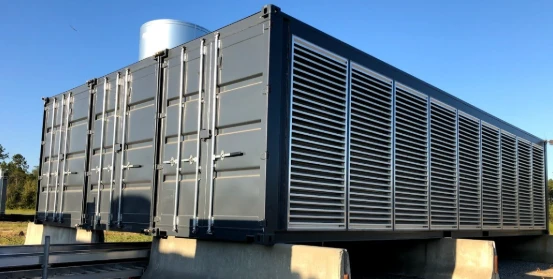
A 40-foot ISO container housing 5 MWh of storage capacity can be manufactured in Jiangsu, shipped to Rotterdam, installed on a brownfield site, and grid-connected within weeks rather than months. The plug-and-play architecture-batteries, BMS, PCS, thermal management, fire suppression, all integrated-dramatically reduces on-site engineering complexity.
Liquid cooling has become essentially mandatory for high-density deployments. Immersion cooling pilots are underway. Smart fire suppression systems using aerosol agents rather than traditional water-based approaches are gaining traction after several high-profile thermal runaway incidents raised insurance premiums across the sector.
The less glamorous reality: containerized systems still face significant permitting hurdles in urban and peri-urban contexts. NFPA 855 compliance adds 15-25% to capital costs for U.S. installations. European fire safety standards vary by jurisdiction in ways that frustrate standardized product development. These aren't unsolvable problems, but they're friction that slows deployment velocity.
Supply Chain Tightness Through 2026H2
J.P. Morgan's lithium demand modeling suggests BESS will consume approximately 30% of global lithium supply by 2026, rising toward 36% by decade-end. That's a significant claim on a commodity that remains supply-constrained despite new extraction capacity coming online in Australia, Chile, and Argentina.
Spot lithium carbonate prices have stabilized around USD 950/t after the 2023 crash, with forward curves suggesting USD 1,300/t by 2027. Whether that's accurate depends heavily on Chinese EV demand trajectories and whether DRC cobalt supply disruptions extend to nickel-manganese-cobalt chemistries used in some storage applications.
Cell manufacturers are running at high utilization rates. Lead times for Tier 1 storage-grade cells have stretched to 6-9 months. System integrators with locked-in supply agreements-Sungrow, Tesla, Fluence-have meaningful advantages over smaller competitors scrambling for spot procurement.
The situation probably eases by late 2026 as new gigafactory capacity ramps, but H1 will be tight.
Europe: Fragmented but Growing
Germany's storage buildout is finally accelerating-24 GW projected by 2037 according to TSO planning scenarios. The UK continues to lead on frequency response markets. Spain and Italy are seeing rapid utility-scale project development driven by curtailment economics and capacity remuneration mechanisms.
But here's the thing about Europe that gets lost in aggregate statistics: regulatory fragmentation remains a nightmare. Grid codes differ. Revenue stacking possibilities vary dramatically by market. What works in the Netherlands doesn't necessarily translate to Poland.
Eastern European markets are emerging-expect significant growth in Romania and Greece through 2026-2027 as grid stability requirements intensify. But these are smaller absolute volumes than what's happening in the U.S. or China.
The European Commission's 200 GW storage target for 2030 is ambitious. Whether it's achievable given permitting timelines and grid connection backlogs remains genuinely uncertain.
Commercial & Industrial: The Underappreciated Segment
Everyone focuses on utility-scale. Understandable-the projects are bigger, the press releases more impressive. But C&I storage is where margins are actually attractive and where deployment velocity can be fastest.
Peak shaving for industrial loads. Demand charge management. Solar self-consumption optimization. Backup power replacing diesel generators.
California's Net Billing Tariff changes have accelerated commercial adoption. Massachusetts SMART 3.0 program is driving paired solar-storage installations. Illinois rebate structures are finally gaining traction.
The economics are straightforward: if your demand charges exceed USD 15-20/kW monthly, storage pencils out. Lots of commercial facilities clear that threshold comfortably.
Global C&I storage is projected to grow 92% in 2025, reaching approximately 19.7 GWh. That momentum carries into 2026 and beyond. Africa-specifically diesel displacement applications-represents a genuinely underexplored opportunity that a few Chinese manufacturers are starting to pursue aggressively.
What Actually Matters for 2026
Forget the headline growth projections for a moment. Here's what'll determine whether individual players succeed:
Cell supply security. Companies without long-term offtake agreements with Tier 1 manufacturers will struggle.
Software capabilities. Bidding algorithms for ancillary services markets, state-of-health estimation accuracy, predictive maintenance-these create differentiation that hardware commoditization can't erase.
Balance sheet strength. Project financing requires creditworthy counterparties. BESS-as-a-Service models (ABB launched one in May 2025) are emerging precisely because upfront capital requirements remain a barrier.
Geographic diversification. Overexposure to any single regulatory jurisdiction is dangerous given policy volatility.
The companies positioned best-Sungrow, CATL, BYD, Tesla, Fluence-have moats across multiple dimensions. Smaller integrators face consolidation pressure. That's not speculation; it's already happening.
A Final Thought
This industry has a tendency toward breathless optimism that occasionally obscures real challenges. Grid interconnection delays aren't disappearing. Safety incidents, while rare, generate outsized regulatory responses. Lithium supply constraints are genuine, not invented. Commodity price volatility affects project economics in ways that fixed-price PPA structures can't fully hedge.
And yet.
The fundamental drivers-renewable integration requirements, grid reliability needs, electrification trends, data center power demands-aren't cyclical. They're structural. The 40-50% growth rates that Sungrow and others are projecting for 2026 aren't unrealistic. They're probably conservative.
Storage has moved from "interesting technology" to "critical infrastructure" faster than almost anyone predicted. The next 18 months will determine which companies capture that transition and which get left behind.