

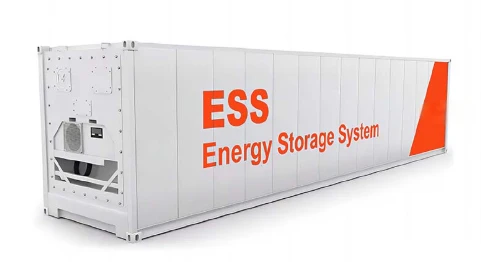
The containerized battery energy storage system represents a paradigm shift in how utility-scale power infrastructure gets deployed. Unlike traditional substation construction that demands months of civil works, a 40-foot container packed with lithium cells, inverters, and thermal management can ship from Shenzhen to Texas and go live within weeks. That's the pitch, anyway. The reality involves considerably more complexity.

What Actually Goes Inside
Crack open one of these units and you'll find a surprisingly dense arrangement of components fighting for space. Battery racks dominate-typically 10 to 20 racks holding thousands of prismatic LFP cells, each rack wired in series-parallel configurations to hit target voltages around 1500V DC on newer platforms. The older 1000V systems still ship, mostly to markets with legacy interconnection requirements or customers who got burned by early high-voltage failures.
Thermal management eats up maybe 15-20% of internal volume. Liquid cooling has basically won the argument over forced air for anything above 2MWh. The energy density gains are just too significant. CATL and BYD both pushed hard on this transition around 2021-2022, and now you'd struggle to find a serious manufacturer still betting on air-cooled architectures for grid-scale applications. Some still do it for the Australian mining sector, where simplicity and dust tolerance matter more than density.
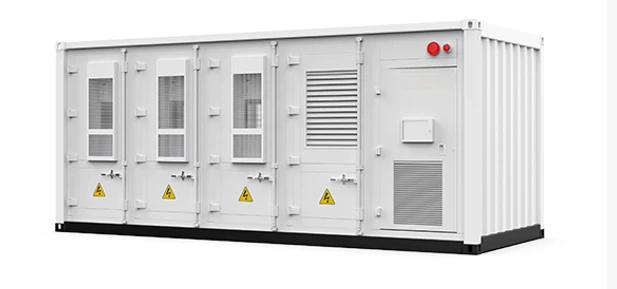
The power conversion system-your DC-AC bridge to the grid-sometimes lives inside the container, sometimes in a separate enclosure. Integration philosophy varies wildly between manufacturers. Sungrow tends toward all-in-one packaging. Fluence often separates components. Neither approach is definitively superior; it depends on site constraints, maintenance access requirements, and how much the customer trusts the integrator's electrical design capabilities.
The Certification Maze
Here's where things get genuinely frustrating for manufacturers trying to go global.

UL 9540A testing in North America isn't just a checkbox. The thermal runaway propagation tests can take six months and cost upward of $500,000 per configuration. Fail once, redesign, test again. Chinese manufacturers entering the US market have burned through millions on certification alone before selling a single unit. Some gave up. Others-Envision, Pylontech, a handful of others-pushed through and now hold legitimate UL listings.
European CE marking looks simpler on paper but hides complexity in the machinery directive interpretations. Different notified bodies have different opinions on what constitutes "foreseeable misuse" for a 5MWh battery installation. Australia's CEC approval process adds another layer. The Middle East mostly defers to IEC standards but individual utilities impose their own witness testing requirements.
Nobody talks publicly about how many containers get shipped before full certification clears. It happens. NDAs cover the specifics.
The current state of the supply chain in 2024-2025
Cell procurement defines manufacturer competitiveness more than almost any other factor. A BESS container is, fundamentally, a packaging and integration exercise built around someone else's electrochemistry.

The top-tier cell suppliers-CATL, BYD, EVE Energy, CALB-don't treat all customers equally. Volume commitments matter. A manufacturer ordering 500MWh annually gets different pricing, allocation priority, and technical support than one ordering 50MWh. This creates a self-reinforcing dynamic where scale begets better economics begets more competitive bids begets more volume.
Smaller integrators survive by finding niches. Second-tier cell suppliers hungry for market share. Specialty applications where brand recognition matters less. Geographic markets where the giants haven't established distribution. Or they get acquired.
BMS sourcing splits into two camps: self-developed versus purchased. The arguments for in-house BMS development center on differentiation and margin capture. The arguments against involve the brutal R&D investment required to match the safety validation depth of specialists like Higee or Kehua. Most manufacturers land somewhere in between-buying core BMS hardware while customizing firmware and adding proprietary monitoring layers on top.
Pricing Dynamics That Don't Make Sense (Until They Do)
Containerized energy storage system prices have fallen sharply in recent years. The ex-factory price of some configurations has dropped below $100/kWh (in China), a remarkable figure considering prices three years ago.
The math doesn't work for everyone at these levels. Gross margins for pure-play integrators have compressed to 12-18% in competitive tenders. Some reported bids suggest even thinner margins-or outright losses taken to secure reference projects in new markets.
Why would a manufacturer bid below cost? Strategic rationale varies:
Breaking into a new geography where a flagship project opens doors
Keeping production lines running during demand soft patches
Betting that cell prices will drop further before delivery, creating margin on the backend
Desperation
The last one is more common than investor presentations suggest. Overcapacity in China's BESS manufacturing sector is real. Estimates vary, but something like 200GWh+ of annual production capacity exists against global demand that might hit 100GWh in a good year. Not everyone survives this shakeout.
Manufacturing Floors I've Walked Through
The range in production sophistication is striking.
One facility in Jiangsu-won't name it-runs a nearly fully automated PACK line. Cells get loaded robotically, welded with laser precision, tested through multiple charge-discharge cycles, then integrated into racks with minimal human intervention. Impressive. Clean. Expensive to build.
Another facility, smaller outfit, relies on trained technicians for most assembly steps. More labor, tighter quality variance if the workers are good, worse variance if they're not. This manufacturer wins on flexibility-they'll customize configurations that the automated lines can't economically handle.
Both approaches find customers. Both have failure modes. The automated line struggles with engineering change orders mid-production. The manual line struggles with consistency at volume.
Testing protocols separate serious manufacturers from those cutting corners. A proper regime includes cell-level incoming inspection, module-level capacity and impedance testing, rack-level balancing validation, and full container burn-in under load. Some compress this. Some skip steps. Problems surface downstream-warranty claims, performance shortfalls, in the worst cases, thermal events.
The Safety Question Everyone Avoids
Container fires happen. The industry doesn't discuss specific incidents openly-legal exposure, reputational damage, customer sensitivity. But fire department reports from Arizona, South Korea, Belgium, and elsewhere document the reality.
Root causes cluster around a few categories: BMS failures allowing cells to overcharge or overdischarge, thermal management inadequacy during peak ambient conditions, manufacturing defects that create internal short circuits, and external factors like grid-side transients or installation errors.
Propagation prevention has become the central design challenge. UL 9540A specifically tests whether a single cell thermal runaway cascades to adjacent cells. The design choices that pass this test-robust interlayer insulation, aggressive vent gas management, deflagration panels, aerosol or clean-agent suppression systems-add cost and complexity.
NFPA 855 in the US now effectively mandates significant separation distances between container installations unless specific mitigation measures are demonstrated. This reshapes project economics. Land costs matter more. Some urban sites become unbuildable.
Geographic Market Peculiarities
The United States post-IRA operates under strange incentive structures. Domestic content bonuses push manufacturers toward final assembly on US soil-or at least plausible claims of sufficient domestic value-add. What counts as "domestic" involves tortured interpretations of Treasury guidance that even tax lawyers struggle to navigate with confidence. Some Chinese manufacturers have established Arizona or Texas assembly facilities. Others partner with US entities for final integration while shipping semi-finished containers.
European demand concentrates in specific countries: Germany for industrial behind-the-meter applications, UK for grid services and merchant storage plays, Italy for solar-plus-storage residential systems. The continent's grid interconnection complexity-each TSO with its own requirements-fragments the market in ways that favor locally knowledgeable integrators.
Australia punches above its weight in utility-scale storage. The Hornsdale project put the country on the map. Grid instability and high wholesale price volatility create genuine economic use cases beyond policy mandates. Customers there are sophisticated; they've seen enough installations to ask hard questions about degradation warranties and round-trip efficiency claims.
Emerging markets-Southeast Asia, Latin America, Africa-remain more promise than reality for most manufacturers. Financing constraints dominate. A 50MWh installation in Indonesia faces different bankability standards than the same hardware in California. Political risk, currency exposure, and underdeveloped regulatory frameworks keep major players cautious.
What Separates Winners From Also-Rans
Track record compounds. A manufacturer with 5GWh of installed capacity and minimal warranty claims wins bids against a competitor with 500MWh deployed, even at higher prices. Project finance lenders demand reference installations. EPC contractors prefer proven suppliers. Reputation is sticky.
Engineering depth shows up in subtle ways. How quickly can the manufacturer respond to a site-specific interconnection requirement? Do they understand the grid code implications, or do they treat the container as an isolated product? The best manufacturers embed power systems engineers who speak utility language, not just battery engineers who understand cell chemistry.
After-sales presence increasingly matters. A container in West Texas needs support from someone who can physically get there within 48 hours. Remote monitoring catches some issues. Not all. Manufacturers building out regional service networks-or partnering with O&M specialists-differentiate against those shipping units and hoping for the best.
Financial stability filters weak players over time. Payment terms in this industry stretch long. Progress payments tie up working capital for months between order and delivery. Customers demand warranty bonds and performance guarantees that require creditworthy counterparties. Small manufacturers without strong balance sheets or banking relationships struggle to underwrite large projects even when they win them technically.
Where This Goes
Sodium-ion chemistries will take some market share from LFP over the next three to five years, primarily in applications where cost sensitivity trumps energy density-grid-scale storage fits that description. Container manufacturers will need to qualify new cell suppliers and potentially redesign thermal management for sodium's different operating characteristics.
Longer-duration storage technologies-iron-air, zinc-based, flow batteries-operate in a different competitive space. Four-hour lithium containers dominate today's market because that's what grid operators procure. If procurement shifts toward 8-hour or 12-hour durations, the containerized lithium paradigm faces pressure.
Consolidation feels inevitable. Too many manufacturers chase too few profitable opportunities. The survivors will likely include vertically integrated players (BYD, CATL's system business), those with locked-in customer relationships in major markets, and a few specialists serving niches that giants ignore.
What won't change: the fundamental value proposition of modular, factory-built energy storage that deploys faster than conventional infrastructure. That's durable. The question is only which manufacturers capture the opportunity.