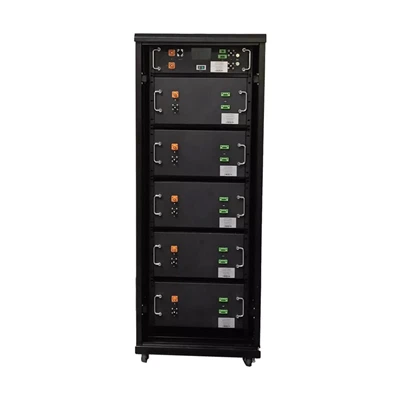
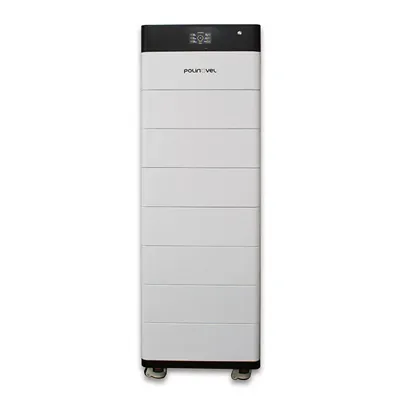
20kWh-60kWh High Voltage Battery Storage
The 20kWh-60kWh High Voltage Battery Storage is a modular, intelligent energy solution designed for flexible deployment in commercial and residential energy storage applications.
With LiFePO4 chemistry, advanced BMS, and cloud connectivity, it delivers safe, long-lasting performance while enabling easy installation, monitoring, and scalable energy management.

Optimized for Your Energy Needs
Scalable Energy Solution
Modules can be added in parallel to meet growing energy demands, enabling flexible deployment for residential, commercial, or light industrial applications.
Smart and Connected
Integrated BMS and cloud connectivity allow automatic charge/discharge management, cell balancing, and remote monitoring for smarter energy usage.
Certified for Global Deployment
Certified to UN38.3, CE, and CE-EMC standards, ensuring compliance with international safety and transportation requirements.
Environmentally Adaptable
Wide operating temperature (-20~55℃ discharge) and humidity tolerance (5~80% RH) ensure reliable performance across diverse environments.
Beyond 12V Limitations
Traditional 12V batteries, even the biggest available, are limited in capacity and efficiency. Our high-voltage architecture delivers the greatest power density, lower current loss, and seamless scalability - ideal for applications that demand more than standard 12V systems can offer.
Specification
|
Battery Model
|
HV20 |
HV30 |
HV40 |
HV50 | HV60 |
|
Battery Module Qty in series
|
4
|
6
|
8
|
10
|
12
|
|
System Nominal Voltage
|
204.8V
|
307.2V
|
409.6V
|
512.0V
|
614.4V
|
|
System Operating Min.Voltage
|
179.2V
|
268.8V
|
358.4V
|
448.0V
|
537.6V
|
|
System Operating Max.Voltage
|
233.6V
|
350.4V
|
467.2V
|
584.0V
|
700.8V
|
|
System Energy
|
20.5kWh
|
30.7kWh
|
41.0kWh
|
51.2kWh
|
61.4kWh
|
|
System Usable Energy
|
19.5kWh
|
29.2kWh
|
38.9kWh
|
48.6kWh
|
58.4kWh
|
| Dimensions (WxDxH) | 776x552x976mm | 776x552x1282mm | 776x552x1588mm | 776x552x1894mm | 776x552x2200mm |
| Weight Approximate | 209kg | 305.7kg | 402.4kg | 499.1kg | 595.8kg |
| Battery Module | 51.2V 100Ah | ||||
|
Recommend Charge/Discharge Current
|
50/50A
|
||||
|
Max Charge/Discharge Current
|
70/100A
|
||||
|
Peak Discharge (3S,25℃)
|
80/120A
|
||||
|
Installation Location
|
Rack Mounting |
||||
|
Recommend Depth of Discharge
|
≤95%
|
||||
|
Cycle Life
|
6000 (25℃,0.5C/0.5C,EOL70%)
|
||||
|
Display Type
|
LED+Touch LCD
|
||||
|
Triple Protection
|
Positive Relay + Negative Relay + Breaker
|
||||
|
Number of Main Circuit Relays
|
3
|
||||
|
Heat Dissipation
|
Natural Cooling
|
||||
|
Certification
|
UN38.3/CE/CE-EMC
|
||||
|
Working Temperature (℃)
|
Charge:0~55℃/Discharge:-20~55℃
|
||||
|
Storage Temperature (℃)
|
0~35℃
|
||||
|
Communicaton Port
|
RS485/CAN/WiFi
|
||||
|
Humidity (RH)
|
5%~80%
|
||||
|
Altitude (m)
|
≤3000
|
||||
|
IP Rating of Enclosure
|
IP20
|
||||
|
Noise
|
<30dB
|
||||
|
Cover An Area
|
0.78 x 0.55m
|
||||
Listed by Leading Inverter Brands
Our batteries are officially listed as compatible by several globally recognized inverter manufacturers. Each product has undergone rigorous testing and validation to ensure seamless communication, reliable operation, and full compatibility across diverse inverter platforms.


LiFePO₄ Cells Built for 6,000 Cycles
Every module in this system uses LiFePO₄ chemistry - chosen for its thermal stability and long cycle life. The result: 6,000 cycles at 25°C / 0.5C with 70% end-of-life capacity retention, natural convection cooling with no moving parts, and operating noise below 30 dB.
6,000 Cycles
25°C, 0.5C/0.5C, EOL 70% capacity retention
< 30 dB Noise
Natural cooling, no fans or pumps required
51.2V / 100Ah per Module
Identical modules across HV20 through HV60
The LiFePO₄ chemistry eliminates the need for active liquid cooling - reducing maintenance and keeping installations quiet enough for commercial & industrial environments near occupied spaces. Charge temperature range is 0–55°C; discharge operates from -20°C to 55°C, with humidity tolerance of 5–80% RH and altitude support up to 3,000 m.
Same cell platform across the 96–209kWh system and 60–130kWh system. Datasheets available on the downloads page.
Triple-Relay Protection & Intelligent BMS
This system uses 3 main circuit relays - not the single contactor found in most competing products. Each relay operates independently, providing redundant isolation paths. Learn more about why BESS safety certification increasingly requires this level of redundancy.
Positive Relay - High-Side Isolation
Controls the positive bus independently. If a fault is detected, this relay opens to disconnect the high side while the BMS communicates fault status to the inverter via CAN/RS485.
Negative Relay - Low-Side Isolation
Independent low-side switching prevents current from finding an alternative return path during a ground fault. Both polarities must be intentionally closed before current flows.
Breaker - Pre-Charge & Manual Disconnect
Limits inrush current when the inverter first connects. Also serves as a visible, lockable manual disconnect for service crews - no reliance on electronic switching during maintenance.
Automatic Cell Balancing
The intelligent BMS balances cells during every charge/discharge cycle, preventing capacity divergence across the 4–12 modules in the string.
Tuya Cloud + WiFi + Bluetooth Monitoring
Remote monitoring via the free Tuya Smart app (iOS/Android). Real-time SOC, temperature, and alarm history - across all sites from a single account.
LED + Touch LCD On-Unit Display
On-unit display shows system status, SOC, and fault codes without requiring a phone or laptop. Useful for quick on-site diagnostics during commissioning.
This architecture is shared across all HV models. For systems requiring fire suppression and cluster-level coordination, see the 2MWh containerized BESS. Commissioning guides in the support video library.
Application Scenarios
Five models (HV20–HV60) cover 20.5–61.4 kWh with a constant 0.78 × 0.55 m footprint. Not sure about sizing? Our kW vs. kWh guide covers the basics.

Solar Self-Consumption & Time-of-Use Arbitrage
Store midday solar surplus for evening loads and capture peak-to-off-peak price spreads with daily cycling. HV30 (30.7kWh / 307.2V) offers a balance of capacity and voltage for residential and small commercial rooftops, while HV40 (41.0kWh / 409.6V) suits larger sites. The 6,000-cycle life and ≤95% recommended DoD keep long-term economics viable across tariff structures. See how this supports a broader C&I solar storage strategy.

Peak Shaving, Demand Charges & EV Charging
Reduce demand charges by discharging during peak windows, and buffer fast-charger spikes that would otherwise trigger costly demand peaks. HV40 (41.0kWh, max 100A discharge) handles moderate commercial loads; HV50 (51.2kWh / 512.0V) absorbs higher transient demand from EV chargers. Pair with Polinovel's EV charging hardware for an integrated system. For higher capacity, step up to the 125kW / 241kWh outdoor cabinet.

Off-Grid, Microgrid & Telecom Backup
For sites without grid access or requiring autonomous backup, HV20 (20.5kWh / 204.8V / 209kg) fits compact telecom shelters at just 0.78 × 0.55 m footprint, with Tuya cloud monitoring across distributed sites to eliminate per-site visits. HV60 (61.4kWh / 614.4V) supports extended autonomy with multiple racks in parallel via CAN. Compare on-grid vs. off-grid vs. hybrid architectures for your project.
For relocatable deployments, see the 100kWh mobile BESS. For utility-scale projects, explore utility-scale solutions or the 4.6 MWh containerized system.
OEM & ODM - Your Brand, Same Quality
Polinovel offers OEM and ODM services for the HV-series. Same LiFePO₄ cells, same BMS, same triple-relay architecture, same production line - shipped under your brand. For context on how BESS suppliers are structured globally, see our analysis of BESS system suppliers.

01
LCD & Enclosure Branding
Your logo on the Touch LCD boot screen and idle display. Enclosure silk-screen printing with your brand identity and certification marks.

02
Inverter Protocol Adaptation
Standard firmware supports 12+ inverter brands (Deye, Growatt, SMA, Victron, etc.) via RS485/CAN. Custom protocols available for unlisted inverters. See inverter-battery pairing principles.

03
Custom Module Configurations
Standard: HV20 / HV30 / HV40 / HV50 / HV60 (4–12 modules). Non-standard module counts available for specific inverter voltage windows. Same flexibility as the 25–40kWh stackable series.

04
Mechanical & Environmental
Custom enclosure colors, modified rack dimensions, upgraded IP ratings for semi-outdoor installations, and repositioned cable entry points for specific wiring standards.
HV20–HV60 Frequently Asked Questions
Q: What is the usable energy of each model at the recommended ≤95% DoD?
A: HV20: 19.5kWh, HV30: 29.2kWh, HV40: 38.9kWh, HV50: 48.6kWh, HV60: 58.4kWh. See the Specification table above for nominal vs. usable figures.
Q: What are the dimensions and weight of the HV50 configuration?
A: 776 × 552 × 1894mm (W×D×H), approximately 499.1kg. Footprint is 0.78 × 0.55m - identical across all models. Full dimensional data for all five configurations is in the Specification table.
Q: Which inverters are compatible out of the box?
A: The battery is officially listed by Deye, Goodwe, Growatt, SAJ, SMA, Victron, Afore, Sunsynk, Solis, Phocos, TBB, and Studer. Communication via RS485 and CAN is included in the standard firmware. No custom cabling required for these brands.
Q: Can I expand from HV20 to HV40 by adding modules later?
A: Yes. All models use identical 51.2V / 100Ah modules stacked in series. Going from HV20 (4 modules) to HV40 (8 modules) means adding 4 modules. The BMS auto-detects new modules - no controller swap or rewiring needed. This modular stacking approach is core to the design.
Q: What is the operating voltage range of the HV30 vs. HV50?
A: HV30: 268.8V (min) to 350.4V (max), nominal 307.2V. HV50: 448.0V (min) to 584.0V (max), nominal 512.0V. Match these ranges to your inverter's DC input window. Full voltage data for all models is in the Specification table.
Q: What are the max charge and discharge current ratings?
A: Recommended: 50A charge / 50A discharge. Maximum: 70A charge / 100A discharge. Peak discharge (3 seconds, 25°C): 120A. These ratings apply to all configurations from HV20 to HV60.
Q: What certifications does this product hold?
A: UN38.3, CE, and CE-EMC. These certifications cover international safety and transportation requirements. More details on certification scope available on the downloads page.
Q: Can the Tuya app monitor multiple HV systems across different sites?
A: Yes. All units connect to a single Tuya Smart account (free, iOS/Android) via the onboard WiFi. Fleet operators monitoring distributed C&I installations can view all systems from one dashboard. Bluetooth is also available for local access.

Need Help Choosing the Right HV Configuration?
Share your load profile, inverter model, and tariff structure. We'll recommend the right model and provide a quotation.
Hot Tags: 20kWh-60kWh Rack-Mounted High Voltage LiFePO4 Battery Storage, China 20kWh-60kWh Rack-Mounted High Voltage LiFePO4 Battery Storage manufacturers, suppliers, factory