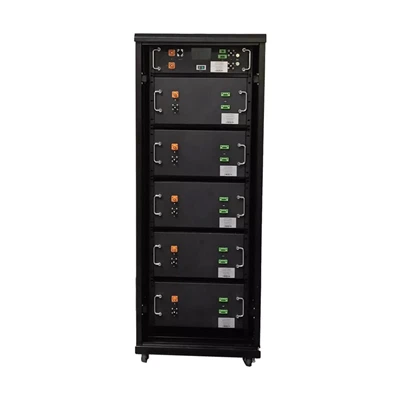
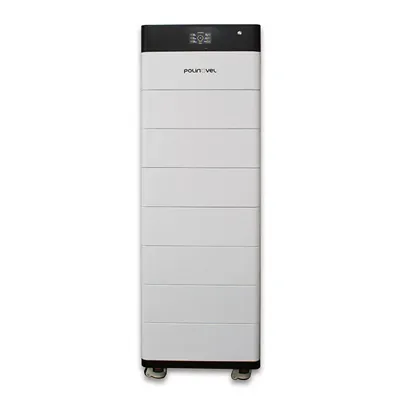
96kWh–209kWh High Voltage Battery Energy Storage System
Built for commercial projects that need more power and deeper storage than entry-level systems can deliver. This rack-mounted LiFePO₄ battery system scales from 96kWh to 209kWh - covering 100kWh, 150kWh, and 200kWh configurations - to handle everything from multi-zone HVAC to elevator banks and light manufacturing lines.
The system runs at 150A continuous (200A max) and handles 220A peak discharge for motor startups. LiFePO₄ cells, intelligent BMS, and triple-relay protection keep it running reliably across 6,000+ cycles - with plug-and-play compatibility for 12 major inverter brands including Deye, Growatt, and SMA.

Optimized for Your Energy Needs
150A/200A/220A High Current for Motor-Heavy Loads
150A recommended, 200A max continuous, 220A peak discharge (3 seconds). This current capacity is 50% higher than our 60–130kWh series - enough to absorb motor inrush current from compressors, elevators, and water pumps without tripping breakers or causing brownouts. Ideal for factories, shopping centers, and facilities with heavy startup loads.
96kWh to 209kWh Modular Battery Scaling (307V–665V)
Stack 6 to 13 battery modules in series to reach anywhere from 96kWh to 209kWh. System voltage scales accordingly (307V to 665V), staying within the operating window of most commercial hybrid inverters. Start with a 100kWh configuration today, expand to 150kWh or 200kWh as demand grows - no rack replacement required.
Triple Relay Protection for High-Voltage Safety
Positive relay, negative relay, and circuit breaker work together as a redundant safety architecture. With triple relay protection, two independent layers remain even after a single relay failure. For high-current commercial battery systems, this redundancy prevents equipment damage and safety incidents that dual-relay designs cannot catch.
BMS Automatic Cell Balancing & Monitoring
The built-in BMS handles charge/discharge cycles automatically - balancing cell voltage and current, monitoring temperature across every module, and cutting off before limits are exceeded. No manual intervention required for daily energy management.
6,000+ Cycle LiFePO₄ Battery Life
LiFePO₄ chemistry delivers stable thermal performance and long service life. At 0.5C charge/discharge, expect 6,000 cycles before capacity drops to 70%, reducing total cost of ownership significantly compared to lead-acid battery banks or shorter-life lithium alternatives.
19-Inch Rack Mount, Front-Access Installation
Standard 19-inch rack-mounted design with front-access wiring. Battery modules slide in, cables connect at the front, and the system powers up. Most installations finish in under a day - no specialized tools required.
Application Scenarios
Peak Shaving & Demand Response for Commercial Facilities
Charge overnight at off-peak rates, discharge at 150A during demand peaks. A 150kWh LiFePO₄ battery rack cycling once daily at a $0.17/kWh peak-to-off-peak spread saves roughly $750–$800/month for a mid-sized factory or warehouse - and in markets with wider tariff gaps or multiple daily peaks, returns scale accordingly. Especially effective as a commercial battery storage solution for load shedding in South Africa, where unpredictable power cuts make stored energy both a financial and operational necessity.
Solar Self-Consumption for Factories & Warehouses
Pair with rooftop PV to store excess daytime generation and discharge after sunset. A 100kW PV array with 150kWh battery storage typically achieves 85–95% self-consumption vs 30–40% without storage. Factories and logistics parks across Southeast Asia, the Middle East, and Africa use this solar battery storage setup to reduce grid dependency and lock in energy costs. Works with Deye, Growatt, GoodWe, Victron, and 8 other compatible inverter brands we've validated via RS485/CAN protocols.
Critical Load Backup: Elevators, Compressors & Cold Chain
The 220A peak discharge handles elevator motor startup surge, cold-chain compressor inrush current, and water pump loads without tripping. A 150kWh system provides 4–6 hours of battery backup power for a typical 25–35kW critical load. Hospitals, data centers, and telecom towers in regions like South Africa and Nigeria use this as a reliable backup - and a modern LiFePO₄ replacement for aging lead-acid battery banks that need constant maintenance.
Off-Grid & Microgrid Battery Storage
Microgrid battery storage in the Philippines, off-grid battery systems in Nigeria, weak-grid zones across Africa - these environments need energy storage that scales with demand. Start at 96kWh (HV96) and scale up to 209kWh (HV209) by adding battery modules in series, without swapping racks or rewiring. Each step up adds roughly 16kWh of system energy, and a new module can be installed in under 2 hours.
Specification
| Model | HV96 | HV112 | HV128 | HV144 |
| Battery Module Qty in series | 6 | 7 | 8 | 9 |
| System Nominal Voltage | 307.2V | 358.4V | 409.6V | 460.8V |
| System Operating Min.Voltage | 268.8V | 313.6V | 358.4V | 403.2V |
| System Operating Max.Voltage | 345.6V | 403.2V | 460.8V | 518.4V |
| System Energy | 96.5kWh | 112.5kWh | 128.6kWh | 144.7kWh |
| System Usable Energy |
91.6kWh
|
106.9kWh
|
122.2kWh
|
137.5kWh
|
| Dimensions (WxDxH) | 840*590*2095mm | 840*1190*2095mm | ||
| Weight Approximate | 867.5kg | 989.5kg | 1111.5kg | 1233.5kg |
| Footprint | 0.84*0.59m | 0.84*1.19m | ||
| Model | HV160 | HV176 | HV192 | HV209 |
| Battery Module Qty in series | 10 | 11 | 12 | 13 |
| System Nominal Voltage | 512V | 563.2V | 614.4V | 665.6V |
| System Operating Min.Voltage | 448V | 492.8V | 537.6V | 582.4V |
| System Operating Max.Voltage | 576V | 633.6V | 691.2V | 748.8V |
| System Energy | 160.8kWh | 176.8kWh | 192.9kWh | 209kWh |
| System Usable Energy | 152.7kWh | 168kWh | 183.3kWh | 198.5kWh |
| Dimensions (WxDxH) | 840*1190*2095mm | |||
| Weight Approximate | 1355.5kg | 1477.5kg | 1599.5kg | 1721.5kg |
| Footprint | 0.84*1.19m | |||
| Battery Module | 51.2V 100Ah | |||
| Recommend Charge/Discharge Current | 150/150A | |||
| Max Charge/Discharge Current | 200/200A | |||
| Peak Discharge (3S,25℃) | 220/220A | |||
| Installation Location | Rack Mounting | |||
| Recommend Depth of Discharge | ≤95% | |||
| Cycle Life | 6000 (25℃,0.5C/0.5C,EOL70%) | |||
| Display Type | LED+Touch LCD | |||
| Triple Protection | Positive Relay + Negative Relay + Breaker | |||
| Number of Main Circuit Relays | 3 | |||
| Heat Dissipation | Fan cooling | |||
| Certification | UN38.3/CE/CE-EMC | |||
| Working Temperature | Charge:0~55℃/Discharge:-20~55℃ | |||
| Storage Temperature | 0~35℃ | |||
| Communication Port | RS485/CAN/WiFi | |||
| Humidity (RH) | 5%~80% | |||
| Altitude | ≤3000m | |||
| IP Rating of Enclosure | IP20 | |||
| Noise | <50dB | |||
96–209 kWh vs 60–130 kWh: Which Battery System Fits Your Load?
Same rack dimensions, same RS485/CAN protocols, same inverter compatibility. The difference is in current rating and capacity ceiling - choose based on whether your facility runs light commercial loads or motor-heavy industrial equipment.
| Parameter | 60–130 kWh Series | 96–209 kWh Series |
| Recommended Current | 100 / 100 A | 150 / 150 A |
| Max Current | 150 / 200 A | 200 / 200 A |
| Peak Discharge (3s) | 200 / 220 A | 220 / 220 A |
| Capacity Range | 63–136 kWh | 96.5–209 kWh |
| Max Voltage | 748.8 V | 748.8 V |
| Best For | Small offices, retail, light commercial | Factories, shopping centers, motor-heavy loads |
Already running the 60–130 kWh battery system? Upgrading to the 96–209 kWh series is straightforward - same rack, same BMS logic. Just swap in the higher-rated modules for 50% more current capacity.
Validated Inverter Compatibility
We've tested communication protocols (RS485/CAN) and protection coordination with 12 inverter brands at full 150A / 200A operating range. Whether you need a high voltage battery compatible with Deye, a Growatt compatible LiFePO₄ rack, or storage for SMA and Victron hybrid inverters - it's plug-and-play. Full validated list: Deye, Growatt, GoodWe, SMA, Victron, Sunsynk, Solis, SAJ, Afore, Phocos, TBB, and Studer. If your inverter is not on this list, reach out - we may have already tested it or can run a compatibility check.


Frequently Asked Questions
Can I upgrade from the 60–130kWh battery system to the 96–209kWh series without replacing the rack?
Yes. Both series use the same rack size (840 × 1190 × 2095 mm), the same communication protocols (RS485/CAN/WiFi), and the same inverter compatibility list. Swap in the higher-rated modules, and the BMS auto-detects the new configuration. No rewiring, no firmware updates.
Can this battery handle elevator motor startup and compressor inrush current?
The system handles 220A peak discharge for 3 seconds - enough to cover the inrush current from most commercial elevator motors and refrigeration compressors. For sustained loads, the 150A / 200A continuous rating keeps the system in safe operating range without thermal derating.
How does commissioning work with Deye, Growatt, or other compatible inverters?
Plug-and-play. Deye, Growatt, GoodWe, SMA, Victron, and the other 7 listed brands are on our validated compatibility list, so the CAN protocol mapping is pre-configured. Connect the cables, power on, and the inverter recognizes the battery automatically via RS485 or CAN communication.
Why choose high voltage over low voltage battery storage for commercial projects?
At the same power output, higher voltage means lower current - which reduces cable losses, allows thinner cables, and improves inverter efficiency. For anything above 30kW, most commercial and industrial inverter manufacturers recommend high voltage battery architecture. We explain the tradeoffs between high voltage vs low voltage battery systems in more detail in this article.
The HV209 weighs 1,700kg. What are the floor requirements for rack-mounted battery installation?
Standard commercial-grade concrete floors handle this without issue. The footprint is 0.84 × 1.19 m, so the load distributes across roughly 1 m². For upper-floor installations or older buildings, verify the structural rating with your building engineer. We can provide a load distribution document on request.
How does 95% depth of discharge affect LiFePO₄ battery cycle life?
The recommended DoD is 95%, which maximizes usable capacity while preserving cell longevity. Running at shallower DoD (e.g., 80%) can extend cycle life beyond the rated 6,000 cycles - some installations report 8,000+ cycles at 80% DoD. Conversely, consistently running at 100% DoD will shorten lifespan. The BMS lets you configure DoD limits based on your operational priorities: maximum daily energy or maximum total lifetime capacity.
How does triple relay protection compare to standard dual-relay battery systems?
Most battery storage systems use dual-relay protection (positive and negative). This system adds a third layer - a dedicated circuit breaker. If the positive relay fails to open during a fault, the negative relay and breaker still isolate the circuit. This triple relay protection redundancy is critical for high-current commercial battery applications where a single point of failure could cause equipment damage or safety incidents.
How long does rack-mounted battery storage installation typically take?
Most installations finish within a day. The 19-inch rack arrives pre-assembled - modules slide into place, cables connect at the front, and the system powers up. No special tools required. If you're adding modules to an existing system, the BMS auto-detects the new configuration without manual setup.
Is LiFePO₄ battery storage a good replacement for lead-acid in commercial backup systems?
Yes. LiFePO₄ (LFP) batteries deliver 6,000+ cycles at 95% DoD, compared to 500–800 cycles for typical lead-acid banks. They require no watering, no equalization charges, and tolerate a wider temperature range. For the same usable energy, an LFP rack system weighs roughly 40% less and occupies less floor space - making it a practical drop-in replacement for commercial backup applications in hospitals, data centers, and telecom towers.
What happens when a battery module fails? Do we lose the whole system?
The BMS monitors each module independently. If one module shows a fault, the system flags it on the LCD display and via the RS485/CAN communication interface. For most faults, you can isolate and replace the affected module without shutting down the entire system. We recommend keeping one spare module on-site for critical installations.
Ready to Size Your Commercial Battery Storage System?
Tell us your load profile and we'll recommend the right configuration - whether you need 100kWh, 150kWh, or 200kWh of rack-mounted LiFePO₄ storage.
Response within 24 hours · MOQ: 1 unit · OEM/ODM available
Hot Tags: High Voltage Battery Energy Storage System