


Mobile BESS demand is growing fast, but understanding the true Mobile BESS cost is not always straightforward. Many buyers make the mistake of comparing mobile systems like stationary storage, focusing only on battery capacity or price per kWh.
In reality, Mobile BESS pricing is shaped by much more than energy size alone. Mobility design, battery quality, cooling, PCS, safety, and outdoor durability can all significantly influence both upfront cost and real project value.
This guide breaks down the 8 key factors that affect Mobile BESS pricing, helping buyers compare quotes more effectively and avoid costly configuration mistakes.
Factor 1: Battery Chemistry and Cell Quality
Battery cells are one of the largest cost drivers in a mobile BESS. They affect safety, cycle life, usable capacity, and long-term performance.
Why it matters:
- Chemistry affects safety and lifespan.
LFP batteries are widely used in mobile BESS because they offer good thermal stability, long cycle life, and reliable outdoor performance.
- Cell grade affects consistency.
Grade A cells usually have better voltage, capacity, and internal resistance matching. This helps the whole battery pack work more safely and predictably.
- Lower-cost cells may increase future costs.
Lower-grade or reused cells may reduce the initial price, but they can lead to faster degradation, uneven performance, and higher maintenance needs.
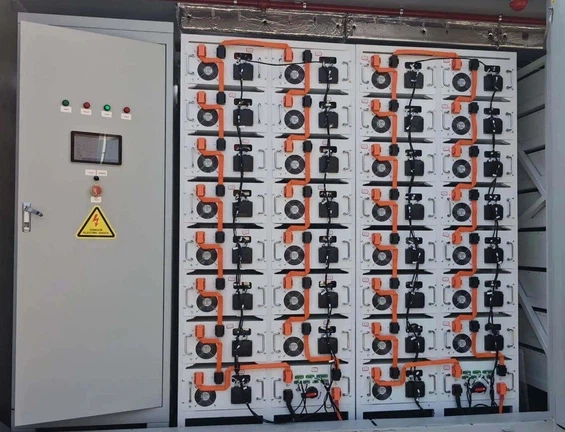
For mobile applications, cell quality matters even more because the system may face vibration, temperature changes, and frequent relocation.
Buyer tip:
Do not compare quotes by capacity alone. Ask about cell grade, cycle life, warranty terms, cell matching, and whether the supplier uses new or reused battery cells.
Factor 2: System Scale: Why Bigger Units Often Cost Less per kWh
Mobile BESS pricing does not scale in a straight line. A 200kWh unit is not simply "one-fifth the cost" of a 1MWh unit. The reason is simple: many parts of a mobile BESS are fixed costs.
A smaller system still needs:
- a mobile enclosure or trailer structure kWh
- BMS and system control
- PCS/inverter
- fire protection
- cooling system
- wiring, testing, and integration
These parts do not shrink much just because the battery capacity is smaller. So when the system has less energy capacity, these fixed costs are spread over fewer kWh. That usually makes the cost per kWh higher.
For larger systems, the battery capacity increases, but the enclosure, control system, and integration cost do not rise at the same speed. This is why larger mobile BESS units often have better unit economics.
For buyers, the key is not to choose the smallest system just to reduce the initial price. It is better to compare the system by usable capacity, runtime needs, site space, mobility requirements, and cost per kWh.
Factor 3: Thermal Management: Air Cooling or Liquid Cooling

For light-duty use, air cooling is often enough. It is simpler, easier to maintain, and usually has a lower upfront cost. This makes it suitable for backup power, low-frequency use, or projects where the system is not charged and discharged heavily every day.
Liquid cooling costs more, but it gives the battery pack better temperature control. This matters when the system needs to handle:
- frequent charging and discharging
- high-power output
- EV charging support
- peak shaving
- hot outdoor environments
- long daily operating hours
When battery temperature is more stable, the system can operate more efficiently and reduce the risk of performance derating. It may also help protect battery life in high-utilization projects.
For buyers, the question is not which cooling method is "better."
The better question is: how hard will the system work? This added cost can be worthwhile when the Mobile BESS works harder every day. For example, EV charging, peak shaving, construction power, and high-temperature sites often require more stable temperature control.
Factor 4: Enclosure and Protection: Why Rugged Design Adds Cost
In many projects, enclosure and protection design can account for roughly 5%–10% of total system cost, depending on mobility requirements and environmental protection level.
A lower-cost enclosure may be suitable for mild conditions, but more demanding projects often require stronger protection, such as:
- reinforced structure for road transport and vibration
- IP-rated sealing (such as IP54 vs. IP65/IP66)
- corrosion-resistant coatings for humid, coastal, or industrial sites
- heavier-duty doors, seals, and cable protection
For example, moving from a basic industrial enclosure to a more rugged outdoor design may increase upfront cost, but it may also reduce long-term risks like water ingress, rust, or premature electrical damage.
This is especially important because the enclosure protects far more expensive components inside, including batteries, PCS, EMS, and fire safety systems.
For buyers, the real question is where and how the unit will operate.
If deployment is mostly indoors or temporary, basic protection may be enough. But for harsh outdoor use, frequent relocation, or multi-year industrial projects, a stronger enclosure design can be a practical form of asset protection.
Factor 5: PCS Power: Why the Same Battery Capacity Can Have Very Different Prices
Two Mobile BESS units may both offer similar battery capacity, but that does not mean they deliver the same usable power.
The difference often comes from the PCS (Power Conversion System) - the part that converts stored battery energy into real-world output.
In simple terms, kWh tells you how much energy you store. PCS tells you how much work you can actually do.
This is why PCS can become one of the bigger price variables, often representing around 10%–20% of total system cost.

A lower-cost PCS may be enough for light backup loads. But price usually rises when buyers need more demanding capabilities, such as:
- Higher continuous kW output
- off-grid or black-start operation
- stable voltage for sensitive equipment
- support for motor starting or heavy industrial loads
- better thermal stability in outdoor use
For example, powering lights or temporary backup is very different from supporting EV charging, construction equipment, or remote industrial operations.
So two systems with the same battery size may perform very differently once load conditions change.
The practical buying question is not just "How many kWh?"
It should also be: "How much real power can this system deliver consistently, under my actual site conditions?"
Factor 6: Mobility Design: Moving Power Is Part of the Cost
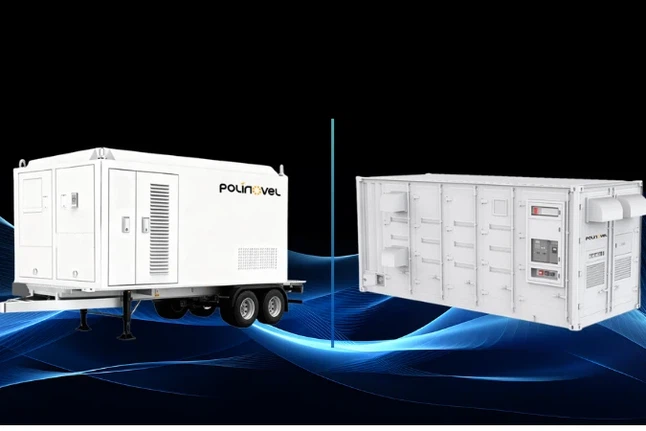
At first glance, a simpler skid-mounted unit may look more affordable because it avoids trailer, axle, and road-ready engineering costs. But a lower initial price does not always mean lower project cost. The real question is how often the system needs to move.
If relocation is frequent, each move may involve:
- crane or forklift access
- flatbed transportation
- external logistics scheduling
- loading and unloading labor
- longer deployment downtime
These repeated costs can accumulate quickly.
Trailer-mounted systems usually cost more upfront because mobility is built into the design. That may include:
- integrated trailer chassis
- towing systems
- braking and stabilization
- faster site-to-site deployment
For projects like temporary construction, rental fleets, emergency backup, or distributed off-grid operations, this added upfront cost may improve flexibility and reduce repeated relocation friction.
Mobility design is not just a hardware choice - it is an operating model choice.
Buyers should evaluate not only the purchase price, but also how many times the system will move each year, how quickly it must deploy, and what each relocation really costs.
Factor 7: Safety Systems and Compliance: A Small Cost Layer With Big Project Impact
For many buyers, safety can look like a secondary feature - until it affects deployment approval, insurance requirements, or operational risk.
Basic systems may include standard electrical protection, but more advanced Mobile BESS designs often add cost through:
- fire detection and suppression
- thermal runaway protection
- gas or smoke monitoring
- emergency shutdown systems
- venting or pressure relief design
- certification or compliance support
These additions increase the upfront price, but they may also improve project acceptance in commercial, industrial, rental, or public-use environments.
For example, a lower-cost system may reduce initial CAPEX, but if it lacks the safety architecture needed for certain sites, buyers may face added insurance limitations, permitting delays, or reduced deployment flexibility.
In other words, safety cost is not only about preventing failure - it can also affect where, how, and whether the system can be used.
For buyers, the smarter comparison is not just "How much does safety cost?"
It is: "What project limitations or hidden risks could exist if safety investment is too low?"
Factor 8: EMS and Remote Monitoring: The Digital Layer Behind Long-Term Control
This is where Mobile BESS pricing can quietly separate into "hardware only" versus "operationally manageable."
At the lower end, some systems provide only basic local controls. That may be enough for simple on-site backup, but it can also mean more manual oversight, slower troubleshooting, and limited visibility.
Higher-level EMS systems often add cost because they may support:
- real-time SOC and system status monitoring
- remote diagnostics
- fault alerts
- energy scheduling or dispatch
- fleet-level visibility across multiple sites
- data logging for maintenance and performance analysis
For single-site or occasional use, advanced EMS may not always be essential.
But for rental operators, distributed fleets, off-grid deployments, or projects where uptime matters, remote visibility can reduce response time and help prevent small issues from becoming larger service interruptions.
This is especially relevant because Mobile BESS is often deployed across changing locations, where physical supervision may not always be practical.
For buyers, EMS is not just a software add-on - it can influence labor efficiency, maintenance speed, and operational control over time.
The real question is not simply whether the system stores power, but how intelligently that power asset can actually be managed.
Mobile BESS Cost Factors: Quick Comparison Table
| Cost Factor | What It Affects | Why It Changes Price | Buyer Checkpoint |
| Battery cells | Safety, lifespan, degradation | Grade A cells, cell matching, and cycle life affect long-term reliability | Ask about cell grade, cycle life, warranty, and whether cells are new |
| System scale | Cost per kWh | Fixed costs are spread across different capacity sizes | Compare total cost and cost per usable kWh |
| Cooling system | Power stability, daily use |
Liquid cooling adds components but supports higher utilization | Match cooling type to duty cycle and site temperature |
| Enclosure | Outdoor durability | Stronger sealing, coating, and structure increase manufacturing cost | Check IP rating, corrosion protection, and deployment environment |
| PCS / inverter | Usable power output | Higher kW output and off-grid capability raise system cost | Confirm continuous power, black-start, and load compatibility |
| Mobility design | Relocation cost | Trailer-mounted systems cost more upfront, but reduce moving friction | Estimate how often the unit will move each year |
| Safety systems | Compliance, insurance, risk Remote operation |
Fire protection and certification add cost, but support project readiness | Review fire suppression, shutdown design, and safety documentation |
| EMS & monitoring | Remote operation | Cloud monitoring and diagnostics add software/control cost |
Check remote access, alerts, datalogging, and fleet visibility |
Financial Decision: The Total Cost of Ownership (TCO)
The TCO Formula Simplified
We use this calculation to see how much you are actually paying for every year of service:

Here is what these terms mean in plain English:
- CAPEX (Initial Price): The check you write today (Trailer, Batteries, Inverter).
- OpEx (Annual Running Cost): What you spend every year. This includes the electricity wasted (efficiency loss) and the cost of technicians to fix fans or clean filters.
- n (Years): The expected service life (usually 10 years for industrial BESS).
- RV (Resale/Residual Value): What the unit is worth after 10 years. (A rusted, dead battery has 0 value; a healthy, liquid-cooled unit can be resold for second-life use).
Case Study: Proportional 10-Year Financial Model
According to long-term energy storage benchmarks from BloombergNEF and Lazard's Levelized Cost of Storage (LCOS) analyses, thermal management directly dictates the slope of your operational expense curve. While actual pricing scales with your specific project capacity and local utility rates, the financial model below aligns with industry-standard degradation and degradation-to-OpEx ratios:
| Cost Component | Premium Liquid-Cooled BESS | Low-Cost Air-Cooled Alternative |
| CAPEX (Initial Price) | $100,000 (Higher upfront) | $75,000 (Looks cheaper) |
| OpEx × 10 Years | $20,000 ($2k/year - high efficiency) | $50,000 ($5k/year - HVAC issues & energy loss) |
| RV (Resale/Residual Value) | - $15,000 (High battery SOH for 2nd life) | $0 (Scrap metal value) |
| Total TCO (10 Years) | $105,000 | $125,000 |
The Reality: While the low-cost alternative seemed 25% cheaper at checkout, it actually costs $20,000 more over its lifetime due to rapid cell degradation, lower round-trip efficiency (RTE), and higher HVAC maintenance.
When evaluating industrial BESS quotes, always demand a detailed breakdown of efficiency losses and expected battery health (SOH) after year 5. A lower initial investment often guarantees a higher total cost of ownership.
Navigating the Mobile BESS cost landscape requires looking beyond the initial invoice. As we've analyzed, the final price is a composite of eight critical layers, from the chemistry of the Grade A cells and the precision of the Liquid Cooling system to the structural integrity of the C5-rated enclosure and the safety compliance of the fire suppression units.
Ready to Build Your Mobile Power Solution?
Every project has unique demands-whether you require a high-utilization trailer for EV charging or a ruggedized unit for remote mining. At Polinovel, we specialize in balancing these technical factors to deliver a system that maximizes your ROI without compromising on safety.
[Get a Customized Quote] – Contact our engineers today to discuss your specific requirements and receive a transparent cost breakdown for your next mobile energy project.