

Your utility bill tells a story most facility managers would rather not read. Somewhere between the energy charges and the demand charges sits a number that has nothing to do with how much electricity you actually used-and everything to do with when you used it. That 15-minute demand spike at 4:30 PM on a Tuesday? It just set your rate for the entire month.
Load shifting with battery energy storage flips that problem on its head. Businesses are using battery energy storage systems to store cheap off-peak electricity and discharge it when grid rates peak. The difference tends to show up on the very first billing cycle. We see commercial facilities pulling 15 to 40 percent reductions in electricity costs with well-designed BESS configurations-and the savings compound as operators learn to fine-tune their charge/discharge schedules over the first few months.
What Load Shifting Means in Battery Energy Storage
Load shifting moves electricity consumption from expensive peak hours to cheaper off-peak windows. You don't use less energy-you rearrange when it gets consumed. The concept is simple-charge a battery at $0.08/kWh overnight, discharge it at $0.25/kWh during the afternoon rush-but it gets confused with two related strategies. Peak shaving caps your highest power draw to reduce demand charges. Load leveling flattens your consumption profile across the whole day. Load shifting specifically plays the time-of-use rate gap: same kilowatt-hours, very different bill.
Time-of-use pricing has become standard across most U.S. utility markets. Late afternoon and early evening rates run two to three times higher than overnight prices-sometimes more in states like California and Massachusetts. A battery storage system charges during those cheap windows and releases stored power when rates spike. Operations don't stop. The grid sees less strain. The bill drops.

How BESS Technology Makes Load Shifting Practical
Load shifting as a concept has been around since the 1930s. But for most of that history, the tools available to individual businesses were pretty limited-either curtail loads and lose productivity, or run a diesel generator with all its fuel costs and emissions. What changed everything was lithium iron phosphate (LFP) battery chemistry hitting commercial scale.
| Cycle life | 5,000–6,000 cycles at 80% DoD (13–15 years of daily cycling) |
| Round-trip efficiency | 85–95% |
| Response time | Milliseconds |
| Thermal runaway threshold | 270°C (vs. ~150°C for NMC)-lower fire risk, lower insurance premiums |
Then the cost curve did its thing. Battery packs went from $1,100/kWh in 2010 to under $140/kWh by 2023 (BloombergNEF). Payback periods for commercial battery energy storage systems landed in the 3.5 to 5 year range. That's the number that got CFOs paying attention.
Commercial and Industrial Load Shifting with Battery Storage
Not every facility gets the same return. The economics hinge on three things: your rate structure, your load profile, and how much flexibility you actually have in scheduling operations.
Manufacturing and Industrial Operations
This is where the financials hit hardest. On a typical industrial electricity bill, demand charges make up 30 to 50 percent of the total. Factories running metal fabrication, plastics extrusion, cold storage, or food processing all face the same problem: a single 15-minute demand spike during shift change or equipment startup sets the charge for the entire billing period. One bad quarter-hour, 30 days of elevated rates.
The fix is more operational than it sounds. Stagger your compressor and conveyor startups so they don't all draw at once. Shift HVAC preconditioning to overnight hours when rates are lowest. Then let a BESS absorb whatever afternoon spike remains. A facility running a 1.5 MW peak load might install a 1 MWh battery system and shave 400–500 kW off that spike. At $18/kW/month in demand charges, that's $7,200–$9,000 knocked off every single month-over $86,000 per year before counting energy arbitrage. We've seen plants hit payback in under four years with that kind of profile, sometimes faster when state incentives are in play.
Cold storage deserves a special mention. Pre-cool the warehouse overnight at $0.06–0.08/kWh, then let the building's thermal mass carry temperatures through the afternoon rate window when grid prices triple. The battery handles other facility loads during those hours. The compressors barely run. The demand charge drops. It's one of the cleanest applications because the building itself becomes part of the storage strategy.
Commercial Campuses and Office Buildings
The mismatch is almost comical on paper. A commercial campus with rooftop solar generates peak output around midday-right when occupancy is low, cooling loads are moderate, and electricity is cheap. Without storage, that surplus either gets exported at unfavorable net metering rates or goes nowhere. A BESS grabs that midday solar, holds it, and pushes it back out at 5:30 PM when everyone's back, the AC is cranking, and TOU rates hit their daily max. One campus we reviewed moved 25 percent of total consumption to cheaper windows and cut annual electricity costs by tens of thousands of dollars without reducing usage at all. Pure rate arbitrage.
Grid Services and Utility-Scale Applications
Utilities are buying into this approach too-especially in areas where grid infrastructure is aging or renewable penetration is outpacing demand patterns. Containerized BESS installations at the distribution level can defer substation upgrades that would otherwise run into the tens of millions. The International Renewable Energy Agency puts the potential demand reduction at up to 20 percent in markets with heavy renewable penetration.
BESS Technology and Sizing for Load Shifting Applications
Battery chemistry matters. But so does the energy management system sitting on top of it, and whether the whole package is sized right for the actual load profile-not the theoretical one from a sales deck.
For facilities comparing energy storage system types and technologies, LFP has basically become the default for daily-cycling applications. No cobalt means stable supply chains. The cycle life outlasts NMC by 40–60 percent in real-world stationary installations. And the safety margin-270°C thermal runaway threshold versus NMC's ~150°C-makes a tangible difference for insurance underwriting and permitting, especially on sites adjacent to occupied buildings.
The EMS layer is where the savings get optimized. A well-configured energy management system tracks utility rates, weather data, facility load patterns, and battery state of charge, adjusting the charge/discharge schedule in real time to capture rate spreads that manual scheduling would miss entirely. Predictive algorithms can stagger equipment startups, sync discharge with solar generation curves, and balance daily revenue against long-term cell degradation. The difference between a basic timer-based controller and a predictive EMS? Often 20–30 percent in annual savings from the same hardware.
Typical BESS Configurations for Load Shifting
Sizing depends on the load profile, but here's roughly how it breaks down:
| Configuration | Capacity | Best For | Typical Demand Savings |
|---|---|---|---|
| Outdoor Cabinet | 100–500 kWh | Retail, office, small manufacturing | $1,000–$5,000/mo |
| Single Container | 1–2 MWh | Mid-size industrial, campuses | $5,000–$15,000/mo |
| Multi-Container | 3–5+ MWh | Heavy industrial, utility-adjacent | $15,000+/mo |
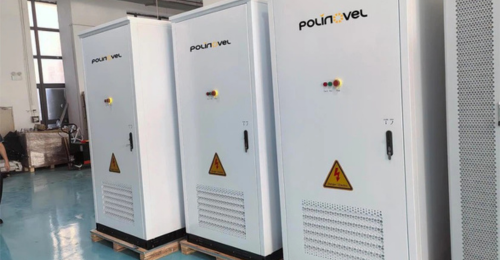
Small to mid-size commercial (100–500 kWh): Outdoor cabinet systems work well here. Polinovel's outdoor cabinet BESS in the 60 kW / 121 kWh to 125 kW / 241 kWh range covers 2–4 hours of demand offset for most commercial buildings. They fit in parking areas, rooftops, or mechanical yards, connect to existing electrical panels with minimal site prep, and ship with integrated BMS, liquid cooling, and fire suppression-no multi-vendor integration headache on site. A 200 kWh cabinet paired with a 100 kW inverter shaves 100 kW off a building's afternoon spike. If your demand charge runs $15/kW/month, that single move saves $1,500/month.
Industrial and large campus (1 MWh+): Containerized systems. A standard Polinovel 20-foot container housing 1–2 MWh of LFP capacity with a 500 kW power conversion system cycles daily for over a decade. Multi-container deployments scale to 5 MWh and beyond. These units come fully integrated-battery racks, PCS, thermal management, fire suppression, and BMS all factory-tested before shipping. Commissioning typically takes weeks, not the months you'd spend coordinating separate battery, inverter, and controls vendors.
Energy Resilience: A Built-In Bonus
A load-shifting BESS already has the infrastructure for backup power. During a grid outage, the same batteries that normally optimize rate arbitrage keep critical operations running-hospitals, data centers, water treatment, continuous manufacturing. Adding backup capability to an existing system costs a fraction of deploying standalone backup. Pair it with on-site solar and the system can island completely.
This isn't the primary financial driver for most projects. But it changes the risk calculation, especially for facilities where a four-hour outage costs more than the battery system itself.
Making the Financial Case for BESS Load Shifting
Pull up your utility bill. Separate the demand charges from the energy charges. Find your TOU rate schedule and note the spread between high-rate and low-rate windows. Then get your hands on 12 months of interval meter data-most utilities provide 15-minute or hourly data through their online portals.
Here's a worked example. Say you run a 200,000 sq ft manufacturing facility in Texas with a 2 MW peak demand, a demand charge of $14/kW/month, and a $0.12/kWh spread between off-peak and on-peak rates. You install a 1 MWh / 500 kW containerized BESS.
The system shaves 400 kW off your monthly peak. At $14/kW, that's $5,600/month in demand charge savings alone-$67,200 over a year. Layer on energy arbitrage: cycling 1 MWh daily at $0.12/kWh with 90% round-trip efficiency yields about $27,000/year over 250 operating days. Combined annual savings land around $94,000. Against a fully installed cost of $350,000–$400,000, you're looking at a 4 to 4.5 year payback before incentives. Apply the federal Investment Tax Credit and that drops to around 3 years.
Demand response programs layer on top. Some utilities pay $50–$200/kW/year for enrolled battery capacity. For a 500 kW system, that's another $25,000–$100,000 in annual revenue depending on the market and program structure.
For organizations planning large-scale battery energy storage projects, the economics keep improving. Battery costs are still falling. Rate differentials between daily peaks and overnight windows are widening in most markets. Both trends push payback periods shorter.
How to Start a Load Shifting Project with the Right BESS
- Start with data, not equipment. Run an energy audit, map consumption by hour, and identify which loads can actually move without disrupting production. Common candidates include HVAC preconditioning, water heating, EV fleet charging, and batch processing. Some facilities discover that 30–40 percent of their demand spike comes from processes that could easily shift to a different time slot. Others find their peaks are locked to production schedules, which means the battery has to absorb the full shift.
- Size to the demand delta, not total consumption. Polinovel's engineering team does this regularly-analyzing interval meter data, modeling demand charge and arbitrage savings under different configurations, and specifying the right cabinet or containerized system for the site. A facility consuming 50,000 kWh/month doesn't necessarily need a massive battery. It might only need 200 kWh to clip the demand spike driving 35 percent of the bill. The biggest mistakes happen when systems get oversized based on total kWh rather than the actual peak-to-off-peak gap.
- Verify compliance before procurement. Make sure your system carries UL 9540 certification and UL 9540A fire test data-these directly affect permitting timelines and insurance eligibility. Polinovel systems ship with both, along with LFP cells, integrated BMS, liquid cooling, and fire suppression, all factory-tested and ready for commissioning within weeks of delivery.
- Optimize continuously after install. Track performance monthly. Adjust your charge/discharge windows as rate schedules shift seasonally and facility loads change. The projects that pull the best returns are the ones where somebody is actually watching the dashboard-not the ones where the battery sits on auto and nobody checks whether the EMS settings still match the current rate structure.