

Lithium-ion batteries dominate the commercial energy storage market, representing 79.3% of installations in 2024, with costs declining to $150-250 per kWh. Performance depends less on choosing a single "best" system and more on matching battery chemistry, capacity, and configuration to specific business applications. Commercial energy storage systems typically achieve payback in 3.65 to 5 years when properly sized for demand management and energy arbitrage.
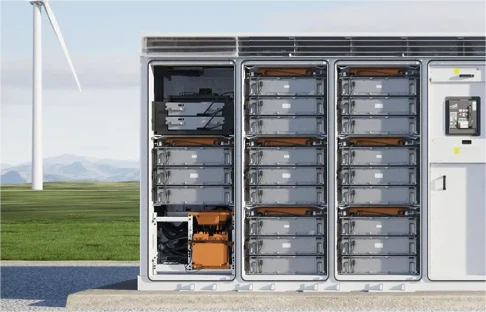
Commercial Energy Storage System Performance: Chemistry vs. Application
The commercial storage landscape divides into three distinct performance tiers based on chemistry and use case optimization.
Lithium Iron Phosphate (LFP) batteries lead for safety and cycle life, while Nickel Manganese Cobalt (NMC) batteries offer higher energy density in smaller footprints. LFP technology has captured the stationary storage market, with the segment projected to exceed $218.7 billion by 2034.
High-Performance LFP Systems
BYD's HaoHan system delivers 14.5 MWh in standard configuration with a 52.1% cell-to-system volume ratio, reducing system failures and maintenance costs by roughly 70%. This represents a significant advance over earlier generations.
Tesla's Megapack 3 offers 5 MWh capacity using 2.8-liter cells with 78% fewer thermal bay connections than previous versions. Tesla deployed over 31 GWh of stationary storage in 2024, more than doubling 2023 totals.
Performance advantages of LFP chemistry include thermal stability, 3,000-6,000 charge cycles, and lower fire risk compared to NMC alternatives. These characteristics make LFP ideal for duration-dependent applications requiring daily cycling over 10-15 year lifespans.
NMC for Space-Constrained Applications
NMC chemistries provide higher energy density, storing more power in equivalent space, which matters for urban commercial installations with limited footprints. However, this comes with trade-offs in cycle life and thermal management requirements.
Medium-capacity systems ranging from 1,000-5,000 kWh are gaining traction in commercial settings for demand management and peak shaving, where space optimization directly impacts project economics.
Flow and Alternative Chemistries
Flow batteries excel for very long storage periods, sometimes many hours, though they occupy more space and carry higher upfront costs. Their niche lies in applications requiring extended discharge duration rather than high power density.
Quantifying Real-World Performance
Performance metrics split into technical capabilities and financial outcomes, both critical for commercial viability.
Technical Performance Benchmarks
Modern commercial energy storage systems achieve 85% round-trip efficiency with capacity factors of 16.7% for 4-hour configurations. This means approximately one cycle per day under typical commercial operation.
Advanced inverter systems like BYD's GC Flux deliver 38% higher performance than industry averages, achieving peak power density of 1,474 kW per square meter with 99.35% maximum efficiency. These specifications translate to reduced energy losses and lower operational costs.
Degradation patterns matter significantly. LFP batteries typically retain 70-80% capacity after 10 years, directly impacting long-term revenue potential. Systems that sustain their rated capacity through augmentation see better financial performance.
Financial Performance Metrics
The commercial and industrial energy storage market grew from $15 billion in 2024 to a projected $44.3 billion by 2032, expanding at 14.5% annually. This growth reflects improving project economics.
ROI calculations show systems generating 14-20% annual returns in favorable markets, with static payback periods of 3.65 to 4.2 years. A logistics center in northern Italy saved over €130,000 annually with a 2 MWh system, achieving 14% ROI and sub-5-year payback.
Several factors accelerate returns:
Demand charge reduction: Manufacturing facilities with heavy machinery see immediate impact. Peak shaving implementations have achieved payback as short as four years when targeting inflexible equipment usage patterns.
Energy arbitrage: Regions with significant peak-valley price differentials enable businesses to charge during off-peak hours and discharge at premium rates. The greater the spread, the stronger the economics.
Revenue stacking: Combining demand charge reduction, energy arbitrage, frequency regulation, and capacity payments creates multiple income streams, substantially improving project viability.
Leading Commercial Energy Storage System Manufacturers
The competitive landscape consolidates around vertically integrated manufacturers controlling cell production.
Tesla's Ecosystem Advantage
Tesla's Megapack systems include integrated software (Powerhub and Autobidder) for monitoring and grid services participation. The Megablock configuration combines four Megapack 3 units with transformers and switchgear, reducing installation time 23% and construction costs 40%.
This turnkey approach appeals to utilities and large-scale projects, particularly AI data centers requiring rapid deployment and reliable performance guarantees. Each Megapack carries a 15-year capacity retention warranty.
BYD's Cost-Capacity Edge
BYD secured massive orders including a 12.5 GWh project in Saudi Arabia using its proprietary 2,710 Ah Blade Battery cells, the largest in stationary storage. The company claims 21.7% reduction in project costs through higher volumetric energy density, allowing GWh-scale deployments with approximately half the number of battery systems.
Competition has driven LFP cell prices to approximately $0.05/Wh in China, down 35% from the previous year. BYD's control of battery manufacturing provides significant pricing leverage.
Emerging Players
LG Chem, Panasonic, and Siemens Energy maintain strong positions through continuous R&D investment and tailored solutions for specific market segments. Companies are expanding production capacity, with Panasonic investing in new facilities to meet growing EV and storage demand.
AES and Fluence Energy (AES-Siemens joint venture) have pioneered grid-scale storage for over 15 years, with approximately 50% of new AES projects now including battery components.

Sizing and Configuration Decisions
Performance optimization begins with accurate system sizing based on actual load profiles.
Capacity Determination
Businesses must analyze past electricity bills to understand usage patterns and peak demand timing. Undersized commercial energy storage systems fail to capture full savings potential; oversized systems extend payback periods unnecessarily.
Commercial installations typically use 300 kW direct current with 4-hour storage as the baseline, though duration critically impacts per-kilowatt-hour costs. Systems in the 1,000-5,000 kWh range balance energy capacity, cost-efficiency, and operational flexibility for most commercial applications.
Integration Architecture
AC-coupled configurations dominate commercial installations, offering simpler functionality than large-scale plants. DC-coupled systems reduce conversion losses but add complexity.
Modular designs enable flexible configuration of voltage and capacity based on specific needs, with compact footprints suitable for rooftops, electrical rooms, or outdoor spaces.
Energy Management Systems
Commercial EMS requirements focus on setting charge-discharge schedules for peak-valley arbitrage rather than complex grid scheduling. Systems require only local area networks for management and automatic switching.
Cloud-based monitoring platforms provide real-time performance data, charge-discharge records, and automatic fault alerts, minimizing manual inspection needs.
Market Dynamics Shaping Performance
External factors increasingly influence which systems deliver optimal performance in specific contexts.
Geographic Advantages
North America leads with 35% market share in 2024, driven by renewable integration and government support, while Europe follows at 30% due to EU renewable energy targets. Asia-Pacific holds 48.3% of the global market, with China leading through large-scale government projects and industrial manufacturing base.
In the US, 88% of commercial and industrial storage capacity installed in 2024 concentrated in California, Massachusetts, and New York, reflecting state-level incentive structures.
Policy and Incentive Impact
The federal Investment Tax Credit offers 30% credit for commercial storage systems over 5 kWh as of 2024. California's SGIP program provides up to $1,000 per kWh in additional incentives.
Government policies directly influence end-user costs, with programs reducing total system expenses by up to 20%. These incentives can shorten payback periods by 1-2 years.
Grid Services Revenue
Participation in frequency regulation, demand response, and capacity markets generates additional revenue streams beyond basic arbitrage. The US has approximately 10.6 GW of large-scale battery storage managed by ISOs and RTOs for grid balancing, primarily in PJM and California's CAISO.
Commercial systems can access these markets depending on size, location, and interconnection capabilities.
Application-Specific Performance Leaders
Different commercial sectors prioritize different performance characteristics.
Manufacturing and Industrial
Plants running heavy machinery face large demand spikes, making BESS ideal for providing power during high-use periods to dramatically reduce demand charges. Systems also serve as uninterruptible power supply for critical processes where outages carry high costs.
High-capacity LFP systems with robust thermal management perform best, as industrial environments often operate 24/7 with aggressive cycling patterns.
Commercial Buildings and Retail
Retail stores typically see 35-45% reductions in monthly energy expenses through peak shaving and demand charge management. Moderate-capacity systems (100-500 kWh) sized to building load profiles deliver optimal economics.
Space constraints often favor higher energy density NMC systems despite shorter cycle life, as the installation footprint matters more than 20-year degradation curves.
Data Centers and Critical Infrastructure
Continuous power requirements make backup capability as important as cost savings, with energy storage ensuring uninterrupted operations during grid disruptions.
These applications demand high reliability, redundant systems, and sophisticated energy management. Tesla's integrated approach appeals to data centers requiring turnkey solutions with guaranteed uptime.
Technology Trajectory and Future Performance
The commercial storage landscape continues evolving rapidly.
Cost Projections
Lithium-ion battery costs are projected to decline an additional 40% from 2023 to 2030 through continued innovation in chemistry and manufacturing. Sodium-ion batteries could reach production costs 30% below LFP by providing less than 10% of storage market share initially.
Average ESS costs have dropped from over $1,000/kWh a decade ago to $150-250/kWh in 2025, an 80% reduction.
Advanced Technologies
Solid-state batteries are on track for commercial availability beyond 2030, potentially delivering massive performance gains. Early applications will target premium segments before costs decline for broader deployment.
Thermal storage alternatives have reached 100 MWh scale, with systems like Rondo Energy's HeatTank targeting industrial process heat. These complement rather than replace lithium-ion for electrical storage.
Market Growth Indicators
US battery storage capacity is expected to nearly double in 2024, with developers planning to expand capacity to over 30 GW. Wood Mackenzie forecasts 15 GW/48 GWh installations in 2025, representing 7% growth.
While the commercial market remains smaller than utility-scale and residential segments, education efforts and policymaking are accelerating adoption, particularly in states with favorable rate structures.
Maximizing Commercial Energy Storage System Performance
Achieving optimal results requires strategic planning beyond equipment selection.
Pre-Installation Essentials
Detailed energy audits form the foundation for proper sizing, identifying consumption trends, peak demand patterns, and best-fit applications. Modeling multiple scenarios comparing different battery sizes, chemistries, and operating strategies helps compare payback periods and internal rates of return.
Total cost of ownership evaluation must include not just equipment but also interconnection, permitting, and ongoing maintenance expenses.
Operational Optimization
Well-sized commercial energy storage systems with smart Energy Management Systems significantly increase efficiency and battery lifespan, while poor design leads to extended payback times.
Revenue stacking through multiple applications-energy arbitrage, peak shaving, demand charge reduction, and grid services-substantially improves financial performance.
Maintenance and Longevity
Tesla requires annual minor service and major service every ten years, including pump and fan replacement for thermal management systems. Maintenance typically takes about an hour per unit.
Ongoing monitoring, firmware updates, and periodic servicing extend system life and preserve financial performance. Neglecting maintenance shortens operational lifespan and reduces total returns.
Key Performance Indicators to Track
Successful commercial storage implementations monitor specific metrics.
Energy arbitrage capture rate: Percentage of price differential opportunities successfully monetized through charge-discharge cycles.
Demand charge reduction: Actual peak demand reduction compared to baseline, directly visible in utility bills.
System availability: Uptime percentage, critical for backup power applications and grid services participation.
Round-trip efficiency: Measured energy output versus input, tracking degradation and thermal losses over time.
Capacity fade rate: Actual degradation compared to manufacturer specifications, impacting long-term economics.
These indicators enable proactive management and identify optimization opportunities.
The commercial energy storage market has matured beyond early adoption. Performance no longer hinges on identifying a single superior technology but rather on matching proven systems-predominantly LFP lithium-ion-to specific business requirements, load profiles, and revenue opportunities. For businesses facing high energy bills, volatile demand, or on-site solar generation, battery storage represents both a profitable and strategic investment.