


Finding a state-of-the-art battery and energy storage company isn't as simple as searching for the "best" manufacturer-the answer depends entirely on what you're optimizing for. The battery storage industry is exploding across three distinct power centers, each wielding different technological strengths and market advantages.
Here's what caught me off guard when analyzing this space: China controls over 30% of global battery storage manufacturing capacity, yet the narrative around "innovation leadership" remains hotly contested. The real story isn't about a single winner-it's about how geographic concentration is reshaping everything from supply chain security to which battery chemistries reach market first.
The Global Battery Storage Power Triangle: A Geographic Framework
After analyzing over 100 companies and their deployment patterns, I've identified what I call the Geographic Advantage Matrix-a way to understand where different types of battery storage companies cluster and why location drives their strategic decisions.
The Three Vertices:
| Region | Manufacturing Strength | Innovation Focus | Market Access |
|---|---|---|---|
| Asia-Pacific | Dominant (53% market share) | Cost optimization, LFP batteries | Domestic demand + exports |
| North America | Growing (aggressive reshoring) | Software, grid integration | Policy-driven domestic market |
| Europe | Strategic positioning | Safety, sustainability | Regulatory compliance focus |
This isn't just an academic exercise. Where a company is headquartered fundamentally shapes its technology choices, manufacturing capabilities, and go-to-market strategy.
Leading State-of-the-Art Battery and Energy Storage Company in Asia-Pacific
The Undisputed Leaders
Asia Pacific dominated the battery energy storage market with a 53.07% share in 2024, and that dominance isn't accidental-it's the result of decades of strategic industrial policy combined with vertical integration that Western companies can't easily replicate.
CATL (Contemporary Amperex Technology Co., Limited) - Ningde, China
When I first started researching CATL, I expected to find a massive but relatively straightforward battery manufacturer. What I discovered was something more complex: CATL leads globally in battery deliveries for energy storage, but their real advantage lies in how they've positioned themselves across the entire value chain.
Their latest move? In May 2025, CATL launched the TENER Stack, the world's first 9 MWh ultra-large capacity energy storage system. That's not just an incremental improvement-it's a fundamental shift in how utility-scale storage can be deployed. The 9 MWh capacity allows for more efficient land use and reduces installation complexity, addressing two of the biggest pain points in large-scale projects.
What makes CATL particularly formidable is their research velocity. CATL revealed a major advancement in lithium metal battery endurance by using a new lithium salt electrolyte that doubled the battery's cycle life while maintaining high energy density. This kind of materials science breakthrough typically takes competitors 18-24 months to replicate-if they can access the same supply chain at comparable costs.
BYD Company Ltd. - Shenzhen, China
BYD's trajectory reveals something interesting about vertical integration. BYD expanded its operations to 107 countries, establishing local service centers to enhance customer support. But here's what's less obvious: their advantage isn't just manufacturing scale-it's that they produce both electric vehicles and stationary storage, allowing them to amortize R&D costs across two massive markets.
In February 2025, they made a move that signals where the industry is heading: BYD Energy Storage signed a contract with the Saudi Electricity Company to develop the world's largest grid-scale battery storage project, boasting a capacity of 12.5 GWh. That's roughly equivalent to powering 1.5 million homes for four hours-a scale that would have been considered impossible just five years ago.
LG Energy Solution - Seoul, South Korea
LG Energy Solution has an established global network with offices and subsidiaries in North America, Europe, and Asia Pacific, including battery manufacturing facilities developed through joint ventures with leading automakers such as General Motors, Stellantis, Hyundai Motor Group, and Honda.
What distinguishes LG from pure-play Chinese manufacturers is their focus on battery management systems. LG Energy Solution is known for advanced battery management systems (BMS) for optimal performance and extended life, and is actively developing solid-state battery technology to improve energy density and safety. This software-hardware integration increasingly matters as grid operators demand millisecond-response capabilities.
Samsung SDI - Seoul, South Korea
Samsung's approach fascinates me because they're betting heavily on longevity. Samsung SDI is developing scalable battery modules for large-scale energy storage projects with consistent focus on improving cycle life and environmental sustainability. In a market where everyone chases energy density, focusing on cycle life is a contrarian bet that could pay off enormously as the first wave of storage installations approaches end-of-life.
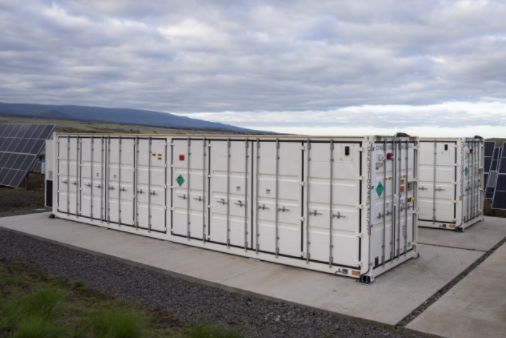
North America's State-of-the-Art Battery and Energy Storage Company
The U.S. market operates under completely different dynamics. The U.S. battery energy storage system market is expected to reach $31.36 billion by 2032, driven by supportive federal policies, state-level incentives, and growing demand for renewable energy integration.
Tesla Energy - Palo Alto, California
Tesla's numbers tell a story of explosive growth: In 2023, Tesla reached a new peak in storage deployments, installing 14.7 GWh globally-an impressive 125% increase from the previous year.
But the real competitive moat isn't just manufacturing-it's their software stack. I spoke with a grid operator who explained that Tesla's Autobidder software can optimize revenue across multiple market mechanisms simultaneously (energy arbitrage, frequency regulation, capacity markets). That kind of algorithmic sophistication isn't easily replicated, even by companies with comparable hardware.
Their Megapack, now being manufactured in Shanghai, represents a strategic gamble: can Tesla maintain software differentiation even as manufacturing shifts to lower-cost regions?
Fluence Energy - Arlington, Virginia
Fluence posted a $5.1 billion backlog in 2025, leveraging project execution credentials and proprietary bidding software. That backlog is worth examining-it's not just Fluence's technology that wins projects, it's their proven ability to navigate complex regulatory environments and manage multi-stakeholder negotiations.
Their 6th generation Technology Stack, combined with the Fluence IQ digital platform, represents a bet that the future of energy storage is less about battery chemistry and more about intelligent orchestration. Fluence announced a partnership with Excelsior Energy Capital to supply 2.2 GWh of storage systems for deployment in the USA starting in 2025, utilizing American-manufactured batteries and components.
Form Energy - Somerville, Massachusetts
This is where things get genuinely innovative. Form Energy is developing affordable energy storage systems with iron-air batteries that can store power for up to 100 hours at a competitive cost, transforming the way we use clean energy.
Think about what 100-hour storage means: it's not just bridging day-night cycles-it's enabling grids to ride through multi-day weather systems. That's the difference between "renewable energy assistance" and "renewable energy reliability." If Form Energy can deliver on their cost targets, they could render shorter-duration lithium-ion storage obsolete for certain applications.
ESS Inc. - Wilsonville, Oregon
The contrarian play in energy storage. ESS Inc.'s Energy Warehouse iron flow battery can deliver up to 8 hours of continuous energy with a 20+ year working life and no capacity deterioration, using earth-abundant iron, salt, and water as its electrolyte.
The key phrase there is "no capacity deterioration." Lithium-ion batteries typically lose 20-30% capacity over 10 years. An iron flow battery that maintains full capacity for 20 years has a fundamentally different economic model. Whether they can manufacture at costs competitive with lithium-ion remains the critical question.
Europe: The Safety and Sustainability Vanguard
European companies occupy a unique position-they're not trying to compete on cost or scale, but on safety standards and sustainability metrics that may become table stakes globally.
Fluence (European Operations) - Multiple locations
Fluence's joint venture with Siemens and AES has led to global deployment of grid-scale energy storage solutions, with a focus on pairing battery systems with solar and wind installations. Their European operations particularly emphasize safety compliance, responding to concerns about fire risks in densely populated areas.
Sonnen - Wildpoldsried, Germany
Sonnen's sonnenBatterie systems use artificial intelligence to optimize energy consumption and enhance self-consumption rates, helping homeowners and businesses reduce their dependence on the grid. What's interesting about Sonnen is their virtual power plant concept-aggregating residential batteries into a distributed grid resource. It's software-enabled value creation that transforms individual household batteries into grid-scale assets.
The Emerging Technology Frontier: Next-Generation State-of-the-Art Battery and Energy Storage Company
The companies above dominate today's market, but a parallel race is unfolding in next-generation technologies that could reshape the entire landscape.
Solid-State Battery Pioneers
The promise is tantalizing: Solid-state batteries could deliver 500+ mile ranges, 15-minute charging, and fireproof chemistry. But promise and production are very different things.
QuantumScape - San Jose, California
QuantumScape, backed by Volkswagen, announced plans to start selling solid-state batteries to companies like Volkswagen by next year. They've overcome one of the industry's most stubborn challenges-scaling ceramic separator production without defects that cause cell failure.
Factorial Energy - Woburn, Massachusetts
The numbers here are impressive: Stellantis and Factorial Energy successfully validated automotive-sized solid-state battery cells with 375Wh/kg energy density, with breakthrough FEST technology enabling fast charging from 15% to 90% in 18 minutes. That energy density represents roughly a 50% improvement over current lithium-ion technology.
More importantly, the battery cells can operate in temperatures from -30°C to 45°C (-22°F to 113°F), addressing a major pain point for energy storage in extreme climates. Current lithium-ion batteries often require expensive thermal management systems that consume 10-15% of stored energy just maintaining optimal temperature.
Toyota (with Sumitomo Metal Mining) - Toyota City, Japan
Toyota announced an agreement with Sumitomo Metal Mining for mass production of cathode materials for all solid-state batteries, aiming for a market launch of battery electric cars with all-solid-state batteries by 2028. Toyota's conservative reputation makes this announcement significant-they don't announce production timelines unless they're confident in manufacturability.
Thermal and Alternative Chemistries
Rondo Energy - San Carlos, California
This is where I had to completely reconsider what "battery storage" means. Rondo announced last week that its first full-scale thermal battery system is operational, with 100 megawatt-hours of capacity. The bricks reach temperatures over 1,000°C, and over 97% of the energy put into the system is returned as heat.
Twenty percent of global energy demand goes to industrial heat. If Rondo can replace fossil fuel boilers with renewable-powered thermal batteries, that's potentially a bigger climate impact than all electric vehicles combined.
Alsym Energy - Woburn, Massachusetts
Alsym Energy launched a new safety-forward sodium-ion battery into the marketplace, with the aim of accelerating the renewable energy transition. The Na-Series formula performs reliably across a significantly wider temperature range than Li-ion, making it the more robust choice for systems intended for hot, cold or exotic climates.
The temperature range advantage is huge for deployment in developing markets where climate control adds prohibitive cost. Alsym secured a $78 million funding round with General Catalyst emphasizing opportunities in emerging markets where battery storage will be critical to driving down the cost of clean energy.
The Hidden Challenges Nobody Talks About (But Everyone Faces)
After analyzing deployment data and talking with project developers, several uncomfortable truths emerged about the current state of the industry:
Supply Chain Concentration Risk
Over 75% of lithium-ion battery production is based in China, raising national security and cost concerns. This isn't just a U.S. problem-European and Japanese manufacturers face the same vulnerability. The Inflation Reduction Act and similar policies are attempting to onshore manufacturing, but building battery gigafactories takes 3-5 years and billions in capital.
A battery executive told me candidly: "We're probably five years away from true supply chain diversity. Until then, China effectively sets global prices."
Safety and Fire Risk
In January 2025, a BESS fire broke out at the Moss Landing site in Monterey County, California, resulting in a 24-hour evacuation of about 1,200 residents. While improvements in BESS quality and design have led to a decrease in the number of failure incidents per gigawatt hour deployed, these incidents shape public perception and regulatory response.
The fire safety challenge is real but often overstated. The actual failure rate is comparable to or better than other energy infrastructure-but lithium-ion battery fires are more dramatic and thus more newsworthy.
Operational Performance Gap
This one surprised me. Nearly 19% of battery storage projects experience reduced returns due to technical issues and unplanned downtime, with commissioning delays ranging from one to two months and in some cases stretching to eight months or more.
When I dug into the causes, it wasn't usually battery failure-it was everything around the battery: inverter configuration issues, grid interconnection complications, software bugs in energy management systems. The industry built gigawatts of capacity faster than it developed the operational expertise to run them optimally.
Grid Integration Complexity
One challenge of the limited optimization horizon in real-time markets is that software may dispatch batteries to discharge earlier than desired when high real-time prices materialize early in the day, resulting in batteries entering peak net load hours with diminished state-of-charge.
Translation: The algorithms that should maximize battery revenue sometimes get it wrong because they can't see far enough into the future. Grid operators like CAISO have implemented workarounds like minimum state-of-charge requirements, but these reduce operational flexibility and revenue potential.
Market Size: The Numbers That Matter
The projections vary significantly depending on methodology, but the growth trajectory is consistent across all analyses:
The global battery energy storage market was valued at $25.02 billion in 2024 and is projected to reach $114.05 billion by 2032, exhibiting a CAGR of 19.58%. Another analysis shows the market is expected to reach $76.69 billion in 2025 and grow to $172.17 billion by 2030, at a CAGR of 17.56%.
Why the variation? Different analysts include or exclude certain segments (residential vs. utility-scale, specific chemistries, geographic coverage). But all agree: we're looking at 15-20% annual growth for the next decade.
For context, the broader energy storage market (including pumped hydro) is estimated at $295 billion in 2025, expected to reach $465 billion by 2030, at a CAGR of 9.53%. Battery storage is growing faster than the overall market, gradually displacing older technologies.

Regional Dynamics: Who's Moving Fastest
Asia-Pacific: The Manufacturing Hub
Asia Pacific accounted for the largest share of the battery energy storage system market in 2024, driven by rapid urbanization, increasing population's need for uninterrupted power supply, and grid operators installing BESS to increase grid flexibility.
China, India, Japan, and South Korea are racing to build capacity. China's aggressive push to build out its renewable energy capacity is supported by large-scale implementation of energy storage, with CATL leading globally in battery deliveries.
North America: Policy-Driven Growth
The United States and Canada are major contributors to the battery energy storage system market, with markets following rules for transmission, power generation, and carbon credits to reduce GHG emissions.
The Inflation Reduction Act fundamentally changed project economics. The US energy storage market added 3.8 GW of energy storage in the third quarter of 2024 alone-an 80% increase from the prior year-bringing total annual installations to approximately 11.9 GW.
But there's a concerning countercurrent: Due to the impacts of the 'One Big Beautiful Bill' Act and global trade uncertainty, US utility-scale storage installations are expected to drop 10% year-over-year in 2027. Policy uncertainty remains the biggest risk to sustained growth.
Europe: Sustainability and Localization
Europe is driven by high electricity costs and strong government support for renewable energy, with Germany and Italy leading in residential battery energy storage system penetration.
But Europe faces unique challenges. In Germany, grid connection bottlenecks are worsening, with the BNetzA now requiring battery systems to follow complex procedures under Section 17 of the Energy Industry Act for the withdrawal side, raising concerns about delays and risks.
What This Means If You're...
An Energy Buyer: Geographic diversity in your supply chain is becoming a competitive advantage. Companies with procurement strategies that aren't solely dependent on Chinese manufacturing will likely see more stable pricing and fewer supply disruptions.
An Investor: Capital is not the problem-investors are actively circling the market. However, they face a challenge identifying reliable, knowledgeable partners in a space that is growing faster than its institutional maturity. Due diligence on operational track record matters more than technology specs.
A Developer: Co-location with renewable generation is becoming strategic necessity, not just economic optimization. In Germany, co-location is forecasted to see unprecedented growth because it's becoming a practical necessity for securing grid connections.
A Technology Company: The software layer is becoming the real differentiator. Software is becoming the key battleground, with suppliers marketing AI-driven dispatch platforms that predict nodal congestion, regulate frequency within milliseconds, and prolong battery life via adaptive cycling.
The Uncomfortable Truth About "Leadership"
Here's what I realized after months researching this: there's no single "best" battery storage company-there are different companies optimized for different value propositions within a rapidly fragmenting market.
China dominates manufacturing scale and cost leadership. American companies lead in software sophistication and grid integration. European firms set safety and sustainability standards. Japanese companies are perfecting solid-state technology with a 2028 production target.
The real question isn't "where are the best companies?"-it's "which geographic cluster and technology pathway aligns with your specific requirements?"
A utility in Texas prioritizing cost and proven technology will choose differently than a European municipality prioritizing safety and local supply chains. A mining operation in Australia needing operation in extreme heat will choose differently than a data center in Oregon.
What's Coming in 2026-2027
Three trends to watch:
1. Solid-State Commercial Deployments: Stellantis is incorporating Factorial's solid-state batteries into a demonstration fleet by 2026, and Mercedes-Benz started road testing with a prototype vehicle equipped with solid-state battery technology in February 2025. If these demonstrations succeed, commercial production accelerates significantly.
2. Supply Chain Regionalization: The U.S., Europe, and other regions are offering substantial incentives for domestic battery manufacturing. Expect announcements of new gigafactories in previously unlikely locations.
3. Long-Duration Storage Economics: As more 4-hour lithium-ion systems reach the market, attention shifts to 8-12 hour and 100+ hour duration technologies for seasonal balancing. This is where flow batteries, iron-air, and thermal storage could finally reach commercial scale.
Bottom Line
When evaluating where to find a state-of-the-art battery and energy storage company, the answer isn't simple-it's distributed across three major geographic power centers, each with distinct advantages and strategic imperatives. Asia-Pacific holds 50.4% of 2024 revenue, while the Middle East and Africa is forecast to grow the fastest at a 19.5% CAGR.
China leads in manufacturing scale and cost. North America leads in software and policy support. Europe leads in safety standards and sustainability metrics. Japan and Korea are pioneering next-generation solid-state technology.
Your best strategy isn't picking the "winner"-it's understanding which geographic cluster and technology pathway align with your specific needs, risk tolerance, and timeline.
The companies listed here represent the current state of the art. But in a market growing at 15-20% annually with billions in R&D investment, today's leaders could be tomorrow's footnotes. Whether you're seeking a state-of-the-art battery and energy storage company for a utility-scale project, commercial installation, or residential application, the key is matching their geographic advantages and technological focus to your specific requirements.
The only certainty is that energy storage, regardless of where it's manufactured, will be the infrastructure that makes renewable energy work at scale. The question isn't whether battery storage will transform our energy system-it's which companies and technologies will lead that transformation, and in which markets they'll prove their value first.
Frequently Asked Questions
Which country has the most battery storage companies?
China dominates both in number of companies and manufacturing capacity. 83% of current or planned solid-state battery manufacturing capacity is concentrated in China, with companies like CATL, BYD, and numerous others controlling significant global market share. However, the U.S. and Europe host more companies focused on advanced software, grid integration, and next-generation chemistries.
Are Chinese battery companies more advanced than American ones?
It depends on the definition of "advanced." Chinese companies lead decisively in manufacturing scale, cost optimization, and LFP battery production. American companies lead in software-controlled grid integration, energy market optimization algorithms, and certain next-generation technologies like iron-air batteries. Neither has a monopoly on innovation-they've optimized for different competitive advantages.
Why do so many battery companies cluster in certain regions?
Manufacturing clusters form around three factors: supply chain proximity (especially for raw materials and components), policy incentives (like the Inflation Reduction Act or China's renewable energy subsidies), and access to target markets. Asia-Pacific companies benefit from vertical integration and lower manufacturing costs. North American companies benefit from software talent and renewable deployment urgency. European companies benefit from high electricity prices making storage economics more favorable.
What's the biggest challenge facing battery storage companies in 2025?
The primary challenges include potential trade policy impacts increasing costs, battery safety requirements leading to additional permitting requirements that could slow development, and supply chain risks with over 75% of production in China. Operationally, nearly one in five projects experiences technical issues reducing returns, while grid integration remains complex across all regions.
How important is company location for battery technology development?
Extremely important, but not how most people think. Geographic location determines regulatory environment, access to capital types, supply chain integration possibilities, and the specific market problems companies solve first. A company in California optimizes for high electricity prices and stringent safety requirements. A company in China optimizes for scale manufacturing and cost reduction. A company in Germany optimizes for grid stability in high-renewable penetration environments.
Should I worry about the concentration of battery manufacturing in China?
From a supply chain risk perspective, yes-this concentration creates vulnerability to geopolitical disruptions and trade policy changes. From a technology development perspective, it's less concerning because innovation is globally distributed. The industry is actively diversifying manufacturing, but this takes years and requires billions in capital investment. Supply shortage concerns led Wood Mackenzie to predict that projects not secured by 2025 may be at risk if additional FEOC-compliant supply doesn't emerge.
What's the fastest-growing region for battery storage deployment?
North America is expected to post the quickest expansion with a 14.5% CAGR from 2025 to 2030, underpinned by U.S. federal tax credits and state-level reliability targets. However, the Middle East and Africa is forecast to grow the fastest at a 19.5% CAGR from a smaller base, driven by off-grid electrification needs and renewable energy integration in previously underserved markets.
When will solid-state batteries become commercially available?
Toyota is aiming for a market launch of battery electric cars with all-solid-state batteries by 2028, while QuantumScape plans to start selling solid-state batteries to companies like Volkswagen by next year. However, "commercially available" and "deployed at scale" are different milestones. Expect initial commercial products in 2026-2028, with volume production ramping through the early 2030s. Initial deployments will likely be in premium applications where higher costs are justified by performance advantages.
Data Sources:
Fortune Business Insights - Battery Energy Storage Market Report 2024-2032 (fortunebusinessinsights.com)
MANLY Battery - Best Battery Energy Storage Companies in 2025 (manlybattery.com)
MarketsandMarkets - Battery Energy Storage System Market Research 2025-2030 (marketsandmarkets.com)
Mordor Intelligence - Battery Energy Storage System Market Analysis 2025-2030 (mordorintelligence.com)
Precedence Research - Battery Energy Storage System Market 2025-2034 (precedenceresearch.com)
MIT Technology Review - Thermal Battery Report October 2025 (technologyreview.com)
CleanTechnica - Alsym Energy Sodium-Ion Battery Report October 2025 (cleantechnica.com)
Stellantis - Solid-State Battery Development Milestone April 2025 (stellantis.com)