

The integration of battery energy storage systems with electrical grids represents one of the more intricate engineering puzzles we're collectively working through right now. And honestly, the deeper you dig into it, the messier it gets-in the best possible way.
There's something almost deceptively simple about the question. You've got electricity from the grid, you've got a battery sitting there, and somehow they need to talk to each other. Plug it in. Done. Right?
The conversion problem nobody warned you about
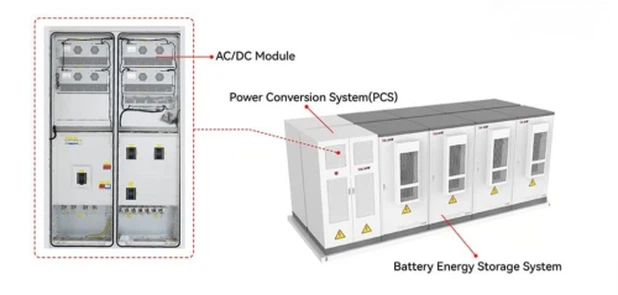
Here's the thing about batteries: they speak DC. Direct current. The grid? It's all AC, alternating current, humming along at 50 or 60 Hz depending on where you live. These two don't naturally get along.
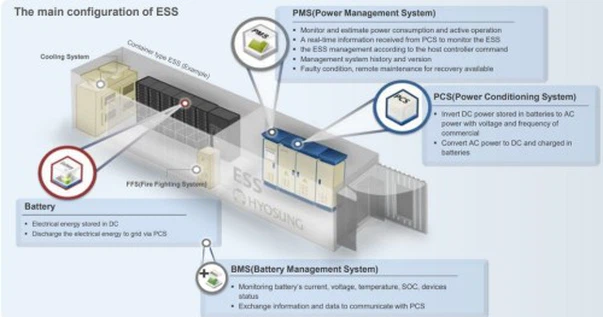
Enter the power conversion system, usually called PCS in industry circles. Think of it as an extremely sophisticated translator that works in both directions. When the grid has excess power and needs to charge the battery, the PCS converts AC to DC. When demand spikes and you need that stored energy back, it flips DC to AC and pushes it out. This bidirectional dance happens through what engineers call rectification (AC to DC) and inversion (DC to AC). The switching between these modes? Modern systems can do it in under 200 milliseconds. Blink and you'd miss it.
The efficiency losses during conversion used to be brutal-we're talking 15-20% of your stored energy just vanishing as heat. Contemporary systems have pushed that down to around 2-5%, which sounds small until you're dealing with megawatt-scale installations and realize those percentages translate to real money walking out the door.
What keeps the whole thing from catching fire
Battery management systems. BMS. If the PCS is the translator, the BMS is the paranoid security guard who never sleeps.
A lithium-ion battery pack isn't just one big cell-it's hundreds or thousands of individual cells wired together. Each cell has its own personality, its own quirks. Some charge faster. Some run hotter. Some age quicker than their neighbors. Left unmanaged, these differences compound. The strong cells get overworked. The weak ones get pushed past their limits. Eventually, something goes wrong.
Thermal runaway is the nightmare scenario. One cell overheats, triggers a chain reaction in adjacent cells, and suddenly you've got a fire that's notoriously difficult to extinguish. The BMS monitors voltage, current, and temperature across every cell-sometimes checking parameters multiple times per second-and intervenes before problems cascade. If a cell's getting too warm? The system throttles charging. Voltage creeping too high? It redistributes load. Something truly wrong? It disconnects the pack entirely.
Cell balancing is the other critical function. Over time, small differences in charge states accumulate. The BMS uses either passive balancing (bleeding off excess charge through resistors-wasteful but cheap) or active balancing (shuttling energy between cells-efficient but expensive) to keep everything equalized. Without this, your battery pack's usable capacity shrinks to match its weakest cell.
Actually talking to the grid
Integration isn't just about physical connections. It's about communication protocols, market participation, and the surprisingly analog problem of keeping the lights on.
Grid operators-the folks responsible for making sure supply matches demand every single second-use SCADA systems (Supervisory Control and Data Acquisition) to monitor and control equipment across their networks. Your battery installation needs to plug into this ecosystem. That means establishing communication links, often through Modbus or DNP3 protocols, that let the grid operator see your state of charge, available capacity, and current output in real time. More importantly, it means accepting dispatch commands: charge now, discharge now, provide frequency support now.
Frequency regulation-where batteries really shine
Grid frequency must stay within incredibly tight tolerances. In North America, that's 60 Hz. In Europe, 50 Hz. Deviations of even 0.5 Hz indicate serious imbalances between generation and load. Too much generation? Frequency rises. Too much load? It drops.
Traditional power plants can adjust their output to help correct these imbalances, but they're slow. Ramping a gas turbine takes minutes. Batteries? They can respond in 100 to 500 milliseconds. This speed makes them exceptionally valuable for what's called primary frequency response-the immediate, automatic correction that prevents small imbalances from becoming big problems.
Grid operators will actually pay for this service. In Texas's ERCOT market, frequency regulation services accounted for 87% of battery storage revenues in the first half of 2023. Australia's Hornsdale Power Reserve-Tesla's famous big battery-generated over $36 million in revenue in a single quarter, largely from frequency services. The economics work because batteries can switch between charging and discharging almost instantaneously, something no conventional generator can match.
The brain on top of the brain
Above the BMS sits the Energy Management System, or EMS. If the BMS worries about keeping individual cells healthy, the EMS worries about making the whole installation profitable.
The EMS runs optimization algorithms that decide when to charge, when to discharge, and which market services to prioritize at any given moment. Should you be doing energy arbitrage right now-buying cheap overnight power and selling it back during the evening peak? Or should you be holding capacity in reserve for frequency regulation, which might pay better? What about fulfilling a capacity contract you signed last month? These decisions involve real-time price signals, weather forecasts (which affect renewable generation), demand predictions, and constraints from the BMS about what the batteries can actually handle.
Modern systems increasingly use machine learning for these predictions. Not because it's trendy, but because electricity markets are genuinely complex and historical patterns matter. A human looking at price curves and weather data couldn't make the same optimization decisions at the speed required.

The physical integration nobody talks about
There's a lot of hardware involved that doesn't fit neatly into software-focused discussions. Transformers to step voltage up or down. Switchgear for protection and isolation. Cooling systems-either air or liquid-because all those power electronics generate substantial heat. Fire suppression systems, usually specialized ones designed for lithium battery fires. Concrete pads, fencing, access roads.
Grid connection studies alone can take months. You need to demonstrate that your installation won't destabilize the local grid, won't cause voltage problems, won't interfere with existing protection schemes. Utilities are understandably cautious about letting new equipment connect to infrastructure they're responsible for keeping operational.
Why this is harder than it looks
Standards haven't kept pace with deployment. The technology evolves faster than codes and regulations can follow. Different jurisdictions have different requirements. What works in California might not be permitted in Germany. What Germany accepts might confuse regulators in Australia.
Interoperability remains a headache. Battery systems from one manufacturer don't always play nicely with inverters from another. Communication protocols might technically be standardized, but implementation details differ enough to cause integration nightmares. The industry is getting better at this, slowly.
And then there's degradation. Batteries wear out. Every charge-discharge cycle takes a small toll. Aggressive participation in frequency markets-with their constant small cycles-accelerates this wear differently than doing two big cycles per day for arbitrage. The economic models underlying your project need to account for degradation trajectories that we're honestly still learning to predict accurately.
Where this is all heading
The International Energy Agency projects that global energy storage capacity needs to reach 1,500 gigawatts by 2030 to meet climate targets. We're nowhere close to that yet. But costs keep falling-lithium-ion battery prices have dropped roughly 90% since 2010-and deployment is accelerating.
Hybrid systems combining batteries with renewables are becoming standard practice rather than novelty projects. Virtual power plants, which aggregate thousands of small battery installations into grid-scale resources, are proving their worth in markets from Belgium to South Australia.
The fundamental engineering of integration-the PCS, the BMS, the EMS, the grid communications-is mature enough to work reliably. The challenges now are economic and regulatory. Getting market rules right. Building enough interconnection capacity. Training enough workers to install and maintain these systems.
What once seemed impossibly complex has become, if not simple, at least tractable. We know how to integrate batteries with grids. The question now is how fast we can scale.