

Battery storage energy systems can save money, but the answer depends on your electricity pricing structure, usage patterns, and available incentives. Residential systems typically deliver annual savings between $160 and $2,400, with payback periods ranging from 5 to 15 years depending on location and configuration.
The Economics Have Shifted Dramatically in 2024-2025
Something fundamental changed in the battery storage market during 2024. System costs dropped 40% year-over-year, with turnkey prices falling from $275/kWh to $165/kWh globally. In China, costs hit an unprecedented $85/kWh for 4-hour systems, while U.S. prices averaged $236/kWh.
This isn't just incremental improvement-it represents the biggest single-year cost reduction since BloombergNEF began tracking the market in 2017. The collapse resulted from three converging forces: lithium carbonate prices plummeted 75% from their 2023 peak of $80/kg to around $20-25/kg, Chinese manufacturing overcapacity created fierce price competition, and improved production efficiency reduced balance-of-system costs.
For consumers evaluating battery storage in 2025, this timing matters enormously. A residential system that cost $18,000 in 2023 now runs closer to $13,000-15,000 before incentives. The federal investment tax credit adds another 30% reduction through December 2025, dropping that same system to $9,100-10,500. After 2025, the credit expires entirely.
The immediate implication: waiting doesn't make economic sense unless you expect another technological breakthrough. NREL's moderate scenario projects costs will decline approximately 2.3% annually through 2035-steady but nowhere near the dramatic 2024 drop.
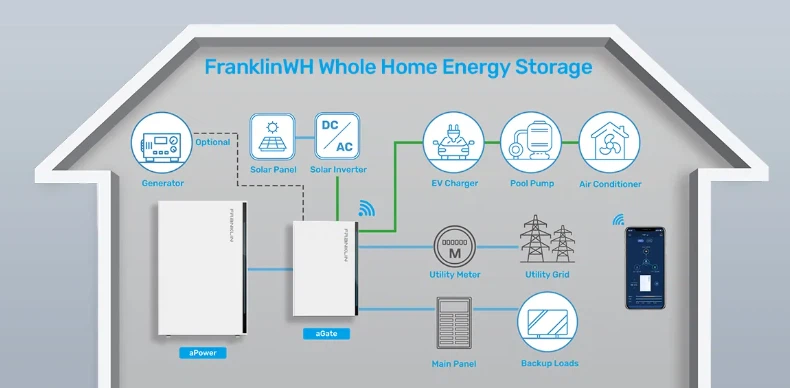
Four Variables That Determine Your Savings
The actual money you save from battery storage depends on how four factors align in your specific situation.
Your Electricity Rate Structure
Not all electricity rates are created equal when it comes to storage economics.
Time-of-use rates create the strongest case for battery storage. These tariffs charge 2-3x more during peak hours (typically 4-9 PM) compared to overnight rates. California's Pacific Gas & Electric charges up to 57 cents/kWh during peak summer hours but only 32 cents/kWh off-peak. In the UK, Octopus Energy's Intelligent Go tariff offers 7p/kWh overnight versus 25p/kWh during the day-a 257% spread.
A Georgia household on a time-of-use plan can save $160-425 annually with a 13.5 kWh battery by charging overnight and discharging during expensive peak hours. That same household on a flat-rate plan would save essentially nothing from price arbitrage alone.
Demand charges for commercial customers offer even larger savings opportunities. Businesses pay not just for total energy consumed, but for their peak 15-minute demand window each month. A single 200kW spike during a hot afternoon can add $2,000-4,000 to monthly bills. Battery systems sized to shave these peaks often achieve 3-5 year payback periods-far faster than residential applications.
Net metering policies significantly impact solar-plus-storage economics. Full 1:1 net metering (where utilities credit you retail rates for exported solar) reduces storage value since selling surplus directly to the grid becomes equally attractive. California's NEM 3.0 slashed export compensation to wholesale rates, making on-site storage much more economical. Homeowners who previously earned 30 cents/kWh selling to the grid now receive closer to 8 cents/kWh-suddenly, storing that energy for evening use makes clear financial sense.
Your Energy Consumption Patterns
The shape of your daily energy use curve determines how much benefit you can extract from a battery.
Households where everyone works from home during the day get limited value from solar-plus-storage. They're already consuming most solar generation as it's produced, leaving little excess to store. The battery sits mostly idle except for rare outages.
Conversely, empty-house-during-the-day families see dramatic benefits. Their solar panels generate 30-40 kWh daily while the house uses maybe 5 kWh before 5 PM. Without storage, that surplus flows to the grid at wholesale rates. With a properly sized battery, they capture and shift that generation to evening hours when the home needs 15-20 kWh.
Running high-power appliances creates another opportunity. If you use HVAC systems, electric vehicle charging, pool pumps, or industrial equipment, these loads can be strategically shifted to draw from stored energy during expensive peak periods. One UK homeowner reported saving £550 annually by charging a 13.5 kWh battery overnight at 7p/kWh and running their heat pump from battery power during 25p/kWh peak hours.
System Design Choices
The specifications you choose directly impact economic performance.
Battery capacity needs careful matching to your usage. Oversizing wastes money on unused capacity that never cycles. Undersizing means you still buy expensive peak power from the grid. The optimization point typically falls where daily cycling fully charges and discharges the battery, maximizing the value extracted per dollar invested.
Most residential installations use 10-15 kWh systems, designed to store enough for an evening's consumption without massive overcapacity. Commercial systems scale to hundreds or thousands of kWh, sized to match peak shaving requirements rather than daily cycles.
Round-trip efficiency matters more than marketing materials suggest. Lithium iron phosphate batteries typically achieve 85-87% efficiency-meaning you lose 13-15% of stored energy to conversion losses. For every 100 kWh you charge, only 85-87 kWh comes back out. On an arbitrage strategy buying at 10 cents/kWh and selling at 30 cents/kWh, those losses eat directly into your margins.
Pairing with solar fundamentally changes the equation. Standalone batteries arbitrage grid prices. Solar-plus-storage systems first maximize self-consumption of free solar energy, then use any remaining capacity for price arbitrage. This dual-purpose operation typically improves ROI by 30-50% compared to standalone storage.
Installation costs also vary dramatically. Adding a battery to an existing solar system requires electrical work that might cost $3,000-5,000. Installing both simultaneously saves those duplicate costs-one reason solar-plus-storage packages often show better economics than sequential installations.
Available Incentive Programs
Government programs can cut upfront costs by 30-60%, fundamentally reshaping the investment math.
The federal ITC remains the most universal benefit for U.S. customers, providing a 30% tax credit on battery costs through December 2025. This works only as a tax credit, not a rebate-you must have sufficient tax liability to claim it. For a $15,000 system, that's $4,500 in tax savings.
California's Self-Generation Incentive Program stacks on top of the ITC, offering up to $1,000/kWh for qualified systems. A 13.5 kWh battery could receive $13,500 from SGIP alone, though incentive levels tier down based on income and location. Higher rebates target disadvantaged communities and wildfire risk zones.
Connecticut's Energy Storage Solutions program provides up to $16,000 per system, while Massachusetts structures its incentives around Connected Solutions payments-ongoing compensation for grid services that can total thousands annually. Some early adopters report these payments fully covering battery costs within 5-7 years.
European markets take different approaches. The UK eliminated VAT on battery storage systems in 2024, immediately reducing costs by 20%. Germany offers low-interest loans through KfW Bank, while various regional programs provide additional grants.
The catch: incentive programs change frequently and often have limited funding. California's SGIP nearly exhausted its budget in 2024, forcing potential customers onto waitlists. This funding uncertainty creates urgency-waiting might mean missing available programs entirely.
Real Payback Scenarios With Actual Numbers
Let's move beyond generalities into specific calculations that reflect real 2025 market conditions.
Scenario 1: California residential solar-plus-storage
System specifications:
6.5 kW solar array + 13.5 kWh battery
Total system cost: $28,000
Federal ITC (30%): -$8,400
SGIP incentive: -$8,000
Net investment: $11,600
This household uses 30 kWh daily. The solar array produces 32 kWh daily (average). Before storage, excess solar exported to the grid under NEM 3.0 earned about 8 cents/kWh. With storage, they consume evening power from the battery instead of paying 45 cents/kWh retail rates.
Annual savings calculation:
Self-consumption improvement: 18 kWh/day × $0.37/kWh × 365 days = $2,431
Backup value during 3 annual outages: ~$150
Total annual benefit: $2,581
Payback period: 4.5 years
After 12 years (typical battery warranty), total savings: $30,972. Accounting for battery replacement costs around year 12-15 and 2% annual electricity inflation, the net present value exceeds $18,000 over 15 years.
Scenario 2: Texas standalone battery for arbitrage
System specifications:
13.5 kWh battery with hybrid inverter
Total cost: $13,500
Federal ITC (30%): -$4,050
Net investment: $9,450
Texas ERCOT market experiences extreme price volatility. This household on a time-of-use plan pays 8 cents/kWh overnight, 22 cents/kWh during shoulder hours, and 35 cents/kWh during peak 4-8 PM.
Annual savings calculation:
Daily arbitrage: 10 kWh battery cycling × $0.27/kWh differential × 365 days = $986
Summer peak shaving (90 days at higher differentials): Additional $340
Virtual power plant participation payments: $200
Total annual benefit: $1,526
Payback period: 6.2 years
This scenario looks worse than California, primarily because there's no free solar generation to capture. The battery purely arbitrages grid prices. However, Texas incentives may improve this calculation-proposed programs in 2025 could add $1,500-3,000 upfront rebates.
Scenario 3: UK residential with time-of-use tariff
System specifications:
10 kWh battery system
Total cost: £7,200 (including VAT elimination)
Government grants: -£500
Net investment: £6,700
UK household using Octopus Intelligent Go tariff, paying 7p/kWh overnight (12:30-5:30 AM) and 25p/kWh during the day. Daily consumption: 25 kWh, with 18 kWh occurring during expensive daytime hours.
Annual savings calculation:
Daily arbitrage: 9 kWh cycling × £0.18/kWh differential × 365 days = £591
Total annual benefit: £591
Payback period: 11.3 years
The UK scenario shows weaker economics than U.S. examples. Lower electricity price spreads and higher system costs (even after VAT removal) stretch payback timelines. However, rising electricity prices-UK rates increased 33% from 2014-2024-could accelerate returns.
Scenario 4: Commercial facility with demand charges
System specifications:
300 kW / 600 kWh battery system
Total cost: $420,000
Federal ITC (30%): -$126,000
Accelerated depreciation benefit: -$95,000
Net investment: $199,000
Manufacturing facility with 800 kW peak demand paying $18/kW demand charges monthly, plus energy costs averaging 11 cents/kWh.
Annual savings calculation:
Demand charge reduction (shaving 200 kW peak): 200 kW × $18/kW × 12 months = $43,200
Energy arbitrage (250 kWh daily cycling): 250 kWh × $0.05/kWh × 250 working days = $3,125
Avoided power factor penalties: $4,800
Total annual benefit: $51,125
Payback period: 3.9 years
Commercial applications consistently show superior economics compared to residential. Larger systems benefit from economies of scale, demand charges provide substantial savings opportunities, and businesses can leverage additional tax benefits unavailable to homeowners.

When Battery Storage Doesn't Make Financial Sense
Understanding where storage fails economically matters as much as knowing where it succeeds.
Flat electricity rates with no time-of-use component eliminate the primary value driver. If you pay the same price 24/7, there's no arbitrage opportunity. Your battery can't profit from price differentials that don't exist. Backup power becomes the sole benefit-and that's expensive insurance at $1,000+ per kWh.
Some utilities offer flat rates below 12 cents/kWh. At these prices, even with solar, the modest savings can't justify a $10,000-15,000 battery investment. You'd need 15-20 years to break even, by which point you're approaching or exceeding the battery's useful life.
Low electricity consumption also undermines the financial case. If you use only 15-20 kWh daily, there's simply not enough energy throughput to generate meaningful savings. A 13.5 kWh battery that only cycles 8 kWh per day isn't extracting value proportional to its cost.
One California couple using 18 kWh daily (extremely efficient home) calculated they'd save only $480 annually with storage. Their $12,000 net investment produced a 25-year payback-absurd by any reasonable standard. They'd be better off investing that $12,000 in a basic index fund.
Excellent net metering arrangements reduce storage value dramatically. Full 1:1 net metering essentially makes the grid your free battery. Why pay $12,000 for physical storage when you can bank unlimited excess generation with the utility at no cost?
This explains why battery storage remained economically questionable in many markets until recently. As long as net metering policies favored grid exports over self-consumption, batteries couldn't compete. Only the degradation of net metering terms made them financially attractive.
Unreliable incentive availability creates another barrier. If you're in a state with no incentives, facing the full system cost changes everything. That same California system costing $11,600 net would cost $28,000 without ITC and SGIP. The payback extends from 4.5 years to 10.8 years-and suddenly looks much less appealing.
Short-term residence plans also argue against investment. The payback periods we've discussed assume you'll remain in your home for 5-15 years. If you're planning to move in 2-3 years, you'll never recover your investment. While battery systems may add property value, there's limited evidence they increase sale prices dollar-for-dollar with installation costs.
One study found homes with solar sell for 3-4% more than comparable homes without, but the research on storage-only value addition remains sparse. Buyers value solar's visible electric bill reduction; storage's benefits are harder to communicate and verify.
The Hidden Value of Backup Power
Pure financial calculations miss an important dimension of battery storage: insurance value against outages.
Standard economic analyses exclude backup power benefits because they're difficult to quantify. How much is it worth to keep your refrigerator running during a 6-hour outage? What about maintaining home office productivity during grid instability?
For most urban and suburban homeowners, power outages remain rare inconveniences. Grid reliability averages 99.9% in many U.S. regions, translating to just 9 hours of downtime annually. At that frequency, backup power isn't worth thousands in upfront investment.
The calculation shifts dramatically in specific situations. California wildfire zones experience multi-day Public Safety Power Shutoffs affecting millions of customers. One Sonoma County resident reported 8 separate outages totaling 47 hours in 2023. Her medical equipment requirements made backup power essential, not optional-suddenly the battery system wasn't an energy investment, it was a health necessity.
Hurricane-prone coastal regions face similar dynamics. A week without power damages frozen food worth hundreds of dollars, creates potential flooding from non-functioning sump pumps, and makes homes uninhabitable in extreme heat or cold. One Texas family calculated their February 2021 freeze losses exceeded $8,000 from burst pipes and spoiled food-more than their battery system cost.
Rural areas with aging grid infrastructure also see elevated outage frequency. Some locations average 20-30 hours of annual downtime, making backup power progressively more valuable.
Businesses face even higher stakes. Downtime costs for data centers can exceed $5,000 per minute. Manufacturing facilities lose production capacity. Retailers can't process transactions. These operational impacts often justify battery investments independent of energy arbitrage benefits.
One manufacturing plant calculated that avoiding a single 3-hour outage saved $45,000 in lost production-immediately justifying their $180,000 battery system before considering any demand charge savings.
The challenge lies in assigning dollar values to these benefits. Insurance policies provide one framework: what would equivalent backup power via generator or service agreement cost annually? Commercial generators require $800-2,000 yearly maintenance plus fuel costs. Over a battery's 12-15 year life, those expenses can approach or exceed battery system costs.
Maximizing Your Battery Storage Investment
If you've determined battery storage makes financial sense for your situation, several strategies optimize returns.
Size the system precisely to your usage patterns. Bigger isn't automatically better. A 20 kWh battery doesn't deliver twice the value of a 10 kWh battery if you can only cycle 12 kWh daily. Run detailed load analysis using smart meter data or monitoring systems to identify your actual daily consumption curve. Target 80-90% daily depth of discharge for optimal economic performance.
Combine with solar whenever possible. The synergies between solar generation and storage drive superior returns compared to standalone systems. You capture free solar energy that would otherwise export at unfavorable rates, then deploy it during expensive peak hours. This dual benefit typically improves ROI by 30-50% versus storage alone.
Installation timing matters too. Adding storage to existing solar requires additional electrical work and permitting that adding both simultaneously avoids. Industry data shows combined solar-plus-storage installations cost $3,000-5,000 less than sequential installations.
Optimize for your specific rate structure. Battery management systems offer sophisticated controls that can significantly impact performance. Program charging schedules to align precisely with lowest-cost overnight hours. Configure discharge to prioritize highest-value peak periods.
Some advanced systems integrate with utility APIs to access real-time pricing data, automatically adjusting behavior as rates fluctuate. These smart controllers can add 15-20% to annual savings compared to fixed schedules.
Participate in utility programs beyond net metering. Virtual power plants, demand response programs, and grid services create additional revenue streams. Utilities will pay for using your battery to stabilize the grid during peak stress periods.
California's Emergency Load Reduction Program pays up to $2/kWh for capacity provided during grid emergencies. Massachusetts' Connected Solutions averages $225-400 annually per enrolled battery. These programs turn your battery into a grid asset that generates income beyond personal savings.
Texas led the nation with $750 million in consumer savings from battery deployments during summer 2024 alone-primarily through wholesale market participation and demand response.
Monitor performance actively during the first year. Battery systems rarely achieve theoretical performance immediately after installation. Incorrect settings, communication issues with inverters, or improperly configured rate schedules can cut returns by 25-40%.
Check monitoring apps weekly for the first few months. Verify charging is occurring during intended off-peak windows. Confirm discharge aligns with peak rate periods. Many installers offer optimization services that fine-tune systems based on actual usage data-typically improving performance 10-15% over initial settings.
Consider warranty implications for aggressive cycling. Most battery warranties guarantee 70% capacity retention after 10 years or a specific number of cycles (typically 4,000-6,000). Aggressive daily cycling accelerates degradation and may void warranties if you exceed rated cycle limits.
Calculate whether potential extra revenue from maximizing daily cycles outweighs warranty risks. In most residential applications, one full cycle daily keeps you well within warranty limits while maximizing economic returns.
What the Next Five Years Hold
The battery storage market is evolving rapidly, with several trends likely to reshape economics through 2030.
Continued cost reductions appear likely but not guaranteed. NREL's moderate forecast projects residential battery costs declining from $1,098/kWh in 2022 to $704/kWh by 2030-a 36% reduction. BloombergNEF sees similar trajectories, with lithium-ion cells potentially reaching $60-70/kWh by 2030.
However, these projections assume stable supply chains and steady technological progress. Trade restrictions, tariff changes, or raw material supply disruptions could slow or reverse cost declines. Proposed U.S. tariffs on Chinese battery components could increase prices 20-60% if implemented.
The 2024 cost plunge came from specific, non-repeatable conditions: lithium oversupply and Chinese manufacturing overcapacity. While efficiency gains and scale effects will continue driving costs down, expecting another 40% single-year drop seems unrealistic.
Incentive programs face uncertain futures. The federal ITC expires December 31, 2025, unless Congress extends it. State-level programs like California's SGIP are exhausting their funding pools. Some customers now face 6-12 month waitlists for rebate processing.
Future incentive structures may shift toward performance-based payments rather than upfront rebates. Programs that compensate ongoing grid services better align with utility needs than simple installation incentives. This transition would change financial calculations significantly-requiring longer-term projections to capture value rather than immediate cost reductions.
Time-of-use rates are expanding rapidly. More utilities are implementing or mandating time-varying rates. California requires default time-of-use billing for all residential customers. Other states are following similar paths as renewable penetration increases and utilities seek to manage peak demand.
This trend strongly favors battery storage economics. Each new time-of-use program creates customers for whom batteries suddenly make financial sense. Markets that show weak storage economics today may become attractive within 2-3 years as rate structures evolve.
Alternative battery chemistries are emerging. While lithium-ion dominates current installations, sodium-ion batteries are entering commercial production at costs 20-30% below lithium equivalents. Energy Vault and others are developing gravity-based storage systems for utility scale applications.
These alternatives could disrupt current market dynamics if they achieve cost parity with better performance characteristics. However, lithium-ion's incumbent advantage-established supply chains, proven reliability, and continuous improvement-suggests it will maintain dominance for residential applications through 2030.
Grid reliability concerns are intensifying. Extreme weather events, aging infrastructure, and increasing electricity demand are straining grid capacity. California experienced 25,000+ power outages in 2023. Texas ERCOT issued multiple grid emergency alerts.
Deteriorating reliability makes the backup power value of battery storage increasingly tangible. What was once theoretical insurance becomes practical necessity in markets experiencing frequent disruptions. This could accelerate adoption independent of pure energy arbitrage economics.
The broader implication: battery storage transitions from a niche product for early adopters to mainstream home infrastructure. Within 5-10 years, batteries may become as standard as HVAC systems-expected components of modern homes rather than optional luxury upgrades.
Lithium-ion batteries cost $1,200/kWh in 2010. They cost $165/kWh in 2024-an 86% reduction over 14 years. Another decade of similar progress could push costs toward $50-75/kWh, completely transforming the economics.
At those price points, payback periods compress to 2-4 years for most applications. Storage becomes financially obvious rather than carefully calculated. Markets that currently look marginal-flat-rate customers, low-consumption households, areas without incentives-suddenly become viable.
The question isn't whether battery storage will eventually make universal economic sense. Declining costs and evolving rate structures point toward that future. The question is timing: when does your specific situation cross the threshold from questionable to compelling?
For high-consumption California households with solar and time-of-use rates, that moment arrived 2-3 years ago. For flat-rate Midwest customers without incentives, it might be 5-7 years away. Understanding where you fall on that spectrum determines whether you should act now or wait for better conditions.

Frequently Asked Questions
How long do battery storage systems actually last before needing replacement?
Most lithium-ion batteries carry warranties guaranteeing 70% capacity retention after 10-12 years or 4,000-6,000 cycles. Real-world performance data shows quality systems often exceed these specifications, maintaining 75-80% capacity after 12 years. Complete replacement typically becomes necessary between years 12-15, depending on usage patterns and depth of discharge. Manufacturers like Tesla and LG Chem report batteries regularly operating beyond warranty periods, though at gradually reduced capacity. The key variable is daily cycling depth-batteries that routinely discharge to 20% capacity degrade faster than those maintained between 30-80% charge levels.
Can I add a battery to my existing solar system without major upgrades?
Adding storage to an existing solar installation is possible but requires evaluating your current inverter type. AC-coupled systems can integrate batteries with minimal changes-you add a battery with its own inverter that connects on the AC side of your solar inverter. DC-coupled systems may require inverter replacement to accommodate battery connections. Many installers recommend hybrid inverters when adding storage, which handle both solar and battery management. Electrical panel capacity matters too; batteries typically require 30-40 amp circuits. Homes with limited panel space may need electrical service upgrades costing $1,500-3,000. Despite these costs, retrofitting storage typically runs 15-20% cheaper than complete system removal and reinstallation.
What happens to my battery savings if I sell my house?
Battery systems transfer to new owners with the property, similar to HVAC equipment. However, home value appreciation from batteries remains uncertain. Research on solar shows 3-4% sale price increases, but storage-specific studies are limited. Real estate agents report batteries provide talking points about energy independence and lower bills, potentially speeding sales in competitive markets. Some regions show stronger value recognition-California buyers familiar with PSP shutoffs value backup power highly, while Midwest buyers may be indifferent. Lease agreements complicate transfers; unlike owned systems, leases require credit approval for new homeowners, potentially limiting your buyer pool. If selling within the payback period, you'll likely exit before recovering your investment.
Do battery systems require ongoing maintenance or replacement parts?
Modern lithium-ion battery systems are essentially maintenance-free, unlike older lead-acid batteries that required regular water refills and terminal cleaning. The sealed units need no user servicing beyond occasional software updates through WiFi connectivity. Inverters typically last 10-12 years before requiring replacement, costing $2,000-3,500. Annual inspection by installers is recommended but not mandatory-checking connections, reviewing performance data, and verifying system operation. Most issues are software-related rather than hardware failures. Manufacturers recommend keeping batteries within specified temperature ranges (typically 32-95°F) to optimize lifespan; extreme temperatures accelerate degradation. Budget approximately 2.5% of initial system cost annually for O&M expenses, primarily inverter replacement reserves.