6.26MWh Lithium Battery Storage Container
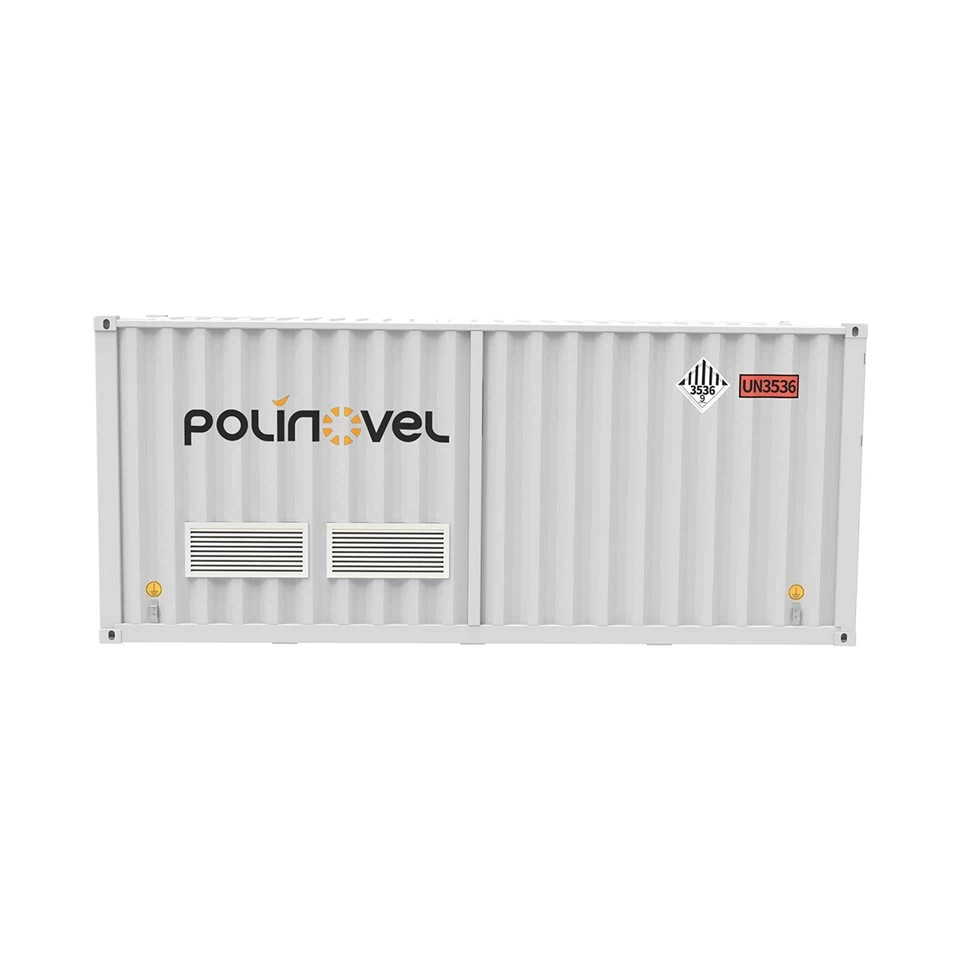
The 6.26MWh Lithium Battery Storage Container is a high-capacity liquid-cooled battery container designed for utility-scale energy storage, renewable energy storage, grid-side storage, and large C&I energy storage projects.
Built on a high-voltage lithium battery platform, this DC-side battery storage container supports flexible PCS connection, active balancing, intelligent thermal control, and multi-level safety protection. It helps project developers increase usable energy, simplify system integration, and deploy large-scale battery storage capacity in a standardized 20ft container structure.

High-Density BESS Container Built for Large-Scale Projects
By concentrating 6.26MWh into one standard 20ft high-cube enclosure, this container reduces the number of units, land area,
cabling and civil works required per MWh deployed
High-Capacity Lithium Battery Storage
The 6.26MWh lithium battery storage container delivers high energy capacity in a standardized 20ft container structure. Compared with conventional 5MWh-level systems, the higher energy density helps reduce project footprint, improve land-use efficiency, and support larger energy storage capacity with fewer containers.
3°C Intelligent Temperature Control
Temperature consistency is critical for battery life, safety, and long-term system performance. The 3°C intelligent temperature control design works with liquid cooling and heating to help create a more stable operating environment for the battery system, supporting reliable charge and discharge performance across demanding outdoor conditions.
Active Balancing for Higher Usable Energy
Active balancing helps improve balancing efficiency across battery cells and modules, allowing the system to make better use of available energy. For large battery storage containers, this supports higher energy availability, better consistency, and stronger long-term operating value.
Flexible DC Output for PCS Matching
The container supports optional 1, 2, or 12 DC output channels, giving project developers more flexibility when matching external PCS configurations. As a DC-side battery container, it does not include PCS, but it provides flexible battery-side access for centralized PCS, string PCS, or customized energy storage system designs.
Multi-Level Safety Protection
The container is designed with multi-factor safety analysis, battery monitoring, module-level thermal runaway protection, and container-level fire protection. These layers help control risks from the cell level to the container level, supporting safer operation for utility-scale and large C&I battery energy storage projects.
Built for Scalable Energy Storage Projects
With a containerized structure, IP55 protection, CAN / RS485 / TCP/IP communication, and flexible DC interfaces, this liquid-cooled battery storage container is ready for scalable deployment in solar farms, wind farms, grid storage stations, industrial parks, and other high-capacity energy storage projects.
6.26MWh Lithium Battery Storage Container Specification
| System Parameters | |
| Battery Chemistry | LFP |
| Cell Capacity | 314Ah |
| Configuration | 416S12P |
| Nominal Energy | 6261.9kWh |
|
|
Liquid Cooling / Liquid Heating |
| Communication Protocol | CAN, RS485, TCP/IP |
| Electrical Parameters
|
|
| Nominal Voltage | 1331.2V |
|
|
1040–1500V |
|
|
4500Vdc, leakage current ≤5mA, no breakdown or flashover |
| Auxiliary Power |
3-phase 400Vac ±10%, 50Hz(CE) 3-phase 480Vac ±10%, 60Hz(UL) |
| Rated Charge Power | 1565.5kW, 0.25P |
| Rated Discharge Power | 1565.5kW, 0.25P |
| Peak Charge Power | 3131kW @ 60s |
| Peak Discharge Power | 3131kW @ 60s |
| Depth of Discharge | 100% DOD |
| DC Output Channels | 1 / 2 / 12 outputs optional |
| Environmental Conditions | |
| Operating Temperature | -30°C to 55°C |
| Altitude | Derating above 3,000m |
| Mechanical Parameters | |
| Container Type | 20HQ |
| Dimensions (L × W × H) | 6058 × 2438 × 2896mm |
| Weight | Approx. 49t |
| Protection Rating | IP55 |
| Certifications | |
| Module-Level Standards | UL9540A-2019, UN38.3, RoHS, GB/T 36276-2023 |
| Unit-Level Standards | UL9540A-2019, UL1973-2022, IEC62477-1-2012, IEC62619-2022, IEC63056-2020, IEC60730-1-2022, GB/T 36276-2023 |
| Container-Level Standards | UL9540-2023, NFPA68-2023, NFPA69-2024, NFPA855, UN3536, IEC62477-1-2012, IEC62933-5-2-2022, IEC61000-6-2-2016, IEC61000-6-4-2018, IEEE Std 693-2018, ISO3744-2010, RoHS, REACH |
All-in-One DC Battery Container for Grid & Renewable Storage
The Polinovel 6.26MWh lithium battery storage container is a complete DC-side system, not just a cabinet of cells. Inside one factory-integrated 20ft enclosure, LFP battery racks, a multi-level BMS, an intelligent liquid-cooling thermal management system, a fire suppression system, power distribution and open communication interfaces are engineered to operate as a single coordinated unit. This system-level design is what utility-scale buyers actually need: a clearly defined boundary that connects to your chosen PCS (power conversion system) and EMS with predictable behavior. Because every container is assembled and tested at the factory, EPC teams inherit less field wiring and lower commissioning risk - turning specification into a bankable, deployable asset.
What's inside the container?
Battery system - LFP racks/clusters with a multi-level BMS and core BESS components monitoring cell, module and system level.
Thermal management - intelligent liquid cooling to control cell temperature difference and derating.
Safety system - gas/smoke detection, thermal runaway mitigation, emergency stop and fire suppression.
Power & distribution - integrated DC distribution ready for PCS connection (DC-coupled; AC/PCS optional).
Controls & communication - open interfaces for EMS integration and remote monitoring.
Why Choose the Polinovel 6.26MWh Battery Storage Container
6.26MWh in a 20ft Footprint
Concentrating 6.26MWh into one standard 20ft container reduces unit count, land use, cabling and civil works per MWh - a decisive advantage for land-constrained or permitting-sensitive sites and lower balance-of-system cost.
Intelligent Liquid Cooling
Liquid cooling technology can control the battery temperature difference during charge and discharge cycles, reduce high-temperature degradation, and thus protect the battery's long-term capacity retention.
Multi-Layer Protection
Safety is a chain, not a claim: LFP → liquid cooling → BMS → detection → suppression → factory testing. This layered architecture supports permitting, insurance review and long-term safe operation.
Flexible PCS & EMS
A wide DC window and open protocols (CAN, RS485, Ethernet, Modbus TCP, IEC61850) let the container match different PCS brands and EMS platforms, keeping the responsibility boundary clear during commissioning.
Factory-Integrated, Tested
Each container is integrated and factory-tested before shipment, so field teams face less on-site wiring, matching and commissioning work - shortening the EPC timeline and reducing field rework.
Factory-Direct Manufacturer
Beyond hardware, Polinovel supports OEM/ODM configuration, engineering documentation, export-ready packaging and multi-container supply - one accountable BESS manufacturer for supply, clarity and quotation.
Common Challenges in Utility-Scale BESS Deployment
Land pressure & high container count
Limited land inflates balance-of-system cost and slows approvals. The 6.26MWh 20ft container raises energy per footprint, cutting unit count and site works.
Fire safety, permitting & insurance
Projects stall when reviewers demand real evidence of fire safety and thermal-runaway mitigation. A documented safety chain and UL certification support ease authority review.
Complex multi-vendor integration
When batteries, PCS, EMS and protection come from different suppliers, responsibility blurs and commissioning drags. Factory-integrated containers with open interfaces give a defined system boundary.
Slow delivery & commissioning overrun
On-site wiring, matching and commissioning consume EPC schedule and budget. Pre-configured, tested delivery reduces field labor and risk.
Unclear lifecycle cost (LCOS)
Opaque efficiency, degradation and O&M make LCOS hard to defend internally. Transparent efficiency and life targets - verifiable by test report - plus remote monitoring lower O&M.
Supplier reliability & documentation gaps
Large projects need repeatable supply, FAT reports and layout drawings across phased builds. Factory-direct supply and OEM/ODM close that gap.
Application scenarios of 6.26MWh Lithium Battery Storage Container
Solar + Storage
Wind + Storage
Grid-Side Storage
Large C&I Energy Storage
Independent Storage Plant
Microgrid / Island / Mining
Why Upgrade to a 6.26MWh Lithium Battery Storage Container
Compared with distributed cabinets or earlier 3–5MWh containers and 4–6MWh containers,
the 6.26MWh container improves density, integration and deployment economics.
| Factor | Polinovel 6.26MWh Container | Older / Distributed Systems |
|---|---|---|
| Energy Density | 6.26MWh per 20ft unit | More units, more land and cabling |
| Cooling | Intelligent liquid cooling | Often air-cooled - larger ΔT |
| Integration | Factory-integrated, defined boundary | Field-assembled from many vendors |
| Delivery | Tested, ready to install | More on-site wiring & commissioning |
| Scalability | Modular block for phased builds | Redesign often needed to scale |
Safety, Compliance and Factory Testing
For utility-scale procurement, quality has to be provable, not promised. The 6.26MWh container is built around a documented safety and quality chain - from LFP chemistry and liquid cooling to a multi-level BMS, detection, suppression and Factory Acceptance Testing - so buyers, authorities and insurers can follow the evidence. Production runs through controlled steps including cell matching, pack assembly, liquid-cooling leak testing, BMS communication testing and pre-shipment inspection, with quality traceability available on request.
Compliance is treated conservatively: certification documents can be provided upon request, applicable standards may include those commonly required in your market, and final compliance status is confirmed per project. LFP chemistry combined with a wide operating temperature range and thermal management gives approving authorities the documentation trail they expect. Test reports are available upon request.
Quality control & test items
- IQC → cell matching → pack assembly → liquid-cooling leak test → BMS communication test → fire-linkage test → charge/discharge test → FAT → pre-shipment inspection.
- Applicable standards: UL1973, UL9540A, IEC62619, IEC62477, IEC63056, UN38.3, NFPA855, CE - available or under application per project.
- Documents for buyers: datasheet, layout drawing, single-line diagram, certification list, FAT report (upon request).
6.26MWh Lithium Battery Storage Container FAQ
Q: What is the Polinovel 6.26MWh lithium battery storage container?
A: It is a 20ft, DC-side containerized LFP battery energy storage system rated at 6.26MWh (per configuration). It integrates LFP battery racks, a multi-level BMS, intelligent liquid cooling, fire protection and open communication interfaces into one factory-integrated, tested unit for utility-scale and large C&I projects.
Q: What is included, and where does the scope end?
A: Each unit typically includes battery racks, BMS, liquid-cooling thermal management, fire detection and suppression, DC distribution and communication interfaces. The PCS is generally project-dependent and can be optional.
Q: Is this a DC-side container or an AC/DC integrated BESS?
A: The standard product is a DC-side battery container designed to connect to your chosen PCS. AC/PCS integration can be discussed per project.
Q: Which PCS brands or voltage platforms can it support?
A: The container uses a wide 1000–1500V DC window and open protocols (CAN, RS485, Ethernet, Modbus TCP, IEC61850) for flexible PCS and EMS matching.
Q: How does liquid cooling improve safety and lifetime?
A: Intelligent liquid cooling holds cell temperature difference within a controlled band, reducing hot spots that shorten cell life and helping the 6.26MWh lithium battery storage container maintain more consistent performance and capacity retention over its service life.
Q: Can the system be customized for 2-hour or 4-hour applications?
A: Yes. The system can be configured for different duties, including 2-hour and 4-hour applications, based on your rated power and duration targets. Provide your duty cycle and grid requirements for a matched configuration.
Q: Do you support OEM/ODM and custom packaging?
A: Yes. Polinovel offers OEM/ODM support including capacity configuration, branding, PCS/EMS matching and documentation packages, along with export-ready custom packaging for international project logistics.
Q: What is the MOQ and lead time?
A: MOQ is project-based, typically from a single container upward. Lead time depends on project quantity and certification scope, so we confirm it against your specific order rather than quoting a fixed day count.
Q: What certifications are available?
A: The system is designed to meet standards commonly required in utility-scale bids (UL1973, UL9540A, IEC62619, UN38.3, NFPA855, CE).
Q: What information is needed to prepare a quotation?
A: Please provide required capacity, application scenario, storage duration (2h/4h), PCS/EMS preference, grid code, destination country and project timeline. With these, our engineering team can prepare a project-based configuration and quotation for the 6.26MWh lithium battery storage container.

Plan Your 6.26MWh BESS Project with Our Engineering Team
Share your site conditions, grid requirements and target storage duration, and Polinovel's engineering team will recommend a suitable configuration and quotation for your 6.26MWh lithium battery storage container. Whether you're sizing a solar-plus-storage plant, a grid-support asset or a phased multi-container build, you'll get a defined system boundary, clear documentation and realistic delivery terms.
Hot Tags: 6.26MWh lithium battery storage container, liquid-cooled BESS container, 20ft LFP battery container, containerized energy storage system, utility-scale BESS, Polinovel BESS manufacturer