

Energy storage lithium battery systems typically last between 10 and 15 years in residential and commercial applications, though their lifespan varies significantly based on chemistry type, operating conditions, and usage patterns. Modern systems generally manage 6,000 to 10,000 charge cycles before experiencing notable capacity degradation, with premium lithium iron phosphate (LFP) batteries holding around 60% of the battery energy storage market share due to their extended lifetimes.

Understanding Battery Longevity Through Chemistry
The chemistry inside your battery fundamentally determines how long it will serve you. Lithium-ion batteries offer energy densities ranging from 150 to 300 watt-hours per kilogram and can endure 500 to 3,000 charge cycles depending on their specific chemistry, compared to lead-acid batteries which degrade after just 200 to 1,000 cycles.
Lithium Iron Phosphate (LiFePO4) batteries stand out for home storage applications due to their safety, space limitations, and reliable cycle life. The difference matters more than you might think. While severe battery degradation often occurs as early as 2,000 cycles into the lifespan of certain lithium-ion chemistries, nickel-hydrogen battery chemistry delivers a 30-year 30,000-cycle lifespan and can still deliver at 86% capacity after 30,000 cycles.
The Chemistry Hierarchy
Three lithium-ion chemistries dominate today's energy storage market:
Lithium Iron Phosphate (LFP) batteries excel in stationary storage. LFP batteries are gaining popularity for their safety, thermal stability, and longer lifecycle, particularly in stationary storage applications. Their chemical structure resists the thermal runaway events that plague other lithium chemistries, though they sacrifice some energy density for this stability.
Nickel Manganese Cobalt (NMC) batteries pack more energy into less space but demand careful temperature management. Although LFP batteries have been traditionally more expensive than NMC ones, prices have now matched, with vendors looking favorably at them as fire safety regulations become stricter.
Lithium Nickel Cobalt Aluminum Oxide (NCA) batteries push energy density even higher but at the cost of shorter cycle life. This chemistry finds its sweet spot in applications where weight and space matter more than longevity.
The Three Stages of Battery Aging
Battery degradation doesn't happen uniformly. In Stage I, manufacturing conditions play a crucial role, with early-cycle capacity increases followed by declines due to SEI layer formation. In Stage II, aging processes such as SEI growth, electrode cracking, dissolution, and electrolyte breakdown occur at a constant rate. Stage III sees a rapid, non-linear decrease in state of health, mainly due to lithium plating.
This three-stage pattern explains why batteries seem to work fine for years before suddenly declining. The first stage often goes unnoticed by users. The second stage-where most batteries spend the majority of their useful life-proceeds steadily and predictably. The third stage arrives when accumulated damage reaches a tipping point, causing accelerated capacity loss.
What Happens Inside a Degrading Battery
At the microscopic level, several destructive processes compete for dominance. The solid electrolyte interphase (SEI) layer grows continuously with each charge cycle, consuming lithium ions that can no longer contribute to energy storage. Electrode materials crack under the mechanical stress of repeated expansion and contraction. Electrolyte molecules break down, especially at elevated temperatures, releasing gases and further disrupting the battery's internal chemistry.
Several external variables can impact the lifespan of lithium-ion batteries, with factors such as depth of discharge, charge/discharge rates, cycle count, and temperature fluctuations or extreme temperature conditions playing a significant role in accelerating degradation.
Real-World Performance Data for Energy Storage Lithium Battery Systems
The gap between laboratory promises and field reality often surprises battery owners. Frequency regulation was the least harmful for the battery, with an expected lifetime of 12 years, while peak shaving resulted in an expected lifetime of 8 years, with the combined cycle accelerating capacity loss.
By 2024, electric car batteries lost 1.8% of their power each year under normal conditions, down from 2.3% annually in 2019, showing measurable progress in battery technology. This improvement stems from better battery management systems, refined manufacturing processes, and smarter charging algorithms.
The Cycle Life Reality Check
A quality battery storage system should manage 6,000 to 10,000 cycles before experiencing a dip in capacity, which translates to roughly 15 years plus at one cycle per day. But this number requires context. A cycle doesn't necessarily mean a complete charge and discharge. A lithium-ion cell charged to 4.20V/cell typically delivers 300–500 cycles, but if charged to only 4.10V/cell, life can be prolonged to 600–1,000 cycles; 4.0V/cell should deliver 1,200–2,000 cycles and 3.90V/cell should provide 2,400–4,000 cycles.
The tradeoff becomes clear: Every 70mV reduction in charge voltage lowers the overall capacity by 10 percent. You can have more cycles or more capacity per cycle, but rarely both at maximum levels.
Temperature: The Hidden Lifespan Killer
Batteries in a hot atmosphere over 90 degrees F may overheat, which shortens the lifetime of the battery, while very cold temperatures also shorten the lifetime because the battery has to work harder and operate at a higher voltage to charge successfully. The ideal operating range sits between 68°F and 90°F for most lithium chemistries.
The electrolyte that sits between the electrodes breaks down at elevated temperatures, causing the battery to lose its capacity for lithium-ion shuttling and reducing the number of lithium ions the electrode can accept into its structure.
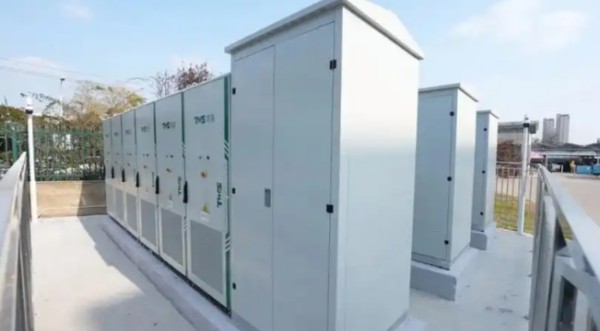
Commercial energy storage systems address this vulnerability directly. Systems equipped with industrial air conditioners and temperature sensors ensure that the temperature of the battery compartment remains stable at 25 degrees Celsius regardless of external ambient temperature changes, greatly improving service life and safety.
The temperature effect compounds over time. A battery running 10°F hotter than optimal doesn't just age 10% faster-the damage accumulates exponentially. Calendar aging (degradation during storage) proceeds roughly twice as fast for every 10°C increase in temperature, even when the battery sits unused.
Depth of Discharge and Charging Practices
How deeply you discharge your battery before recharging dramatically affects its lifespan. Going above your battery's recommended Depth of Discharge can lead to faster degradation of its capacity over time, though some modern batteries are hitting 100% DoDs.
Most solar batteries are deep-cycle batteries, which allows them to discharge up to 80% of their stored energy before recharging. The remaining 20% acts as a buffer protecting the battery from damage.
Partial charging offers another longevity strategy. Using a reduced charge level of 50% state of charge increases the lifetime expectancy of vehicle lithium-ion batteries by 44–130% according to research from Chalmers University of Technology in Sweden.
The Charging Rate Equation
Fast charging tempts users with convenience but extracts a longevity cost. Batteries of different capacities and brands have different optimal charge and discharge rates, and the higher the charge and discharge rate, the fewer cycles the battery has.
A 100Ah LFP battery typically operates at a standard charge rate of 0.5C (50 amps), supporting a maximum of 1C under stress. A 280Ah cell operates at 0.2C standard rate with 0.5C maximum. Exceeding these rates generates heat, accelerates electrode cracking, and promotes lithium plating-all of which permanently reduce capacity.
Market Trajectories and Future Improvements
The energy storage landscape continues evolving rapidly. U.S. battery storage capacity has been growing since 2021 and could increase by 89% by the end of 2024, expanding from around 16 GW at the end of 2023 to more than 30 GW.
The 2024 NREL Annual Technology Baseline represents lithium-ion batteries-primarily those with nickel manganese cobalt (NMC) and lithium iron phosphate (LFP) chemistries-with LFP becoming the primary chemistry for stationary storage starting in 2022.
Technological Advances on the Horizon
Recent breakthroughs in silicon-based anodes, solid-state electrolytes, and advanced cell designs promise to push energy densities beyond 400 Wh/kg and extend cycle lives to over 5000 cycles. These aren't distant dreams-pilot production has already begun.
The global lithium-ion battery market reached USD 75.2 billion in 2024 and is expected to grow at a CAGR of 15.8% from 2025 to 2034, driven largely by energy storage demand alongside electric vehicles.
Solid-state batteries represent the most significant leap forward. Solid-state lithium batteries replace liquid electrolytes with solid materials, representing a breakthrough in safety and performance. Early production models show improved stability, reduced fire risk, and potentially doubled cycle life compared to current lithium-ion technology.
How Energy Storage Lithium Battery Second-Life Applications Extend Value
The end of a battery's first life doesn't mean the end of its usefulness. Although different types of models for predicting lifetime expectancies are available, there is growing confidence among stakeholders that end-of-life batteries can be repurposed for less demanding applications, such as stationary energy storage, providing new value in the electric grid and transportation sectors.
Electric vehicle batteries typically get retired when they reach 70-80% of original capacity-a level still perfectly adequate for grid storage applications where weight doesn't matter. This cascading use model extends total battery lifespan to 20-25 years across two applications.
The economics increasingly favor second-life deployment. Used EV batteries cost 40-70% less than new stationary storage batteries while delivering 80% of their original performance. For applications like peak shaving or renewable integration where absolute maximum capacity isn't critical, second-life batteries offer compelling value.
Warranty Insights and Manufacturer Confidence
Most battery storage system makers offer a standard 10-year warranty covering defects and malfunctions, with some companies like Enphase IQ offering an impressive 15-year warranty.
These warranty terms reveal manufacturer confidence in their products. A 15-year warranty with 70% end-of-life capacity means the company expects the battery to perform reliably for that entire period. However, warranty terms vary significantly in their fine print. Some guarantee a minimum number of cycles, others a time period, and many specify both.
Fixed operations and maintenance costs include battery augmentation costs, which enable the system to operate at its rated capacity throughout its 15-year lifetime, estimated at 2.5% of the capital costs. This ongoing cost reflects the reality that maintaining peak performance requires occasional component replacement.
When Replacement Becomes Necessary
As your battery approaches the end of its lifespan, telltale signs include consistently longer charging times or charging more quickly but not holding charge as long, which are signs of decreasing capacity and performance.
If your battery doesn't seem to be lasting as long as it once did under similar use conditions, it's reaching the end of its lifespan. Regular monitoring helps catch degradation early. Modern battery management systems track state of health automatically, alerting owners when capacity drops below acceptable thresholds.
Physical inspection reveals additional warning signs. Any visible damage, leakage, corrosion, or swelling demands immediate professional attention. These symptoms indicate serious internal failures that pose safety risks beyond mere performance degradation.
Maximizing Your Battery's Lifespan
Proper installation by a professional in a cool, dry location with good ventilation, away from extreme conditions and moisture, significantly extends battery life, with well-sealed loft spaces, large cupboards, and utility rooms being suitable locations.
Regular cycling at one charge-discharge cycle per day represents good practice, though the optimal frequency depends on your specific usage pattern and battery chemistry.
Practical Maintenance Checklist
Monthly visual inspections cost nothing but catch problems early. Check for leakage and corrosion, especially near terminals and cables, and feel around for hot spots. Any irregularity deserves investigation.
Monitor performance data continuously if your system provides it. Unusual charging times, unexpected capacity drops, or temperature anomalies often signal developing problems. Modern smart battery systems make this monitoring automatic, sending alerts to your smartphone when parameters drift outside normal ranges.
Keep your battery charge between 20% and 80% to prevent damage and maintain optimal function, and avoid fast charging to lower battery stress. This operating window may sacrifice some usable capacity but extends total lifespan significantly.
The Economic Perspective
Initial battery costs have declined dramatically. According to analysis from BloombergNEF, prices fell 14% in 2023 alone to a record low, making energy storage more economically viable than ever.
For a 60-MW 4-hour battery, technology innovation scenarios result in capital expenditures reductions of 18% (Conservative Scenario), 37% (Moderate Scenario), and 52% (Advanced Scenario) between 2022 and 2035.
The total cost of ownership extends beyond purchase price. While the total cost for a professionally installed residential system can range from $9,000 to over $19,000, several factors make this investment more accessible, including federal tax credits, utility incentives, and the value of backup power during grid outages.
Calculating true value requires considering the entire lifespan. A $12,000 battery lasting 12 years costs $1,000 per year, or roughly $83 per month. If it reduces your electricity bill by $60 monthly and provides backup power worth $25 monthly, the investment breaks even-before considering environmental benefits or energy independence.
The Duration Question
Lithium-ion BESS typically have a duration of 1–4 hours, meaning they can provide energy services at their maximum power capacity for that timeframe. This duration constraint shapes their ideal applications.
There's general agreement that the long-duration storage designation begins right around the point where the economic viability of current lithium-ion batteries drops off, which experts tend to agree is in the 8- to 12-hour range.
For residential applications, 4-6 hours of storage typically suffices for evening peak usage and overnight backup. Commercial and utility-scale applications increasingly demand longer duration, driving innovation in alternative chemistries like vanadium redox flow batteries for multi-day storage needs.
Looking Forward
While lithium-ion batteries excel at delivering short bursts of electricity, they were too expensive for long-duration storage, leading to development of multiday batteries cheap enough to supply electricity for multiple days during cloudy spells or wind lulls.
The energy storage industry stands at an inflection point. Current lithium-ion technology serves short-duration needs admirably, while emerging technologies target longer durations. With the right policies and market structures in place and continued investment in technological and manufacturing advancements, long-duration storage technologies can achieve rapid scale-up and grid integration.
Frequently Asked Questions
How many charge cycles can I expect from my energy storage battery?
Quality lithium battery storage systems manage 6,000 to 10,000 cycles before significant capacity degradation, though this varies by chemistry and operating conditions. LFP batteries typically deliver more cycles than NMC chemistries when operated under comparable conditions.
What actually causes my battery to lose capacity over time?
Capacity loss results from multiple side reactions including SEI layer growth, electrode cracking, dissolution, electrolyte breakdown, and lithium plating. These processes accelerate with higher temperatures, deeper discharge cycles, and faster charging rates.
Can I slow down battery degradation?
Keeping charge between 20-80%, avoiding fast charging, and maintaining temperatures between 68-90°F significantly extends battery life. Some research suggests that operating at 50% state of charge can increase lifetime expectancy by 44-130%.
Are all lithium-ion batteries the same in terms of lifespan?
No-Lithium-iron-phosphate (LFP) batteries currently hold around 60% of the battery energy storage market share and are expected to grow further as they offer better safety, thermal stability, and longer lifecycles compared to other lithium chemistries.
Energy storage lithium battery systems do last, typically delivering 10-15 years of reliable service when properly managed. The battery chemistry you choose, how you operate the system, and the environmental conditions it faces all significantly impact longevity. As technology advances and costs decline, energy storage lithium battery installations become increasingly practical for both residential and commercial applications, with ongoing improvements promising even longer lifespans in the future.